Rising sea levels threaten Vietnam’s top rice producer

Because of climate change, Kien Giang province is struggling to maintain its place as Vietnam’s biggest rice producer – a distinction it has held for nearly two decades.
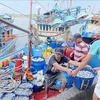
Rising sea levels threaten Vietnam’s top rice producer ảnh 1Rice uploading for export at the Southern Food Company in Ho Chi Minh City (Photo: VNA)

Kien Giang (VNS/VNA) - Because of climate change, Kien Giangprovince is struggling to maintain its place as Vietnam’s biggest rice producer– a distinction it has held for nearly two decades.

The province is well positioned to produce rice. Located on the coast, in anarea in Cuu Long (Mekong Delta) with some of the country’s richest soil, KienGiang is home to more than 357,000 ha of rice paddies. It produces an averageof over four million tonnes of rice each year.

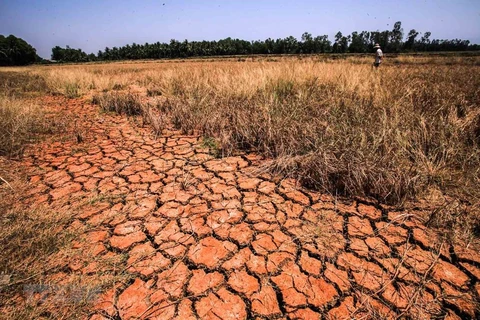
But ever-rising seas have deposited saltwater deeper into the province,contaminating the three key production areas of Long Xuyen Quadrangle, West HauRiver and U Minh Thuong and killing off hundreds thousands of hectares of riceover the last few years.

“Climate change is affecting the growth of local agriculture,” said deputydirector of the province’s agriculture and rural development department Do MinhNhut.

He cited drought and the intrusion of saltwater as factors that had damagedmore than 56,500 ha of fields in 2016 alone, reducing that year’s yield by morethan 481,200 tonnes compared to the previous year.

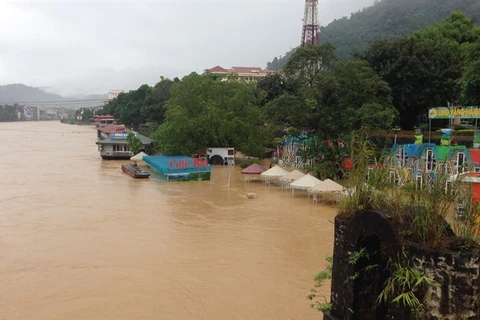
Saltwater intrusion continued in 2017, destroying over 30,455 ha. Heavy rainand flooding damaged an additional 7,150 ha.

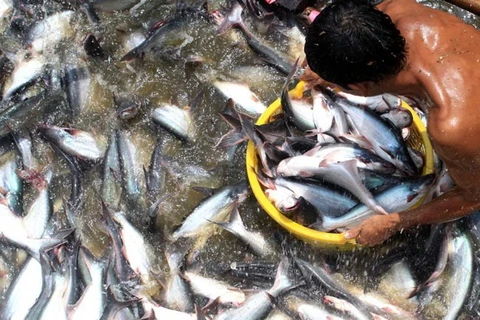
Agriculture in Kien Giang is not only about rice. As a seaside province, it hasdeveloped its aquaculture by focusing on farming shrimp, fish, crabs, andclams.

According to the municipal Department of Agriculture and Rural Development,aquaculture areas have grown steadily since 2015, producing more than 217,000tonnes of seafood last year.

“Aquaculture has helped increase the value of Kien Giang’s agriculture sector,lifting farmers out of poverty and raising their quality of life,” saiddepartment director Nguyen Van Tam.

“However, annual productivity has not yet reached its potential, especially inshrimp farming. One important factor is certainly the negative impact ofclimate change.”

Tam said prolonged drought and the intrusion of saltwater had cost farmers morethan 22,188 ha of shrimp farms in the 2015-2016 season. Similar environmentalfactors caused the loss of 6,000 ha in 2017 and 10,000 ha so far this year.

With its economy threatened by climate change, Kien Giang is pushing ahead withnew irrigation facilities to manage the rapid invasion of saltwater.

The province is investing 950 billion VND (42.2 million USD) to finance newsluice gates along the An Bien-An Minh coastal dyke that will prevent saltwaterintrusion and retain as much fresh water as possible. The funds will also gotowards a massive network of irrigation channels in the Long Xuyen Quadrangleand West Hau River agricultural areas.

Although the province had already invested much of its own money, Kien GiangPeople’s Committee Chairman Pham Vu Hong said it would need more financialsupport from the central Government to protect its agricultural sector fromclimate change.-VNS/VNA 
VNA
See more

Representatives of the Ngoc Lam Border Guard Station under the Nghe An Border Guard Command and Son Lam commune's police hand over a pangolin voluntarily surrendered by a local resident to the wildlife conservation centre at Pu Mat National Park. (Photo: VNA)

Nghe An residents voluntarily hand over rare pangolins for conservation

On May 11, the Quy Chau Forest Protection Department, along with local police and authorities, took in a critically endangered pangolin, handed over by a resident. The animal was discovered a day earlier by Thai Doan Tuan, from Viet Huong village in Quy Chau commune, after it wandered into his garden. Recognising it as a protected Sunda pangolin, he contacted authorities for assistance.

A 2kg pangolin is released back into the wild at the Pu Huong Nature Reserve on May 6, 2026. (Photo published by VNA)

Nghe An releases rare pangolin back to the wild

Pangolins, scaly mammals capable of curling into a ball for self-defence, are classified as critically endangered and are strictly protected under both Vietnamese and international law.

At the working session (Photo: Vietnam Meteorological and Hydrological Administration)

Vietnam, Sri Lanka share experience in hydrometeorology

Both sides expressed confidence that continued dialogue and knowledge-sharing will deepen cooperation in hydrometeorology, helping enhance disaster response capacity and climate change adaptation in the years ahead.

Chac Den Cave was recently discovered in Phong Nha - Ke Bang National Park in Quang Tri province. (Photo: VNA)

26 new caves discovered in Phong Nha – Ke Bang National Park

The new findings comprise several large caves with complex structures and high scientific value, including Thien Cung Cave, measuring 4,206 metres – the longest cave identified during the survey, Nuoc Lan Cave (2,721 metres), Ma Dom Cave (1,257 metres) and Cha Ngheo Cave (583 metres).

Nine Sunda pangolins (Manis javanica) have been released back into the wild at the Bach Ma National Park. (Photo: VNA)

Nine endangered Sunda pangolins returned to nature in Hue

Before their release, the animals had undergone quarantine, care, rehabilitation and close monitoring by technical staff and veterinarians to ensure they were in good health and capable of returning to their natural habitat.

Thailand ready to share experience with Vietnam in green urban development: officials

Thailand ready to share experience with Vietnam in green urban development: officials

Thailand is ready to share its experience and successful models in green urban development with Vietnam, as the two countries share many similar characteristics, including rapid urbanisation, traffic congestion, flooding, canal networks and growing demand for greener public spaces, Thai officials have said in recent interviews with the Vietnam News Agency.

This May marks the third time the country’s largest wildlife bird photography competition has been held. (Photo: Vietnam BirdRace 2026 organising committee)

Vietnam BirdRace 2026 to attract hundreds of photographers worldwide

Participating teams, each comprising three to four members, are tasked with photographing as many wild bird species as possible within the official competition period. While artistic quality is not mandatory, images must be clear enough for species identification, ensuring authenticity and avoiding any disturbance to natural habitats.

Quang Tri recently received two endangered pangolins from local resident. (Photo published by VNA)

Two pangolins handed over to authorities in Quang Tri

At around 8:30 pm on April 12, Le Thanh Tung, a resident of Thuong Nghia hamlet in Cam Lo commune, and his friend spotted the two pangolins, weighing over 4 kg, while working near the Cam Lo–La Son Expressway.

A view of Phong Nha - Ke Bang National Park in Da Nang city (Photo: VNA)

Phong Nha – Ke Bang: untapped biological treasure in Truong Son mountains

Unlike ecosystems where species inventories are largely complete, Phong Nha–Ke Bang National Park remains scientifically “open,” with each survey revealing new findings. Recent studies - from local research projects to international collaborations - have recorded additional bird species and identified the rare parasitic plant Sapria himalayana, which only survives in intact primary forests.