Saigon Co.op ties up with Winrock International for waste circulation

Saigon Co.op signed an MoU with non-profit Winrock International in HCM City on April 12 to reduce environmental pollution by developing a waste circulation model, enhancing waste separation at source and raising the extended producer responsibility.
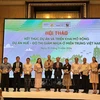
Saigon Co.op ties up with Winrock International for waste circulation ảnh 1Saigon Co.op signs a MOU with Winrock International in HCM City (Photo courtesy of Saigon Co.op)

HCM City (VNA) - Saigon Co.op signed an MoU withnon-profit Winrock International in HCM City on April 12 to reduceenvironmental pollution by developing a waste circulation model, enhancingwaste separation at source and raising the extended producer responsibility.

Within the framework of the programme, Saigon Co.op also signedagreements with the Tan Binh Culture JSC (ALTA Group) and Green Connect JSC toimplement it at its stores.

The partnership is part of the Pollution Reducing Project fundedby USAID, which the Ministry of Natural Resources and Environment and WinrockInternational are managing.

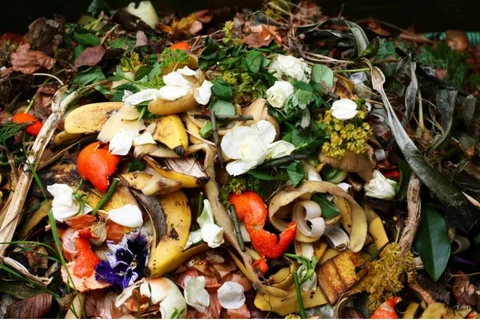
Saigon Co.op will apply the waste circulation process through aplastic waste recycling station and an organic waste circulation model.

Under the former, Saigon Co.op and ALTA Group will install plasticbottle/aluminum can collection machines at Co.opmart supermarkets in HCM City.

The AI-based machines will automatically identify, classify andcollect the bottles and cans.

For each bottle/can a user puts into the machine, they willreceive a certain number of points that will be converted into vouchers forshopping on e-commerce platforms.

The programme will be piloted in HCM City from April 2024 toJanuary 2025 before being deployed across the Co.op supermarket network.

Saigon Co.op will collaborate with Green Connect for the organicwaste classification, collection and treatment at its supermarkets in the cityfrom April 2024 to January 2025.

Based on results, the programme will be widely deployed./.
VNA

See more

Bang Mo volcano in Lam Dong province (Photo published by VNA)

Lam Dong optimises value of UNESCO Dak Nong Global Geopark

Alongside conservation, Lam Dong aims to tap the geopark's tourism potential through geological, ecological and community-based tourism. Infrastructure and tourism development projects must ensure that heritage values, landscapes and the natural environment are preserved.

A large-timber plantation model in Gia Lai province (Photo: VNA)

96-million-USD project promotes agroforestry to cut emissions

The Reduction of Emissions in the Central Highlands and South Central Coast of Vietnam (RECAF) project will run from 2026 to 2031 across the provinces of Dak Lak, Gia Lai, Lam Dong, and Khanh Hoa covering about 145,000ha, according to the International Fund for Agricultural Development (IFAD).

Crested goshawks are handed over by the People's Committee of Dong Le commune, Quang Tri province. (Photo: VNA)

Quang Tri rescues six rare wild animals

The animals are now receiving quarantine, treatment and specialised care. Once recovering their physical condition and wild behaviour, they will be reassessed for release back into the wild.

The Ministry of Industry and Trade has reported initial signs that the fuel is helping reduce emissions and protect the environment. (Photo: VNA)

E10 biofuel shows initial environmental benefits: Ministry

An official said the initial results indicate the nationwide rollout has begun to achieve its intended objectives, but more comprehensive monitoring over a longer period, with a wider observation network and more frequent measurement, is needed for a precise and objective assessment.

Forest development in Phan Son commune, Lam Dong province. (Photo: nhandan.vn)

Vietnam lays groundwork for transparent carbon market

Experts say the launch of the trading platform is only the first step. The long-term success of the market will depend on a transparent system backed by robust measurement, reporting and verification (MRV) standards to ensure every transaction reflects genuine emissions reductions.

A rubber plantation are in Dong Nai province. Vietnam has more than 900,000 ha of rubber plantations, with over 60% operated by smallholders. (Photo: VNA)

Rubber traceability accelerated as EU deforestation regulation deadline nears

Speaking at a conference held recently in Ho Chi Minh City to gather feedback on draft EUDR compliance guidelines for the rubber sector, Nguyen Quoc Manh, Deputy Director of the Plant Production and Protection Department under the Ministry of Agriculture and Environment, said that Vietnam had spent the past three years preparing for the regulation through awareness campaigns, training programmes and coordination with ministries, local authorities and businesses.

A view of the Can Gio mangrove forest, a crucial "carbon sink" ecosystem that contributes to generating carbon credits for operating Vietnam's carbon market. (Photo: VNA)

Vietnam earns 56.5 million USD from forest carbon credit sales to World Bank

Speaking at a conference in Hanoi on July 2 to introduce Decree No. 180 on forest carbon sequestration and storage services, Luong said the latest transaction brought the country's total revenue from the transfer to 56.5 million USD, covering 11.3 million tonnes of CO2 emission reductions at a price of 5 USD per tonne.

Dray Sap Waterfall is located within the UNESCO Dak Nong Global Geopark in Nam Da commune, Lam Dong province. (Photo: VNA)

UNESCO review spurs conservation drive at Dak Nong Global Geopark

The provincial Department of Culture, Sports and Tourism, in collaboration with the Vietnam UNESCO Global Geoparks Network and relevant agencies, surveyed 41 geological, cultural and tourism sites across the geopark, identifying a number of issues requiring urgent attention to safeguard the site's outstanding values.

The release site is carefully selected to provide suitable ecological conditions and improve the pangolin's chances of survival in the wild. (Photo: VNA)

Tay Ninh releases rare pangolin back to nature

Following health checks, care and monitoring, the pangolin was confirmed be in good condition and fit for release. The release site was carefully selected to provide suitable ecological conditions and improve the animal's chances of survival in the wild.