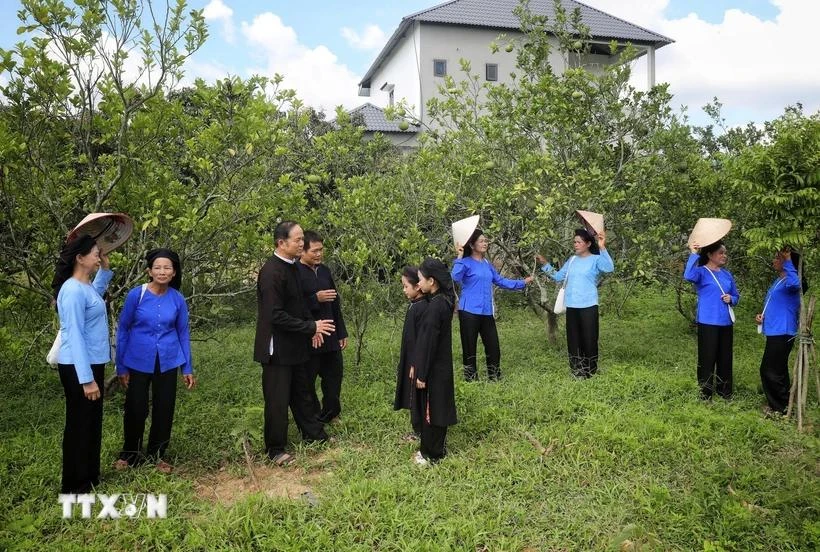
San Chi folk songs, simple but beautiful

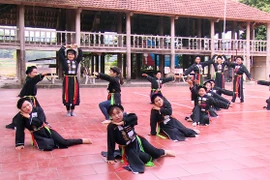
San Chi Folk Music in Kien Lao Commune, Luc Ngan District is one of 12 unique intangible cultural heritages of Bac Giang Province recognised as a national intangible cultural heritage.

Meritorious artist Lam Minh Sap (right) and members of the San Chi folk song club practice singing San Chi folk songs. (Photo: VNA)

Bac Giang (VNA) – San Chi Folk Music in Kien Lao Commune, Luc Ngan District is one of 12 unique intangible cultural heritages of Bac Giang Province recognised as a national intangible cultural heritage.

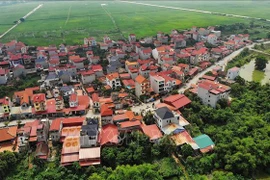
The San Chi ethnic group lives in villages, accounting for 70% of the population of the commune, which is home to seven ethnic groups.

San Chi folk songs are preserved by word of mouth. They are sung as people undertake daily activities such as farming, going to the market, greetings, house warming, weddings or funerals. They sing to communicate and express their feelings. San Chi folk songs can be sung solo, in duets, or between men and women.

The lyrics of the folk songs are both rustic and sophisticated, close to people's lives. They often praise the homeland, labour and express people’s wishes for a happy life and love.

According to studies, San Chi folk songs are divided into four main groups including daytime singing (Chuc Coo); nightime singing (Cnáng Coo); wedding singing (Chau Coo) and name-change singing (Zoong Hoo Coo).

Daytime singing is also known as love singing or teasing singing. In this genre of singing, the San Chi people still have about 300-500 songs from the past, written in Chinese characters.
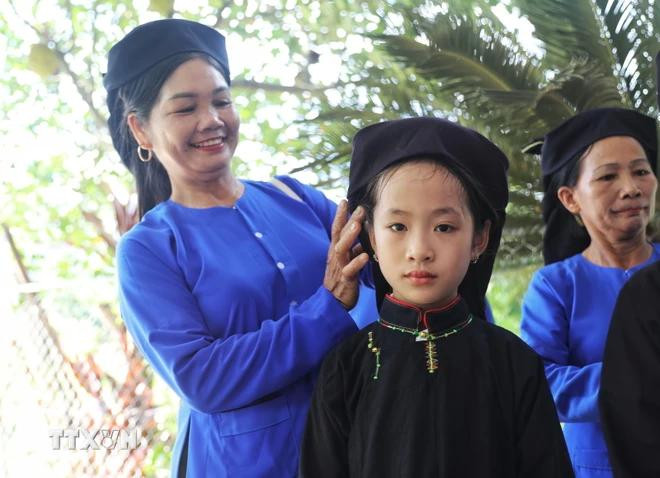
h2.webp
A girl is set to take part in a San Chi folk song performance. (Photo: VNA)

Nightime singing takes place indoors or people sit on mats in the yard and sing. They usually sing five to seven nights a week from about 8pm until morning of the next day. There are about 700-1,000 songs for people to sing. There is a rule that songs performed one night must not be repeated on the following nights.

Meanwhile, San Chi people have about 100 folk songs that they sing at weddings.

Name change singing is a genre that only men sing together during the name change ceremony of an adult male when he turns 18 years old. There are about 50 songs left. Their lyrics express congratulations to the person whose name is changed, marking his maturity and his pride.
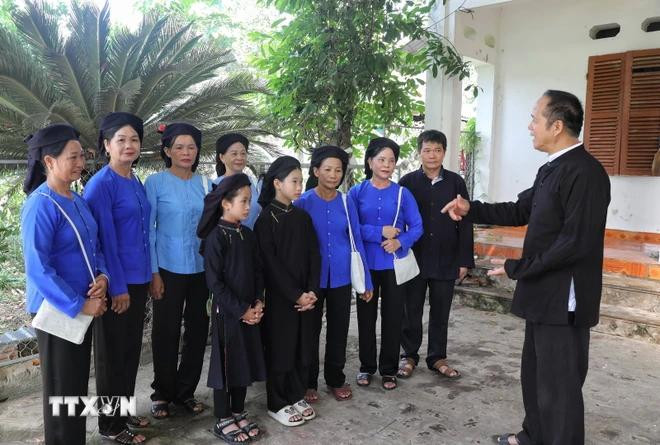
h3.webp
Meritorious artist Lam Minh Sap (right) and members of the San Chi folk song club practice singing San Chi folk songs. (Photo: VNA)

In addition to the four main singing forms above, San Chi folk songs also have another form. This format is called the Cap Chay Coo, a style of singing which details people's destiny. Cap Chay Coo song lyrics often have a heavy tone that includes invasion, war, the death of family members, fires, or desolate fields.

For the San Chi people, singing is an indispensable part of their spiritual life, encouraging and motivating them, helping people come closer to nuture their love for their homeland.
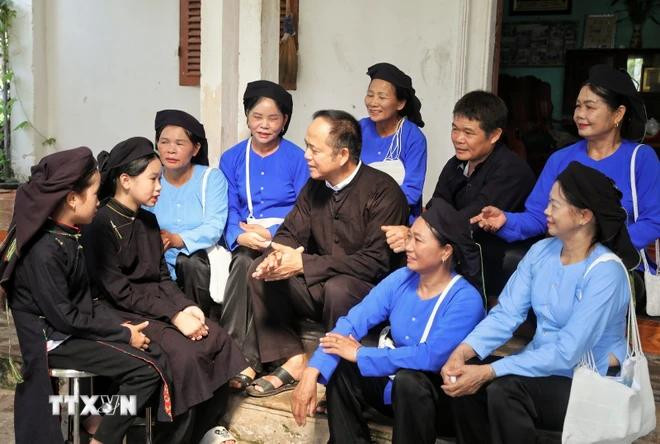
h4.webp
Meritorious Artist Lam Minh Sap teaches people to sing San Chi folk songs. (Photo: VNA)

To preserve and promote the historical, cultural, and scientific value of this type of folk performing art, meritorious Artist Lam Minh Sap from San Chi ethnic group has been working hard for many years to collect and teach the San Chi folk songs to people.

He has collected more than 800 folk songs and composed many others. In 2011, Kien Lao commune established a San Chi folk singing club. The club has attracted 70 members from 7 villages in the commune where San Chi people live. They join performing San Chi folk songs at major celebrations of the country and the locality.

The club also holds exchanges with the San Chi people in Lang Son Province and the Central Highland Region.

Sap and other club members open folk singing classes for more than 60 San Chi ethnic students in the locality.

The provincial Culture Department has published a thousand-page book "San Chi folk songs of Kien Lao Commune, Luc Ngan District" in which folk lyrics are transcribed and translated so that everyone can learn and understand the deeper meaning of the songs./.
VNA

See more

Martial arts practitioners demonstrate techniques using a flute. (Photo: VNA)

First int’l martial arts festival to debut in Hanoi

Hanoi will host its inaugural International Martial Arts Festival from August 7–9 at the Thang Long Imperial Citadel and other venues across the capital, bringing together thousands of martial arts practitioners from Vietnam and overseas.

Members of the Mong ethnic group in Cao Bang province say that embracing Protestantism and participating in local congregations has brought positive changes to their lives, fostering closer bonds and a strong sense of solidarity among followers. (Photo: VNA)

Digital transformation in religion: When religious teachings spread with a single tap

As Vietnam's digital transformation continues, technology is opening new avenues for religious communities to share their teachings more quickly, more broadly and with more diverse audiences than ever before. Yet these opportunities also bring responsibilities: safeguarding the authenticity of religious teachings, cultivating a healthy and trustworthy digital environment, and equipping religious communities with the digital literacy needed to navigate the online world responsibly.

A performance of classic "cai luong" excerpts at a 2026 competition to look for talents. (Photo: VNA)

Vietnamese culture expected to undergo sharp transformation

Drawing on Party General Secretary and State President To Lam's detailed and practical guidance, artists and researchers voiced confidence that Vietnamese culture will undergo a sharp transformation and truly become both a spiritual foundation and a key driver of sustainable development in the new era.

A working session between Deputy Minister of Culture, Sports and Tourism Ta Quang Dong (centre, right) and UNESCO representative to Vietnam Jonathan Wallace Baker (Photo: baovanhoa.vn)

UNESCO, culture ministry discuss Photography City proposal

Jonathan Wallace Baker, UNESCO representative to Vietnam, confirmed that UNESCO stands ready to work alongside the culture ministry throughout the planning and implementation of the Photography City project, helping identify effective solutions to ensure its success.

The Duong Long tower complex is a special national relic built by the Cham people in the late 12th and early 13th centuries. (Photo: nhandan.vn)

Restoration breathes new life into Southeast Asia's tallest Cham tower

After more than 800 years, the towers have suffered damage from weather, time and plant growth. In late 2025, the provincial Department of Culture, Sports and Tourism launched a restoration project worth more than 90 billion VND (3.4 million USD). Scheduled to last 10 months, the project now sees 40% of its workload completed.

A space for performing traditional Vietnamese music at the Temple of Literature. (Photo: VNA)

Art breathes new life into Vietnam's heritage spaces

In Hanoi, many historical and cultural landmarks have successfully enhanced their value through creative artistic activities. The Thang Long Imperial Citadel regularly hosts historical re-enactments, exhibitions and cultural experiences, while popular night tours at Hoa Lo Prison relic site demonstrate the effectiveness of storytelling through the combination of sound, light and performance.

An art performance at the Vietnam-Japan Festival 2026 in Da Nang city. (Photo: VNA)

Vietnam-Japan Festival 2026 opens in Da Nang

Speaking at the opening ceremony, Vice Chairwoman of the municipal People's Committee and head of the festival's organising committee Nguyen Thi Anh Thi said that after many editions, the festival has become one of the city's signature external affairs events, helping reinforce the increasingly close partnership between Da Nang and Japanese localities and partners.

Visitors participate in a live demonstration of pho roll preparation at the event. (Photo: VNA)

Pho takes Vietnam’s flavours, identity on Europe journey

More than a food showcase, the programme combines live cooking demonstrations, cultural talks, chef-to-chef exchanges, and business networking to strengthen the global profile of Vietnamese cuisine and promote deeper international connections through gastronomy.

The opening ceremony of The Grand Esports 2026 on July 9 (Photo courtesy of the Sports Authority of Vietnam)

The Grand Esports 2026 opens in Hanoi

The Grand Esports 2026 officially opened in Hanoi on July 9, demonstrating that esports has entered a new stage of development and is increasingly recognised as an important part of Vietnam's national sports strategy, cultural industries and digital economy.

The poem inscribed on the roof ridge of Ngo Mon Gate is part of the Poetry on Hue Royal Architecture collection, which was recognised by UNESCO as documentary heritage under the Memory of the World Programme for Asia and the Pacific. (Photo: qdnd.vn)

Workforce vital to documentary heritage

The combination of a transparent legal framework, a comprehensive digitisation strategy and an internationally qualified workforce will provide a solid foundation for preserving, utilising and disseminating the value of Vietnam’s documentary heritage, enabling the nation’s collective memory to be passed on sustainably to future generations.

Members of the Vovinam club in Paris. (Photo: VNA)

Paris Vovinam club promotes Vietnamese culture in France

The club currently has nearly 50 members aged from seven to over 70, with regular training sessions held on Tuesday and Wednesday evenings, alongside extended weekend classes for both children and adults. The classes are led by a father-and-daughter team, assisted by between two and six instructors depending on the session.

Viewers watch Thang Long Capital show featuring 3D mapping and digital experiential spaces. (Photo: VNA)

Digital technologies unlock new value from Vietnam’s cultural heritage

Vietnam possesses a wealth of tangible and intangible cultural heritage, with tens of thousands of historical and cultural sites nationwide. Experts believe that, supported by digital technologies, these resources can become a major driver of culture, tourism, education and creative industries.