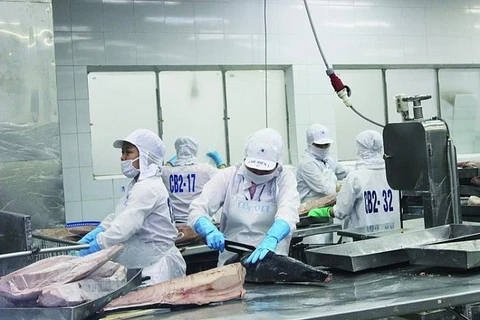
A tra fish processing line for export. (Photo: VNA)
 Hanoi (VNS/VNA) - Diversifying products and adapting quickly to market fluctuations will help create growth momentum and remove difficulties for seafood exports, experts have said.
Since the beginning of the year, exports of the two main seafood products of Vietnam, tra (pangasius) fish and shrimps have declined sharply.
Tra fish exports, in particular, were severely impacted by the COVID-19 pandemic, which had a negative impact on domestic production, pushing the tra fish price in the Mekong Delta region down.
According to Vietnam Association of Seafood Exporters and Producers (VASEP), tra fish import demand in China, which accounts for 22.5 percent of Vietnam's total export value, has recovered. However, other markets are still being affected by the pandemic.
VASEP said tra fish exports to big markets would be unlikely to rise to positive growth rates compared to the same period last year till at least the end of the second quarter.
This means fish farmers and businesses need to continue to balance farming, production and processing.
The association forecast that China, the US and EU would still be major export markets for tra fish in the next five years, accounting for 65 percent of the country’s total export value.
Truong Dinh Hoe, VASEP’s general secretary said the quality and requirements of food safety exported into these markets are increasingly strict. However, Vietnamese tra fish have met all market requirements, such as recognition from the US Department of Agriculture (USDA).
In addition, the US Department of Commerce (DOC) lowered anti-dumping duties on frozen tra fish fillets from Vietnam in the 15th period of review (POR15).
The move was the DOC’s preliminary conclusion after investigating tra fish exported by certain Vietnamese firms from August 1, 2017, through July 31, 2018.
In addition, most big Vietnamese tra fish exporters such as Vinh Hoan Joint Stock Company and Bien Dong Seafood Company Ltd have continued to enjoy zero tax. This has been a positive for local tra and basa exporters in a difficult situation due to the pandemic.
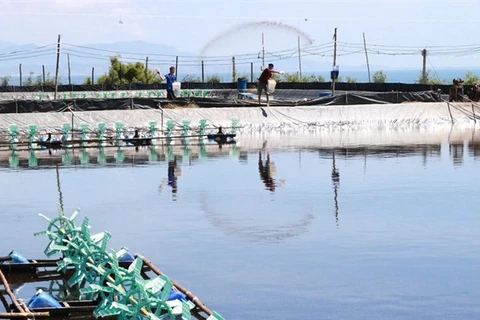
In the first quarter of this year, shrimp exports saw relatively high growth. In April, there was a sharp decrease due to COVID-19, but there are still opportunities for Vietnam’s shrimp and other seafood products to take advantage of post-pandemic.
Many seafood products are expected to have higher growth in the EU when the EU-Vietnam Free Trade Agreement (EVFTA) is expected to take effect in the middle of the year as most shrimp materials would be reduced to from 12-20 percent to zero tax. Imported tax for processed shrimp will also be lowered to zero after seven years. Meanwhile, tra fish will enjoy an import tax of zero after three years.
The US, the second biggest importer of Vietnamese shrimp, is expected to have high demand. VASEP recommends local businesses focus on processed products with high added value as well as changing packaging process to suit the retail segment.
In addition, if the COVID-19 pandemic is basically resolved by the end of the second quarter and the world market re-opens, Vietnamese shrimp can take advantage of opportunities. Shrimp exports tend to be better when import and consumption demand increase, making export prices recover. VASEP forecasts that shrimp export value could recover and even increase by 3-4 percent compared to 2019, reaching 3.45-3.5 billion USD.
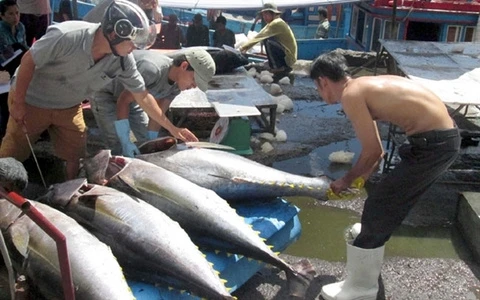
For seafood products, the 35 percent reduction in oil prices compared to the end of 2019 has led fishermen to ramp up their activities. However, some seafood products, especially tuna, are still in short supply due to difficulties in importing raw materials due to the COVID-19 outbreak. Many businesses still receive orders for canned tuna but lack the raw materials for export processing.
VASEP predicted that seafood demand in China, the Republic of Korea and Japan would be reduced while the canned segment would increase. Firms should focus on canned seafood products with suitable prices to meet increasing demand from markets affected by the pandemic, the body said.
However, due to the impact of social distancing and the shortage of domestic raw materials, it will be difficult for seafood enterprises to increase exports in the second and third quarters this year.
Tran Dinh Luan, General Director of the General Department of Fisheries, said the industry would work with localities to improve breeds’ quality by intensifying inspection on conditions and granting certificates for establishments producing aquatic breeds. It will also supervise to ensure food safety and build an electronic traceability system for production, processing and export chains.
The Ministry of Agriculture and Rural Development (MARD) recommended seafood processors continue to diversify frozen products and increase exports to markets which are being affected by COVID-19.
MARD’s Deputy Minister Phung Duc Tien said they had asked management agencies and associations to have plans to meet with increasing demand post-pandemic./.
VNA