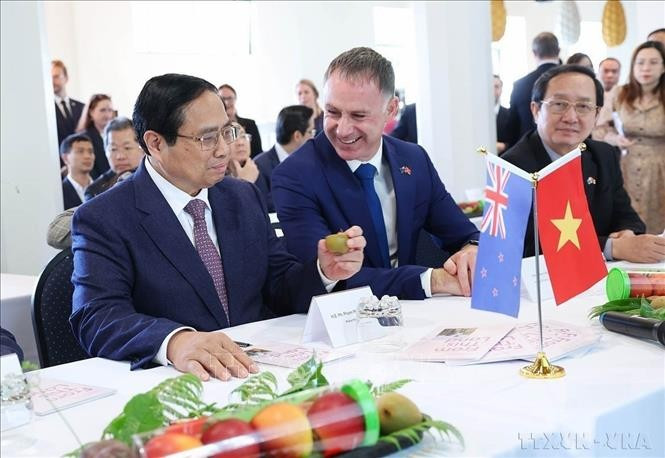
Sydney (VNA) – The Vietnam - New Zealand relationship is grounded in over 50 years of personal and institutional connections, bolstered by common values and growing multilateral cooperation, according to Suzannah Jessep, Executive Director of the Asia New Zealand Foundation.
Speaking to the Vietnam News Agency (VNA)’s correspondent in Oceania, Jessep highlighted that the bilateral relationship has its roots in early engagements through family connections, medical professionals and Colombo Plan scholars—paving the way for enduring goodwill between the two nations. Vietnam joined the Colombo Plan in 2003.
Today, Jessep noted, these connections are strengthened through educational exchanges, capacity-building programmes, short-term work opportunities, and professional networks that foster mutual understanding and respect. The fact that around 40,000 New Zealanders visited Vietnam in 2024 alone reflects the growing interest in the Southeast Asian nation.

According to Jessep, shared values and multilateral cooperation have also significantly advanced the bilateral partnership. “Both Vietnam and New Zealand are active participants in regional and global institutions. We share a strong commitment to international law, an open and rules-based trading system, and regional peace and stability,” she said. These shared values, she added, have helped shape collaboration and build strategic trust.
The Asia New Zealand Foundation has maintained a long-standing and close partnership with the Diplomatic Academy of Vietnam, which, Jessep described as “one of our most valued partnerships,” allowing both sides to exchange perspectives and learn from each other’s experiences.
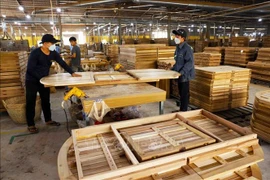
Trade is another key driver in the relationship, supported by natural economic complementarities. New Zealand exports high-quality dairy, fruit, timber and processed foods, while Vietnam supplies electronics, machinery, footwear and textiles. “This provides a strong foundation for continued trade growth and mutual benefit – especially at a time of deep disruption to the international trading system,” Jessep said.
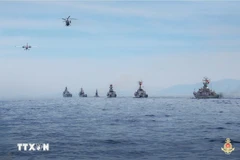
She also pointed to growing cooperation in areas such as defence and maritime security. The 2023 port calls by New Zealand Navy vessels HMNZS Te Mana and HMNZS Aotearoa demonstrated a shared interest in upholding regional stability and a rules-based maritime order.
Looking to the future, Jessep expects several dynamics will shape the next phase of cooperation. Vietnam’s economic dynamism and regional leadership, coupled with New Zealand’s strategic priority of deepening engagement in Asia, are key factors. She also highlighted emerging areas for future collaboration such as green technology, agricultural technology and green energy for climate resilience.
For 28 years, the Asia New Zealand Foundation has been tracking New Zealanders’ perceptions of Asia. That research shows that over two-thirds of New Zealanders now see Vietnam as important to New Zealand's future, and half view Vietnam as a friend of New Zealand - an increase of 8 percentage points between November 2023 and 2024 alone. Despite these increasingly positive feelings, there is still a lot of potential to scale up our engagement, according to the Executive Director.
Despite the progress, Jessep acknowledged some practical challenges remain. “The long distance and limited direct flights can make travel more expensive for business and tourism. Visa processing could be streamlined more. There is still more work to be done for familiarising sector leaders with each other’s market conditions and rules to build confidence," she said.
In terms of solutions, Jessep believes that deepening practical connections and knowledge sharing among post-graduate students, scientists, businesspeople, and government officials will be the key. “More people-to-people exchange programmes, including professional development and industry-specific partnerships, will help us build greater familiarity,” she suggested.
On a broader scale, she expressed optimism about the potential for expanded cooperation both bilaterally and in multilateral forums. Fields such as digital technology, high-tech agriculture, climate action and the blue economy offer significant opportunities. She also praised the Vietnamese community in New Zealand, particularly those in tech and business, for serving as a cultural and commercial bridge.
Programmes such as the Asia New Zealand Foundation’s Young Business Leaders Initiative, backed by the New Zealand Ministry of Foreign Affairs and Trade, help connect young entrepreneurs from both countries and develop a group of innovators with shared values and professional networks.
Jessep underlined that both internal and external factors will shape the relationship in the years ahead.
Domestically, she stressed the importance of continued government support and active engagement from the private sector and civil society. Externally, regional stability and the two countries’ relations with major powers will also influence the depth and pace of cooperation.
“Vietnam and New Zealand have a lot to learn from each other. It is a challenging time for small and middle-sized powers, and the more we’re able to share experiences, support each other and collaborate, the better,” she said.
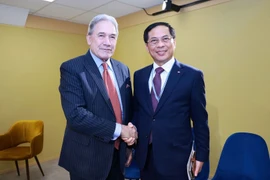
On the recent upgrade of ties to a Comprehensive Strategic Partnership, Jessep noted that the new framework reflects deep mutual trust, shared values and long-term commitment. “It provides a structured framework for our two countries to expand cooperation across key areas such as trade, security, innovation, and people-to-people links, and to resolve issues and develop solutions faster,” she explained.
For businesses, the upgraded relationship signals long-term government backing, which can encourage larger investments and partnerships. For New Zealand exporters, it also creates opportunities to boost market engagement through clearer government support and enhanced diplomatic facilitation, she added./.