Hanoi (VNA) - The updated report released on December 9, 2025 by the US Commission on International Religious Freedom (USCIRF) once again presents a biased assessment of religious freedom in Vietnam, reflecting a continued tendency to politicise an issue that should instead be approached through dialogue, mutual respect, and understanding.
In its December 9 update, USCIRF continues to paint a negative picture of Vietnam’s religious freedom situation, accompanied by familiar recommendations that Vietnam be placed on the “Country of Particular Concern” (CPC) list and subjected to pressure measures.
It is not difficult to recognise the report’s outdated tone, built on unsubstantiated arguments, entrenched prejudice, and imposed interpretations regarding the freedom of religion in Vietnam. This is also not the first time the organisation’s conclusions have exposed clear shortcomings in objectivity and methodology, raising questions about political motivations behind what is presented as a human rights assessment.
What is most evident lies in the way USCIRF approaches and interprets the concept of “religious freedom.” The report is based on a Western-centric notion of “religious freedom,” shaped by the specific historical and political context of the United States, and then applies it as a universal benchmark to judge other countries with entirely different historical, cultural, ethnic, and social conditions. Under this logic, almost any form of state management of religious activities is at risk of being labeled “repression,” regardless of the actual purpose or context of such measures.
Such an approach overlooks a fundamental reality: religious freedom does not exist in isolation from social life. It is always associated with the legal order, community security, and the lawful rights and interests of other stakeholders in society. No multi-religious, multiethnic nation can operate stably without a legal framework governing religious and belief-related activities. Even under international law, freedom of religion or belief is not an absolute right. Article 29 of the 1948 Universal Declaration of Human Rights clearly stipulates that the exercise of rights and freedoms is subject to limitations prescribed by law to ensure public order, social morality, and the rights of others.
In practice, requiring religious organisations to register their activities, ensure transparency in personnel, places of worship, and financial resources is a common practice in many countries, including those often cited by USCIRF as models of religious freedom. In the US itself, religious organisations must register with the Internal Revenue Service (IRS) to receive tax exemptions, comply with financial reporting obligations, and refrain from engaging in partisan political activities. Many states also impose specific licensing requirements and safety standards, including fire prevention and control, for places of worship. Such regulatory measures are, of course, not considered “religious repression” but are widely recognised as part of the normal functioning of a rule-of-law state.
In Vietnam, respecting the people’s freedom of belief and religion has been a consistent and long-standing policy of the Party and State, affirmed from the 1946 Constitution to the 2013 Constitution. This right is guaranteed on a constitutional basis, while being placed within a legal framework to ensure harmony between individual freedom and the common interests of society. USCIRF’s interpretation of this management mechanism as evidence of “restricted freedom” reflects a one-sided perspective that fails to situate the issue in Vietnam’s broader historical, social, and practical context.
Another systemic shortcoming of the USCIRF report is its tendency to conflate the handling of law violations with “religious repression.” In many of the cited cases, individuals are held accountable not for their religious beliefs, but for specific actions such as exploiting religion to incite division, oppose the authorities, disrupt public order, or infringe upon the interests of the State and society. However, this context is often omitted or downplayed, leading to these incidents being collectively labeled as cases of “religious prisoners.”
The case of 17-year-old Ho Trong Phuc, cited by USCIRF as a typical example, clearly illustrates this conceptual distortion. The report emphasises only the religious element while failing to mention that this individual repeatedly posted and disseminated distorted, slanderous content, incited hostility, infringed upon the interests of the State, and negatively affected social order. Isolating these violations from their specific context and labeling them as “religious repression” fundamentally misrepresents the nature of the case.
Methodologically, the USCIRF report also shows heavy reliance on secondary sources, including advocacy groups, and exile groups and individuals with views opposed to the Vietnamese State. These sources are rarely cross-checked against official data, independent assessments, or comprehensive field studies. Meanwhile, the report largely ignores the broader, more objective picture of religious life in Vietnam.
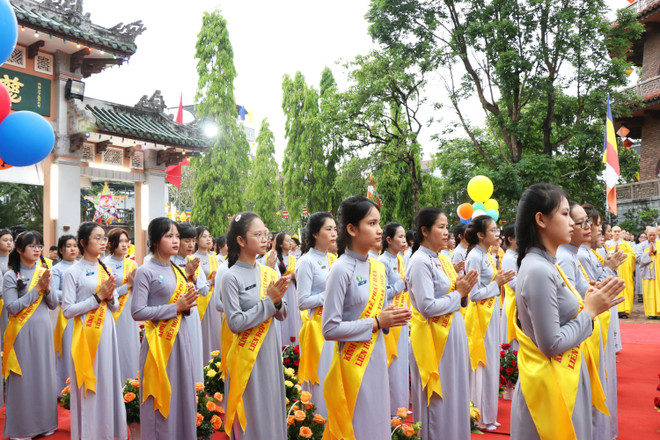
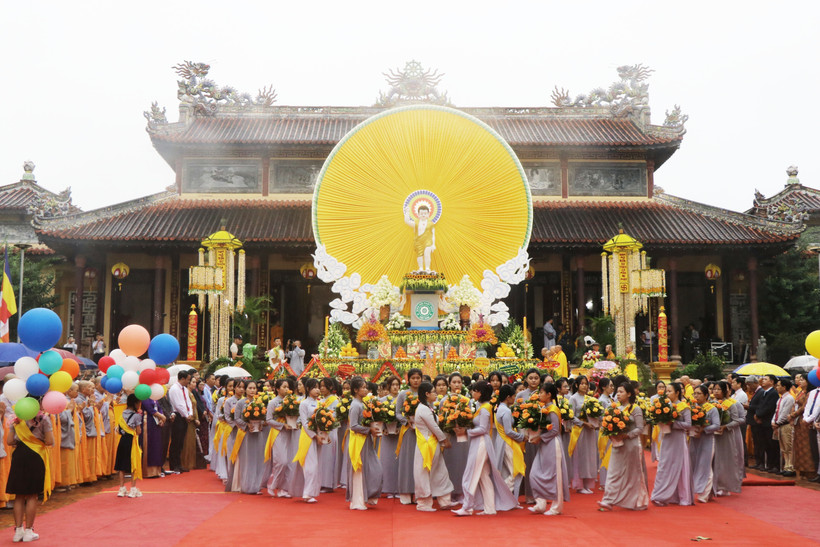
As of mid-2025, Vietnam had recognised 43 religious organisations representing 16 different religions, with approximately 27.7–28 million followers - nearly 28% of the population - more than 53,000 dignitaries, and around 29,600 places of worship. Every year, the country hosts over 8,000 religious and belief-related festivals with widespread participation of followers. Religions in Vietnam coexist peacefully and inclusively, upholding the principle of living a good life and following good faith, observing both religious teachings and the law, and actively contributing to society in the spirit of national unity and national development. This vibrant and convincing reality of religious freedom in Vietnam, however, is largely absent from the USCIRF report.
It is also necessary to place USCIRF’s reports in a broader political context. Although it is not a US government agency, it advises the US Congress, Secretary of State, and President on foreign policy related to democracy, human rights, and religious freedom. In reality, its reports are often used as a basis to exert political pressure, impose standards, and even justify sanctions. USCIRF’s unilateral recommendation to place Vietnam on the CPC list reflects a prejudiced and prescriptive mindset, especially at a time when Vietnam–US relations have been elevated to a Comprehensive Strategic Partnership, with increasingly extensive cooperation across many fields.
Vietnam does not deny that state management of religious affairs is a complex field that requires continued policy and legal improvement. In fact, over the years, the Party and State have consistently worked to better the legal framework and management model related to belief and religion. Provisions in the Constitution, the 2016 Law on Belief and Religion, and Decree No. 95/ND-CP of 2023 have helped ensure citizens’ freedom of belief and religion, while simplifying administrative procedures and creating a fair and transparent environment for legally recognised religious organisations to operate.
An objective and comprehensive assessment of religious freedom in Vietnam can only be achieved within a framework of equal dialogue and mutual respect, rather than through political labeling or coercive, imposed mechanisms. A serious dialogue can only begin when all parties are willing to set aside prejudice, listen to multifaceted realities, and respect each country’s sovereign right to determine its own policies. Once removed from its specific context and politicised, the concept of “religious freedom” can easily be turned into an instrument of pressure, instead of serving as a foundation for understanding, trust, and cooperation.
Clearly, USCIRF’s updated report on Vietnam, both in terms of content and approach, still reveals significant limitations in objectivity, reflecting a biased and prescriptive perspective. Only when assessments are based on multi-dimensional listening, comprehensive data comparison, and respect for Vietnam’s sovereign right to formulate and implement its religious policies, can dialogue on freedom of belief and religion become substantive, helping to build trust and promote healthy, genuine cooperation in Vietnam–US relations, in line with international legal standards to which both countries are committed./.

📝OP-ED: Behind “religious freedom” rhetoric
In reality, behind claims made in the name of “human rights” lies a long-standing set of tactics aimed not at protecting freedom of belief or religion, but at undermining social stability, sowing divisions within the great national solidarity bloc, and smearingVietnam’s international image.