Singapore says it welcomes Vietnamese tourists

Vietnamese tourists are welcomed in Singapore , as confirmed by the Singapore Tourism Board (STB) in a letter recently sent to the Vietnam National Administration of Tourism.
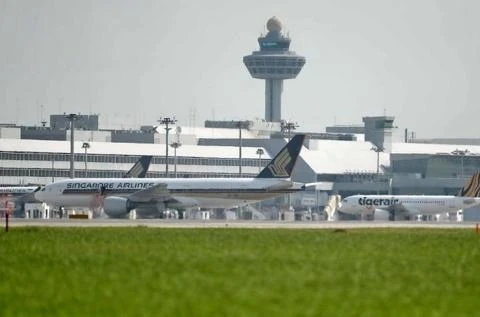
Singapore says it welcomes Vietnamese tourists ảnh 1Tourists at Changi airport (Source: AsiaOne)

Vietnamese tourists are welcomed in Singapore , as confirmed by the Singapore Tourism Board (STB) in a letter recently sent to the Vietnam National Administration of Tourism. 

The STB said some Vietnamese tourists were denied entry to Singapore because they failed to present a valid passport. The guests were then transferred to the inspection part to check additional information and interviews, it added.

Staff from the Singapore’s Immigration & Checkpoints Authority (ICA) at border gates will assess the information and decide whether to grant entry, according to the STB.

On July 24, 2015, the ICA met with representatives from the Vietnamese Embassy in Singapore to explain why some Vietnamese tourists met entry difficulties.

The agency confirmed that Singapore always welcomes foreign tourists and facilitates their traveling, adding that the security inspection procedure is conducted in a professional and equal manner, without gender or nationality discrimination.

According to the STB, the two countries have seen progresses in tourism cooperation, with a steady growth in the number of Vietnamese tourists to Singapore.

Last year, Singapore welcomed over 420,000 visitors from Vietnam .

In the coming time, the STB representative office in Ho Chi Minh City will actively participate in tourism exchanges between the two nations and ensure Singapore welcomes Vietnamese vacationers.-VNA
VNA

See more

Assoc. Prof. Dr. Nguyen Duc Son presents the decision establishing the Vietnamese Language Proficiency Test Council in Japan to a representative of the Vietnam Studies Centre in Japan. (Photo: VNA)

Japan hosts first standardised Vietnamese language proficiency test

As bilateral ties between Vietnam and Japan continue to expand, demand for Vietnamese language learning in Japan has also grown rapidly among OVs, educational institutions, businesses and Japanese people interested in Vietnam. Against this backdrop, the introduction of a standardised proficiency test is expected to provide an official and widely recognised benchmark for Vietnamese language skills.

The “I Love My Fatherland" Journey 2026 kicks off in Nghe An province on May 16. (Photo: VNA)

"I Love My Fatherland” journey features diverse activities

The “I Love My Fatherland” journey will span seven stages across historical and cultural sites and “red addresses” nationwide. There will be a combination of education on traditions, field-based programmes, and digital communications.

At the handover of 33 Chinese nationals who had violated Vietnamese law to Chinese authorities in Quang Ninh on May 15, 2026. (Photo: VNA)

Vietnam hands over 33 law violators to China

Investigations found that the individuals had violated Vietnamese laws relating to illegal entry and unlawful residence in Vietnam. The handover was conducted safely and in compliance with Vietnamese law and international practice.

At the talks between authorities of the northern province of Lang Son and Pingxiang city in the Guangxi Zhuang Autonomous Region of China (Photo: VNA)

Vietnam, China seek to build modern, smart border gates

Authorities of the northern province of Lang Son and Pingxiang city in the Guangxi Zhuang Autonomous Region of China held talks on May 15 at Tan Thanh (Vietnam) – Po Chai (China) clearance point near markers 1090–1091 in Hoang Van Thu commune of Lang Son to promote trade, develop smart border gates and expand cross-border tourism cooperation.

The Vietnam Association for Victims of Agent Orange (VAVA) has carried out various activities to support Agent Orange/dioxin victims. (Photo: VNA)

Over 9.3 billion VND raised for AO/dioxin victims in 2025

VAVA President Lieutenant General Nguyen Huu Chinh said that although the war ended more than 50 years ago, the consequences of toxic chemicals remain severe and long-lasting, with millions of people affected during the war and hundreds of thousands continuing to suffer serious physical impacts in peacetime.