Some 3,500 people register to donate organs

Up to 3,542 people nationwide have registered to donate their organs and tissue after they die as by December 31, 2015, according to the National Centre for Coordinating Human Organ Transplants.
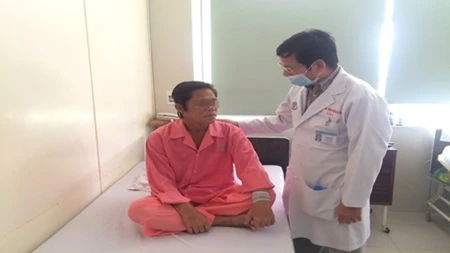
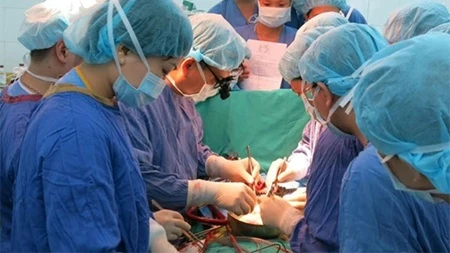
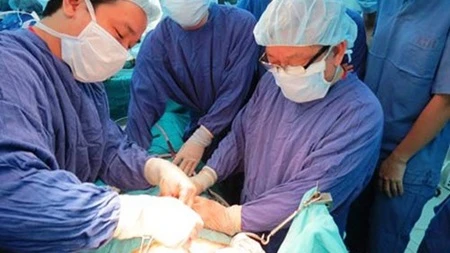
Some 3,500 people register to donate organs ảnh 1Illustration photo. (Photo: VNA)

Hanoi (VNA) – Up to 3,542 people nationwide have registered to donate their organs and tissue after they die as by December 31, 2015, according to the National Centre for Coordinating Human Organ Transplants.

The Centre’s Director, Professor Trinh Hong Son, revealed the figure at a symposium on how to promote the coordination in organ transplants held in Hanoi on January 12, reported the Sai Gon Giai Phong (Saigon Liberty) newspaper.

Of the figure, 2,348 people have registered directly at the centre and the remainders were recorded at Cho Ray hospital in Ho Chi Minh City .

About 76 percent of the registered people are aged between 18 and 27 and males account for nearly 58 percent of the total.

Professor Son reported that 16 hospitals nationwide have been qualified to perform complicated organ and tissue transplantation.

Vietnamese doctors have successfully performed 1,116 kidney transplants, 48 liver transplants, and 13 heart cases so far, he added.

However, the demand for organ transplant is still huge while the organ source is scarce.

Statistics in the last five years showed that 4,000-5,000 people needed kidney transplants while the number of people waiting for liver and cornea transplants were 6,000 and 2,000, respectively.

Vietnam is seeking volunteers, techniques and medical teams to set up a plan on head transplant, Son revealed at the conference.-VNA
VNA

See more

Member of the Party Central Committee and Minister of Health Dao Hong Lan (Photo: VNA)

Health minister highlights comprehensive, people-centred healthcare orientation

Member of the Party Central Committee and Minister of Health Dao Hong Lan said the Politburo's Resolution No. 72 provides a breakthrough orientation for the protection, care and improvement of the people’s health. It places the people’s health at the centre of all healthcare policies and services, while aiming to address long-standing bottlenecks in the health sector that have yet to be fundamentally resolved.

Elderly people do morning exercises in the Hoan Kiem Lake area in Hanoi. (Photo: VNA)

Strategic roadmap for healthier future

As Vietnam’s population ages rapidly, Dr Angela Pratt, WHO Representative in Vietnam, identified two strategic priorities: strengthening primary healthcare and developing a formal long-term care system. These measures are essential not only for healthy ageing, but also as long-term investments with wide-ranging socio-economic returns.

Professor Dr Tran Van Thuan, Deputy Minister of Health. (File photo: VNA)

More than 300 medical staff assigned to serve 14th National Party Congress

Deputy Minister of Health Tran Van Thuan called on experts and healthcare workers to uphold a strong sense of responsibility, professionalism and expertise to ensure that medical services for the 14th National Party Congress are delivered safely, effectively and with the highest level of care.

Health check-up offered to citizens in Gia Lai province. (Photo: VNA)

Health ministry maps out three phases for hospital fee exemption

Health insurance participants from near-poor households and those aged 75 and above who are receiving social pension allowances will be entitled to 100% coverage of medical examination and treatment costs within the scope of health insurance benefits.

A patient pays hospital fees using cashless transactions (Photo: qdnd.vn)

Hanoi aims for modern healthcare system

Hanoi's health sector will continue to expand the comprehensive use of digital technology in professional practices to improve management efficiency and service quality, aiming to develop a modern, transparent, and people-centred healthcare system.

Doctors from the Vietnam Young Physicians Association provide free medical examinations and treatment for residents of the capital. (Photo: VNA)

3.37 billion USD earmarked for public health care, population quality improvement

The programme’s overarching goal is to ensure that all people receive primary healthcare management and early, preventive care delivered close to home, thereby reducing disease burden; to increase the total fertility rate and strive for a balanced sex ratio at birth; to adapt to population ageing while improving population quality; to improve care for vulnerable groups; and to contribute to improvements in physical and mental health, stature, life expectancy and overall quality of life, towards building a healthier Vietnam.

A representative of the Health Strategy and Policy Institute shares the results of a study titled “Assessment of Vietnam’s Readiness for Self-Care and Its Influence Factors”. (Photo courtesy of the organiser)

Vietnam ranks 4th in health self-care readiness

Self-care is an essential component of primary healthcare, with WHO defining it as the ability of individuals, families, and communities to promote and maintain health, prevent disease, and cope with illness with or without the support of healthcare professionals.

A proton machine in a hospital in Singapore. Proton beam therapy provides more options for cancer patients. (Photo courtesy of IHH Healthcare Singapore)

Proton therapy, an alternative method for cancer patients

In recent years, Vietnam's Ministry of Health has held numerous meetings with relevant units to assess the progress in developing proton therapy centres in the country. The project for establishing proton therapy centres is set to commence preparations in 2025 and aims for completion between 2026 and 2030.

At the event (Photo: VNA)

First hospital in Mekong Delta earns US AACI accreditation

Nam Can Tho University Hospital on December 15 hosted a ceremony to announce its accreditation by the American Accreditation Commission International (AACI), a US-based body, becoming the first facility in the Mekong Delta and among a select few in Vietnam to earn the distinction.

A health worker administer IPV polio vaccine to a child in Dong Thap province. (Photo: VNA)

Vietnam proactively takes polio prevention measures amid outbreak in Laos

The meeting took place following an assessment by the World Health Organisation (WHO) warning that Vietnam is facing a very high risk of polio import and re-emergence. The risk arises after neighbouring Laos officially declared a polio outbreak on October 7, following the detection of circulating vaccine-derived poliovirus type 1 (cVDPV1).

National health target programme prioritises the most vulnerable groups (Photo: VietnamPlus)

National target programme on health prioritises most vulnerable groups

The National Assembly on December 11 adopted a resolution on the National Target Programme on Healthcare, Population, and Development for the 2026–2035 period, marking a significant step in Vietnam’s long-term commitment to improving public health and population quality.