Southeast region prepares for new FDI wave

The southeast region is preparing necessary conditions in infrastructure, administrative procedures and human resources to welcome a new wave of foreign direct investment (FDI), as investors have flocked to the region right from the beginning of this year.
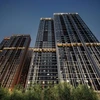
Southeast region prepares for new FDI wave ảnh 1Illustrative image (Source: VNA)
Hanoi(VNA) – The southeast region is preparing necessary conditions ininfrastructure, administrative procedures and human resources to welcome a newwave of foreign direct investment (FDI), as investors have flocked to theregion right from the beginning of this year.

The region, comprisingHo Chi Minh City and five provinces of Dong Nai, Binh Duong, Ba Ria–Vung Tau, BinhPhuoc, and Tay Ninh, has been attractive to investors. HCM City and Binh Duong werethe leading localities in FDI attraction in 2022 with 3.94 billion USD and 3.14billion USD, respectively.

Right at the beginning of2023, Binh Duong welcomed many large firms coming to explore the local investmentopportunities, including Sembcorp and CapitaLand from Singapore, Nebraska fromthe US, and Tokyu from Japan.

According to theMinistry of Planning and Investment (MPI)’s Foreign Investment Department, thesoutheast region will continue to be the major FDI magnet of the country in2023. This year, the country may lure about 36-38 billion USD in FDI.

In order to attractinvestors, over the recent years, the region has focused on developing theinfrastructure system to strengthen regional connectivity. A 76.3-km Belt RoadNo.3 crossing four localities of HCM City, Binh Duong, Dong Nai, and Long Anwill be launched in the second quarter of this year, contributing to motivatingthe region’s development.

Meanwhile, regionallocalities have broadened the national highway and expressway systems to boosttheir growth.

Commenting on thegrowth prospect of the region, Japanese Consul General in HCM City WatanabeNobuhiro said that once the Bien Hoa-Vung Tau expressway and Belt RoadsNo.3 and No.4 are put into operations, the connections among regionallocalities will be fostered, making the region even more attractive.

Alongside, the localitieshave also expanded their industrial parks (IPs) to make more spaces forinvestors.

HCM City is working ona 668-hectare Pham Van Hai IP, while Binh Duong is turning the 1,000-hectareVietnam-Singapore IP (VSIP) to a green IP and investing on a 1,000-hectare CayTruong IP as well as Rach Bap IP.

At the same time, DongNai is finalising procedures to set up eight other IPs, which are expectedto provide more than 7,000 hectares of industrial land for investors.

Ba Ria-Vung Tau isalso working on a plan to set up eight more IPs with a total area of over 8,000hectares from now to 2030.

Furthermore, thelocalities have concentrated on improving their investment environment, withthe promotion of single-window mechanism at IPs, aiming to make all proceduresinvolving businesses faster, smoother and easier.

In terms of humanresources, the localities have formed a linkage among the State, businesses andtraining facilities to ensure human resources training match businesses’demands, and create a start-up ecosystem.

With the carefulpreparations of necessary conditions, experts predicted that the region will continueto take the leading role in FDI attraction./.
VNA
See more

Chili peppers are on the list of essential goods in Indonesia (Photo: VNA)

Indonesia reduces imports of strategic food commodities

In 2026, Indonesia is expected to have approximately 12 million tonnes of rice carried over from the previous year, supported by annual production of around 34.7 million tonnes. With projected consumption of 31.1 million tonnes, national rice reserves could reach approximately 16 million tonnes by the end of the year.

Hanoi’s roadmap to implement low-emission zones from July is providing a strong boost to the electric two-wheeler market (Photo: VNA)

Low-emission zone roadmap drives electric two-wheeler boom in Hanoi

From July 1, Hanoi will introduce time-based or area-based restrictions on petrol-powered motorcycles within Ring Road 1, with plans to expand coverage across the entire zone by 2028 and extend to areas within Ring Road 3 by 2030. The policy is expected to reshape travel habits for millions of urban residents.

Delegates at the opening ceremony of the Made in Da Nang Expo 2026 (Photo: VNA)

Nearly 300 firms join Made in Da Nang Expo 2026

Speaking at the opening ceremony, Vice Chairman of the Da Nang People’s Committee Tran Chi Cuong said the exhibition is a large-scale trade promotion event aimed at showcasing products, connecting markets, and helping businesses enhance competitiveness while expanding domestic and export markets.

 Green production, standardised value chains key to fruit, vegetable sector growth

Green production, standardised value chains key to fruit, vegetable sector growth

Facing mounting pressure from increasingly stringent domestic and international standards, Vietnam’s fruit and vegetable sector is accelerating its shift toward green, safe, and sustainable production models. Beyond changing farming practices, localities and businesses are stepping up efforts to standardise value chains and build brands to achieve growth targets for 2026.

Hiep Phuoc Industrial Park in Ho Chi Minh City. (Photo: VNA)

Southern industrial real estate enters strategic growth phase

Key industrial hubs in the south, including Ho Chi Minh City, Dong Nai and Tay Ninh, are transitioning from a period driven largely by supply expansion and rising land prices to a more refined growth model. This new phase is shaped by infrastructure upgrades, supply chain restructuring, product improvement and greater emphasis on operational performance.