Southern region takes lead in attracting FDI

The southern region has received 1.7 billion USD worth of foreign direct investment (FDI) in the first quarter of 2016, according to the Ministry of Planning and Investment’s Foreign Investment Agency
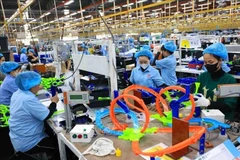
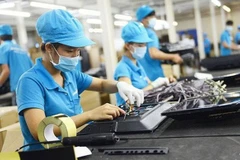
Southern region takes lead in attracting FDI ảnh 1The electronic motor production line of the Japanese-funded Mabuchi Motor Vietnam in southern Dong Nai province's Bien Hoa 2 Industrial Zone. (Photo: VNA)

Hanoi (VNA) – The southern region has received 1.7 billion USD worth of foreign direct investment (FDI) in the first quarter of 2016, according to the Ministry of Planning and Investment’s Foreign Investment Agency.

This value accounted for 51.6 percent of the total FDI registered in the country, making the region the leading performer in terms of FDI attraction. The agency said in its recent report that the positive results were due to the region’s huge potential in developing industries such as hi-tech, IT, oil and gas, in addition to several services in banking, finance and tourism sectors.

During the three-month period, 246 new foreign-invested projects received licences while 305 existing ones were approved to raise capital in the region, which include HCM City, Ba Ria – Vung Tau, Dong Nai, and Binh Duong, in addition to Tay Ninh and Binh Phuoc.

Among large projects included 115 million USD steel mill emissions processing facility, developed by Zincox Resources PLC from the United Kingdom in Ba Ria- Vung Tau Province; a 55 million USD-garment factory, invested by Brunei’s Promax Textile Vietnam Co in Dong Nai Province’s Nhon Trach 3 Industrial Zone and a Brunei-funded furniture manufacturing project, worth 38 million USD, in Dong Nai’s Giang Dien Commune.

There were 41 countries and territories making investments in the region in the reviewed period. Of them, Japan ranked first with 309.3 million USD or equivalent to 18.1 percent of the region’s total FDI. The Republic of Korea and Brunei came second and third with about 270 million USD, or 15.7 percent, and 148.2 million USD, or 8.6 percent, respectively.

Among six localities, Dong Nai attracted the lion’s share of FDI with 585.4 million USD, making up 34.2 percent of the region’s total FDI. It was followed by Binh Duong with 376 million USD, or 22 percent, and HCM City with 354.2 million USD, or 20.7 percent.

From January to March, the manufacturing and processing sector was the most attractive sector to foreign investors as it absorbed 1.29 billion USD, totalling 76 percent of FDI pledged in the region. Water supply and waste treatment ranked second with 115 million USD while wholesale and retail came third with 105.7 million USD.-VNA

VNA

See more

Wind turbines stand fully installed at a wind power project in Gia Lai province. (Photo: VNA)

Gia Lai approves 56-million-USD wind power project

The 42MW wind farm is expected to generate about 123,780.8 MWh of electricity each year. Power generated will be transmitted to the national grid via the 220kV Pleiku 2–Krong Buk transmission line.

Garments for export to the Japanese market are produced at Hung Viet Garment Company in Hung Yen province. (Photo: VNA)

Vietnam’s garment sector pivots towards value-added growth

Future growth can no longer rely on expanding production capacity alone. Meeting this year's 48 billion USD export target will require greater productivity, higher value addition, stronger domestic sourcing, broader market diversification, and faster digital and green transformation.

Trucks carrying goods wait for customs clearance at the Thanh Thuy International Border Gate in Tuyen Quang province. (Photo: VNA)

Border economy strengthens Tuyen Quang’s growth momentum

While the stronger performance provides momentum for the province's 2026 growth target of 10.17%, officials say the focus must now shift from increasing cargo volumes to expanding services, reducing costs and retaining more value locally.

Construction of several key components of Long Thanh International Airport is entering its final stages. (Photo: VNA)

Major works at Long Thanh International Airport gather pace towards completion

The ACV said on July 20 that contractors are deploying additional workers and equipment to speed up construction under Component Project 3, which covers the airport's essential aviation infrastructure. Major facilities, including the first and second runways, taxiways, aircraft aprons, the passenger terminal apron and the aircraft fuel supply system, are approaching completion.

The VinFast Evo electric motorcycle on display at the event. (Photo courtesy of VinFast)

VinFast marks new step in expansion strategy in Southeast Asia

The Evo is priced at 17.5 million IDR (about 973.90 USD) in Jakarta and is available in four colour options: black, red, white and olive green. The Feliz II is sold for 18.5 million IDR, while the Viper is priced at 22 million IDR. All prices include a battery subscription package.

Passengers check in at Hanoi's Noi Bai International Airport. (Photo: VNA)

Vietnam records 15.4% growth in international air passengers

CAAV statistics show that international passenger throughput reached 26.2 million as of June 15, 2026. Of the total, Vietnamese airlines transported 9.6 million international passengers, a slight increase of 0.2% year-on-year, accounting for 36.6% of the total international passenger market.

Vietnam, RoK expand supply chain, manufacturing cooperation

Vietnam, RoK expand supply chain, manufacturing cooperation

Beyond sourcing products, RoK companies aim to build long-term partnerships with Vietnamese firms through product showcases, business-to-business (B2B) matchmaking, investment opportunities and sustainable supply chain development.

Ho Chi Minh City, GTEL partner on technology transfer for metro network

Ho Chi Minh City, GTEL partner on technology transfer for metro network

The two sides will study and localise key technologies covering signalling, communications, power supply, electromechanical systems (E&M), SCADA, operations control centres (OCC), automatic fare collection (AFC) and platform screen doors (PSD), while advancing technology transfer, workforce development and the capabilities of domestic enterprises.