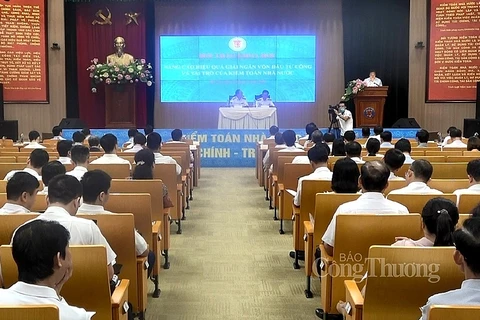
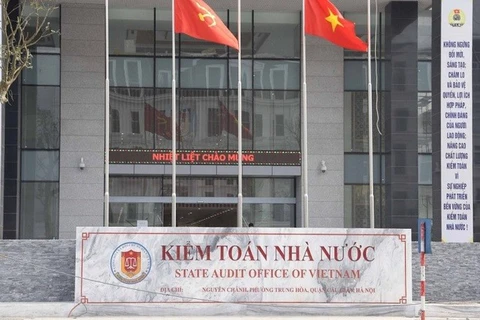
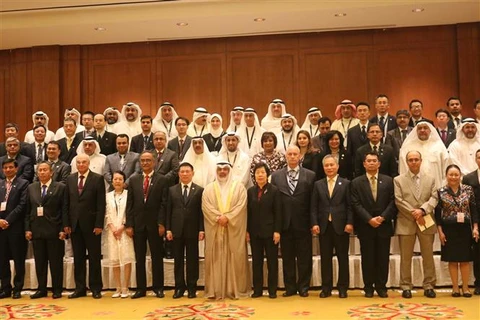
Illustrative image (Photo: SAV)
 Hanoi (VNA) - The initial results of the application of technology in audit activities not only improved audit efficiency but also set further requirements for innovation in auditing in the digital era. To make technology more widespread in the field, the State Audit Office of Vietnam (SAV) must continue to study the matter and act accordingly.
The application of remote sensing technology in the auditing of mineral resource exploitation activities in Thuy Nguyen district, northern Hai Phong city, proved to be entirely feasible. “For successful application, it is necessary to conduct detailed studies, from selecting suitable technologies to building processes and procedures and perfecting the legal framework for each subject and audit,” said Duong Quang Chinh, Chief inspector of the SAV.
A workforce with professional and technological expertise is needed in order to effectively apply new software in audit activities, together with greater cooperation with experts to develop IT applications. To turn new technologies into effective audit tools, the SAV is speeding up training and engaging technological-capable auditors. Further attention is being given to developing software to support auditors and investments made in specialised technological equipment.
Experience has shown that effectively adopting new technologies and turning them into important audit tools is very much needed. To lay the foundation for the SAV’s technological activities in line with orientations to build e-Government and develop a digital society and economy, the State Auditor General has approved a comprehensive IT and development strategy for the SAV in the 2019-2025 period with a vision to 2030. The strategy also sets a roadmap for switching traditional audits to digital audits based on big data, artificial intelligence (AI), and the Internet of Things (IoT) via digitalisation and incorporating data relating to audit activities, using digital technology, particularly AI, to analyse and use data.
Notably, the draft SAV development strategy for the 2020-2030 period with a vision to 2035 also sets out four basic contents, including developing the SAV amid Industry 4.0 and considering the application of IT in its activities a regular and ongoing task in both the near and long terms.
The SAV’s orientation in technological application, especially in audit activities, is reflected in its development strategies and guiding documents, proving its determination in integration efforts, actively seizing opportunities, fully tapping advantages, and mitigating any negative impact from Industry 4.0.
IT application in audit activities also reflects the SAV’s pioneering role in its capacity as the Chair of the Asian Organisation of Supreme Audit Institutions (ASOSAI) for the 2018-2021 tenure. Apart from directing ASOSAI’s activities, the SAV has gradually affirmed its position with international audit organisations and ASOSAI members regarding reform via specific commitments and actions.
One goal set for the 2026-2030 period is to conduct regular annual audits of budget balances at ministries, centrally-run agencies, provinces, and centrally-run cities. Audits of operations, specialised audits, information technology audits, and audits of the environment will be promoted, with these to account for 30-40 percent of all audits each year. Attention will be also paid to detecting loopholes in mechanisms, policies, and laws.
The SAV will work to move from conventional auditing procedures to digital auditing based on big data, with the support of AI in a proactive manner, and improve auditing capacity to meet the requirements of the Government’s management of administration work and supervision work by the National Assembly and People’s Councils.
Regarding international cooperation, professional integration will be the key pillar, towards the goal of quickly narrowing the gap in professional capacity between the SAV and counterparts in the region and the world. Multilateral cooperation will be geared towards raising the SAV’s position in the international community through joining in the implementation and drafting of common auditing standards and rules. Meanwhile, bilateral cooperation will focus on the sharing of experience and technology to enhance the SAV’s capacity. The SAV will organise a various coordinated audits, send or receive auditors for training, and conduct cross-assessments with regional and global supreme audit agencies./.
The application of remote sensing technology in the auditing of mineral resource exploitation activities in Thuy Nguyen district, northern Hai Phong city, proved to be entirely feasible. “For successful application, it is necessary to conduct detailed studies, from selecting suitable technologies to building processes and procedures and perfecting the legal framework for each subject and audit,” said Duong Quang Chinh, Chief inspector of the SAV.
A workforce with professional and technological expertise is needed in order to effectively apply new software in audit activities, together with greater cooperation with experts to develop IT applications. To turn new technologies into effective audit tools, the SAV is speeding up training and engaging technological-capable auditors. Further attention is being given to developing software to support auditors and investments made in specialised technological equipment.
Experience has shown that effectively adopting new technologies and turning them into important audit tools is very much needed. To lay the foundation for the SAV’s technological activities in line with orientations to build e-Government and develop a digital society and economy, the State Auditor General has approved a comprehensive IT and development strategy for the SAV in the 2019-2025 period with a vision to 2030. The strategy also sets a roadmap for switching traditional audits to digital audits based on big data, artificial intelligence (AI), and the Internet of Things (IoT) via digitalisation and incorporating data relating to audit activities, using digital technology, particularly AI, to analyse and use data.
Notably, the draft SAV development strategy for the 2020-2030 period with a vision to 2035 also sets out four basic contents, including developing the SAV amid Industry 4.0 and considering the application of IT in its activities a regular and ongoing task in both the near and long terms.
The SAV’s orientation in technological application, especially in audit activities, is reflected in its development strategies and guiding documents, proving its determination in integration efforts, actively seizing opportunities, fully tapping advantages, and mitigating any negative impact from Industry 4.0.
IT application in audit activities also reflects the SAV’s pioneering role in its capacity as the Chair of the Asian Organisation of Supreme Audit Institutions (ASOSAI) for the 2018-2021 tenure. Apart from directing ASOSAI’s activities, the SAV has gradually affirmed its position with international audit organisations and ASOSAI members regarding reform via specific commitments and actions.
One goal set for the 2026-2030 period is to conduct regular annual audits of budget balances at ministries, centrally-run agencies, provinces, and centrally-run cities. Audits of operations, specialised audits, information technology audits, and audits of the environment will be promoted, with these to account for 30-40 percent of all audits each year. Attention will be also paid to detecting loopholes in mechanisms, policies, and laws.
The SAV will work to move from conventional auditing procedures to digital auditing based on big data, with the support of AI in a proactive manner, and improve auditing capacity to meet the requirements of the Government’s management of administration work and supervision work by the National Assembly and People’s Councils.
Regarding international cooperation, professional integration will be the key pillar, towards the goal of quickly narrowing the gap in professional capacity between the SAV and counterparts in the region and the world. Multilateral cooperation will be geared towards raising the SAV’s position in the international community through joining in the implementation and drafting of common auditing standards and rules. Meanwhile, bilateral cooperation will focus on the sharing of experience and technology to enhance the SAV’s capacity. The SAV will organise a various coordinated audits, send or receive auditors for training, and conduct cross-assessments with regional and global supreme audit agencies./.
VNA