Stock Exchange of Thailand works to restore investors’ confidence

Bangkok (VNA) - The Stock Exchange of Thailand (SET) has announced a strategy to restore investors’ confidence in the country’s stock market with a focus on boosting credibility, increasing market capability and promoting sustainability.

The English-language daily online newspaper The Nation reported that the announcement was made during the annual event “Thailand Focus 2024: Adapting to a Changing World” held in Bangkok on on August 28, which saw the participation of executives from more than 100 leading companies and 178 institutional investors.

Speaking at the forum titled “Revitalising Capital Markets: Boosting Efficiency and Restoring Confidence”, SET chairman Kitipong Urapeepatanapong said the Thai capital market has repeatedly proved its capability and flexibility to survive crises, including global financial problems, political instability and the COVID-19 pandemic.

He expressed confidence that the Thai stock market will keep improving in the next 2-3 years and attract more investors thanks to fewer domestic uncertainties.

Moving forward, SET would focus on a three-point strategy, including boosting credibility and investors’ confidence through cooperation and information sharing with related agencies to ensure efficient regulations of the stock markets as well as increasing the capability of the Thai capital market to further attract both domestic and foreign investors. It will also promote sustainable practices among listed companies through the provision of Thai ESG funds, which offer tax benefits for companies demonstrating a high level of environmental, social, and governance efforts.

Through this strategy, SET intends to increase the number of listed companies that report their greenhouse gas emissions, which currently stands at 445 or 50% of all the listed companies. A 6.1% reduction in greenhouse gas emissions has so far been reported./.

VNA

See more

Thailand diversifies oil sources to ensure energy security

Thailand diversifies oil sources to ensure energy security

Although the diversification of oil import sources has helped reduce the risk of domestic oil shortage, it has not immediately reduced energy costs because import prices depend on market mechanisms, transportation costs, foreign exchange rates and the terms of oil contracts.

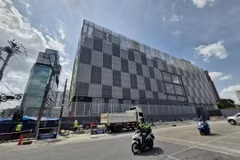
ST Telemedia Global Data Centres (Thailand), an affiliate of Singapore Telecom, is developing three data cehtres in Thailand including this facility on Rama IX Road in Bangkok. (Photo: bangkokpost)

Thailand tightens regulations on data centres

The new rules focus on controlling investment scale, electricity and water consumption, environmental impacts, and preventing investors from reserving resource quotas beyond their actual needs.

A road is under construction in Dong Nai city, Vietnam. (Photo: VNA)

ADB: Southeast Asia needs 7.1 trillion USD in infrastructure investment by 2040

ADB estimates that the region will need an average of 476 billion USD in infrastructure investment annually during 2026–2040, equivalent to 8.7% of GDP. However, at current investment levels, government budget resources would cover only around 45% of this demand, leaving an annual financing gap of 264 billion USD.

Kyodo News publishes an article titled “Sculptures by Japanese, Vietnamese artists on display in Yokohama,” (Screenshot photo)

Japanese media widely cover top Vietnamese leader ’s visit

Japanese media have continued extensive coverage of General Secretary of the Communist Party of Vietnam (CPV) Central Committee and President To Lam’s activities in Japan, highlighting his meetings with representatives of leading financial institutions at the Tokyo Stock Exchange, witnessing of cooperation agreement signing and participation in cultural exchanges.

Thailand pushes for establishment of ASEAN emergency public health centre

Thailand pushes for establishment of ASEAN emergency public health centre

The draft agreement stipulates that ACPHEED will comprise three specialised centres based in three ASEAN member states. Vietnam will oversee the centre for prevention and preparedness; Indonesia will host the centre for detection and risk assessment; and Thailand will be responsible for the centre for response and risk communication.

Indonesia designates 31 mln ha of waters as conservation areas

Indonesia designates 31 mln ha of waters as conservation areas

Head of the Convention and Marine Resource Balance working team at the ministry’s Directorate of Ecosystem Conservation Ahmad Sofiullah said this week that it is a strategic effort to ensure the sustainability of Indonesia’s marine ecosystems.

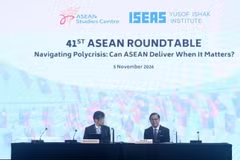
Thai Deputy Prime Minister and Minister of Foreign Affairs Sihasak Phuangketkeow (R) takes part in the Q&A session at the 41st ASEAN Roundtable. (Photo: VNA)

Thailand calls on ASEAN to proactively address polycrisis

Thai Deputy Prime Minister and Minister of Foreign Affairs Sihasak Phuangketkeow noted that no single member state could tackle challenges ranging from major-power competition and economic fragmentation to climate change and energy and food security on its own. Regional cooperation is therefore a strategic imperative, enabling ASEAN not only to overcome crises but also to sustain its development momentum.

Palm oil and palm oil-based products are among Indonesia’s promising export commodities. (Photo: VNA)

Indonesia to launch commodity export monitoring platform next year

DSI will draw on data from customs authorities, trade activities and the financial system, alongside contracts and documents uploaded by exporting companies. The platform will monitor the volume, quality, prices and destination markets of various commodities, as well as transactions between related parties.