Study shows challenges facing domestic migrants in Red River, Mekong deltas

Domestic migrants in the Red River and Mekong deltas face myriad challenges in terms of social welfare, accommodation, education and integration, a study by a team from the National Economics University (NEU) has unveiled.

Introducing voluntary social insurance policy for a migrant worker. (Photo: VNA)

Hanoi (VNA) – Domestic migrants in the Red River and Mekong deltas face myriad challenges in terms of social welfare, accommodation, education and integration, a study by a team from the National Economics University (NEU) has unveiled.

Outcomes of the study on internal migration were released at a conference co-organised by the university and the United Nations Development Programme (UNDP) Vietnam in Hanoi on September 24. They shed light on the driving forces behind the movement, challenges facing the group in their daily lives, their access to public services and social welfare, and the opportunities to ensure their protection and integration rights are recognised.

The study was carried out across eight provinces and cities in the two regions, namely Hanoi, Bac Ninh, Hai Duong, Nam Dinh, Can Tho, Long An, An Giang, and Soc Trang. Additionally, Binh Duong, a province in the southeastern region known for receiving many migrants from the Mekong Delta, was also included in the research. Against a backdrop of the 2020 residence law and the national population database, the study provides timely evidence to help shape policies that promote equal rights for migrants nationwide.

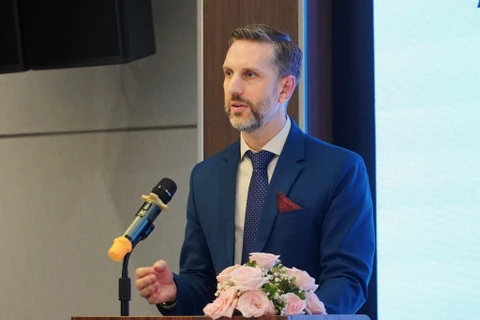
At the conference, Associate Professor Dr. Nguyen Thanh Hieu, NEU Vice Rector, expressed hope that the findings will contribute positively to policy-making for migrants in Vietnam, particularly in improving their access to public services and enhancing their quality of life in the two delta regions.

Sabina Stein, Assistant Resident Representative and Head of Governance and Participation Unit at the UNDP Vietnam, noted that recognising and enforcing migrants' rights is not only a matter of justice but also a prerequisite for the promotion of sustainable development.

To fully harness the potential of migration, she stressed the need to create an environment that fosters the integration of migrants into local communities, building bridges that enhance social cohesion and prosperity for all.

The study's results indicate that the majority of migrants in the sample have not accessed basic social benefits. Many of them, lacking professional skills, often engage in simple labour within companies or work freelance in seasonal jobs without access to health insurance, social insurance, or even voluntary social insurance, and are yet to benefit from social assistance policies at their destinations.

A significant finding is that most migrant workers live in substandard rental accommodations that are overcrowded, damp, lack basic amenities, and do not meet fire safety standards. The separation from their families affects their mental and emotional well-being, contributing to various social issues that require attention.

Many face difficulties enrolling their children in public schools and have to choose expensive private kindergartens. From a gender perspective, female migrants face more psychological, social, and community integration challenges than their male counterparts. Interviews with migrants in the two delta regions also reveals that they rarely participate in local governance or community, cultural, and sports activities in their temporary residences.

Based on these results, the research report proposes several solutions and policy recommendations to ensure that migrants' rights to recognition, protection, and community integration are upheld. It suggests authorities plan and allocate land for housing construction for low-income individuals, regardless of their permanent or temporary residence status, while diversifying the types and forms of housing available to workers. Moreover, in regions like the Mekong Delta, there is a need to create agricultural jobs in rural areas to retain the local workforce. Improving transportation connections within the region to allow daily commuting could also help reduce housing pressure in destination areas./.
VNA

See more

The “I Love My Fatherland" Journey 2026 kicks off in Nghe An province on May 16. (Photo: VNA)

"I Love My Fatherland” journey features diverse activities

The “I Love My Fatherland” journey will span seven stages across historical and cultural sites and “red addresses” nationwide. There will be a combination of education on traditions, field-based programmes, and digital communications.

At the handover of 33 Chinese nationals who had violated Vietnamese law to Chinese authorities in Quang Ninh on May 15, 2026. (Photo: VNA)

Vietnam hands over 33 law violators to China

Investigations found that the individuals had violated Vietnamese laws relating to illegal entry and unlawful residence in Vietnam. The handover was conducted safely and in compliance with Vietnamese law and international practice.

At the talks between authorities of the northern province of Lang Son and Pingxiang city in the Guangxi Zhuang Autonomous Region of China (Photo: VNA)

Vietnam, China seek to build modern, smart border gates

Authorities of the northern province of Lang Son and Pingxiang city in the Guangxi Zhuang Autonomous Region of China held talks on May 15 at Tan Thanh (Vietnam) – Po Chai (China) clearance point near markers 1090–1091 in Hoang Van Thu commune of Lang Son to promote trade, develop smart border gates and expand cross-border tourism cooperation.

The Vietnam Association for Victims of Agent Orange (VAVA) has carried out various activities to support Agent Orange/dioxin victims. (Photo: VNA)

Over 9.3 billion VND raised for AO/dioxin victims in 2025

VAVA President Lieutenant General Nguyen Huu Chinh said that although the war ended more than 50 years ago, the consequences of toxic chemicals remain severe and long-lasting, with millions of people affected during the war and hundreds of thousands continuing to suffer serious physical impacts in peacetime.

An overview of the meeting (Photo: VNA)

Measures sought to accelerate construction of inter-level boarding schools in border areas

The construction of boarding schools in land border communes is a particularly important political task receiving close attention from the Politburo and Party General Secretary and State President To Lam. The programme not only aims to improve learning conditions for students in border areas, but also carries strategic significance for social welfare, human development, national defence and security, and safeguarding territorial sovereignty.

An overview of the court on May 14 (Photo: VNA)

Man gets life sentence for terrorism, anti-State activities

The People’s Court of Ho Chi Minh City on May 14 handed down life imprisonment to Dao Minh Quan on charges of “terrorism aimed at opposing the people’s administration” and “activities aimed at overthrowing the people’s administration”.

Secretary of the Ho Chi Minh Communist Youth Union Central Committee and VYF President Nguyen Tuong Lam addresses the event (Photo: VNA)

“I love my fatherland” journey 2026 launched

The “I Love My Fatherland” journey will comprise seven stages linked to historical, cultural and revolutionary sites across the country. The journey will begin in Nghe An on May 16 to mark President Ho Chi Minh’s birthday, before continuing through Hue city, Tuyen Quang–Lung Cu Flag Tower, Dien Bien, Khanh Hoa, Ca Mau and Ho Chi Minh City, and concluding in Hanoi in October.

Students in the Mekong Delta city of Can Tho are honoured for their outstanding performance in startup activities. (Photo: VNA)

Education ministry targets five digital technology incubators at universities

A key target under the new plan is the establishment of five digital technology incubators, or Deeptech Hubs, at universities and research institutes with strong potential. The education ministry also plans to launch a training programme for 1,000 outstanding technology entrepreneurs and develop criteria for selecting and supporting startup ecosystems within educational institutions.

At the equipment handover ceremony for the Narcotics Targeting Centre of Vietnam Customs. (Photo: cand.com.vn)

Vietnam Customs expands capacity to tackle cross-border narcotics crime

Established in November 2025, the NTC comprises six officers from the Anti-Smuggling Investigation Sub-Department specialising in surveillance, intelligence collection and information analysis. The centre is tasked with strengthening customs capacity in risk assessment and drug crime targeting, helping authorities detect and prevent illicit cross-border trafficking of narcotics and other dangerous substances at an early stage.