Thai gov’t ensures continuing education for adolescent mothers

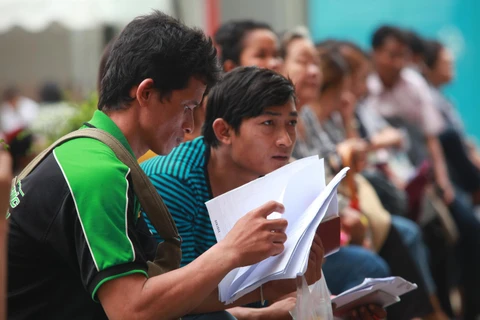
The Thai government has been introducing new laws to protect the education rights of teenager mothers, ensuring that they can have a better future.
Bangkok (NNT/VNA)- The Thai government has been introducing new laws to protect the educationrights of teenager mothers, ensuring that they can have a better future.

Thai Deputy Government Spokesperson Rachada Dhanadirek revealed that theMinistries of Public Health, Education and Social Development and HumanSecurity have signed an agreement on the protection of pregnant students ateducational institutes, with the aim of continuing to provide education toyoung mothers.

Under this agreement, the Ministry of Social Development and Human Securityprovides welfare for pregnant teenagers and their families, such asoccupational training before and after childbirth, assistance in employmentarrangements, as well as providing foster families, in case young mothers areunable to take care of their children themselves.

At the same time, the Ministry of Education has adjusted the sex educationcurriculum, to provide better information and more focus on safe sex.

According to the National Economic and Social Development Council’s (NESDC)report, the rate of pregnancy in the 15-19 year old population has fallen from51 per 1,000 in 2015 to 23 per 1,000 last year.

The pregnancy rate in this age group is still particularly high in the northernand southern regions, where the figure is 42 per 1,000 and 35 per 1,000respectively, while the rate of pregnancy in women younger than 15 years old isat 0.8 percent.

The data also shows teenager mothers in Thailand have lower levels ofeducation, mostly primary school only, at 130 persons per 1,000 population,with the number decreasing at each higher education levels.

Most of the pregnant teenagers had to stop their education, with only 23percent being able to return to her own school afterwards. This condition makesit difficult for young mothers to find a good job or income opportunities,forcing them to rely on other people./.
VNA
See more

At the video conference (Photo: Nation Thailand)

Thailand backs Japan’s push for energy security

At the summit, Japan announced a new initiative to support AZEC member countries through low-interest loans for the procurement of crude oil, refined fuel and essential goods, alongside broader fiscal support measures.

Indonesia steps up local currency use to reduce reliance on USD

Indonesia steps up local currency use to reduce reliance on USD

According to the Indonesian government data, total LCT transaction value reached 8.45 billion USD in January and February, a sharp increase from 3.21 billion USD in the same period last year. User participation has also risen significantly, surpassing 14,600 by February, with monthly averages exceeding 16,000, well above 2025 levels.

SMEs are the backbone of the Malaysian economy. (Photo: thestar.com.my)

Malaysia rolls out low-interest financing package for SMEs

The latest funding forms part of the government’s broader PowerUp10K campaign, a year-long initiative aimed at strengthening SMEs at different stages of growth. Under the programme, the ministry is targeting total disbursements of up to 15 billion MYR in low-cost financing, higher than the previously allocated 10 billion MYR.

Illustrative photo (Photo: thejakartapost.com)

Indonesia strengthens palm oil industry through sustainability certification

Indonesia’s palm oil industry is a major pillar of the national economy, with more than 16 million hectares under cultivation and crude palm oil (CPO) output reaching 51.66 million tonnes in 2025. This scale has helped the country maintain its position as one of the world’s largest producers and exporters of palm oil.

Mount Semeru in East Java erupts on April 14, 2026. (Photo: ANTARA)

Indonesia maintains high alert as Mount Semeru continues erupting

According to the Semeru Volcano Observation Agency, the first eruption occurred at 5:22 am, registering a maximum seismic amplitude of 20 mm and lasting 3 minutes and 23 seconds. The eruption produced an ash column rising about 1,500 m above the crater, reaching approximately 5,176 m above sea level.

Vietnamese Party General Secretary and State President To Lam (centre) and his spouse are welcomed at Beijing Capital International Airport on April 14. (Photo: VNA)

Chinese newspaper expects new chapter in building Vietnam-China community with shared future

From the traditional friendship of "both comrades and brothers" to the contemporary positioning of "the community with a shared future that carries strategic significance," Vietnam-China relations are standing at a new historical starting point, with expectations of opening a new chapter that delivers tangible benefits to both peoples and contributes positively to regional and global development.

 Malaysia strengthens national energy supply mix

Malaysia strengthens national energy supply mix

The Malaysian government will intensify efforts to strengthen the national energy mix to ensure electricity supply security amid extreme weather changes, which are beginning to affect existing resources, according to Deputy Prime Minister Datuk Seri Fadillah Yusof.

Illustrative image (Photo: Thai PBS)

Thai capital introduces recycling initiative

Thailand's Bangkok Metropolitan Administration (BMA) is introducing a sustainable twist to this year’s Songkran festivities by inviting revellers to donate their used or unwanted plastic squirt guns for recycling.

Thailand warns public of online scams during Songkran festival

Thailand warns public of online scams during Songkran festival

It identified four major scam tactics now spreading widely, which involve fake accommodation and travel ticket bookings, hacked social media accounts being used to ask for money, fake links offering cash giveaways or discounts, and fake pages selling festival-related products.

A Petronas filling station in Kuala Lumpur (Photo: VNA)

Malaysia tightens controls on border-town fuel stations

Deputy KPDN Minister Datuk Dr Fuziah Salleh said the government is currently reviewing existing policies to further restrict fuel purchases in high-risk zones, acknowledging that current limits have not completely stopped the leakages.