The draft agreement stipulates that ACPHEED will comprise three specialised centres based in three ASEAN member states. Vietnam will oversee the centre for prevention and preparedness; Indonesia will host the centre for detection and risk assessment; and Thailand will be responsible for the centre for response and risk communication.
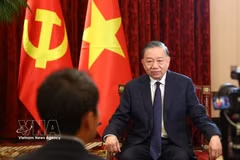
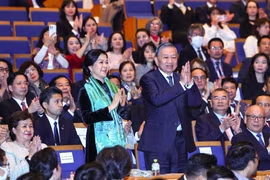
Vietnam hopes to enter a new stage of development together with Japan, in which each country's achievements create new opportunities for the other and bring practical benefits to their people, said top Vietnamese leader To Lam.
The Jakarta Globe said that Vietnam’s GDP per capita is expected to increase 8.9% to 5,259 USD in 2026, surpassing Indonesia’s projected 5,153 USD. This would place Vietnam fifth in ASEAN, after Singapore, Brunei, Malaysia and Thailand.
The Vietnamese leader said he hopes Japanese businesses will expand their investments and cooperation as there is a need for his country to develop human talent and enhance technological capability in advanced fields such as semiconductors, AI and clean energy.
A representative office in Laos could help connect business networks, create new opportunities for Lao women entrepreneurs and strengthen economic cooperation between Laos, BRICS and ASEAN.
Head of the Convention and Marine Resource Balance working team at the ministry’s Directorate of Ecosystem Conservation Ahmad Sofiullah said this week that it is a strategic effort to ensure the sustainability of Indonesia’s marine ecosystems.
Singapore aims to have sustainable aviation fuel (SAF) account for 1% of total jet fuel consumption at Changi and Seletar airports in 2027, rising to 3-5% by 2030.
Cambodia has launched the “Clean Phnom Penh 2026” campaign to raise public awareness, promote a civilised lifestyle and foster positive social behavioural standards.
At COP31, Indonesia plans to host 67 dialogue sessions at its pavilion, focusing on clean energy transition, green industry, nature-based solutions, climate finance and climate justice.
The project is being supported by the World Wildlife Fund For Nature (WWF) and the Lancang–Mekong Cooperation Special Fund.
Recent fluctuations in global energy markets highlighted the need for ASEAN member states to improve preparedness and cooperation. Stockpiling cooperation will enable ASEAN to strengthen energy security while optimising costs through resource sharing.
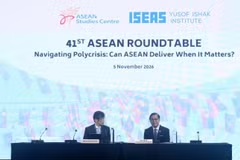
Thai Deputy Prime Minister and Minister of Foreign Affairs Sihasak Phuangketkeow noted that no single member state could tackle challenges ranging from major-power competition and economic fragmentation to climate change and energy and food security on its own. Regional cooperation is therefore a strategic imperative, enabling ASEAN not only to overcome crises but also to sustain its development momentum.
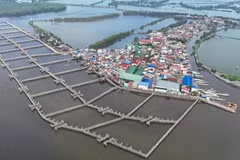
Rather than relying entirely on concrete sea walls and embankments, the project combines bamboo poles, tree branches and oyster shells to reduce wave energy, trap sediment and create favourable conditions for mangrove restoration.
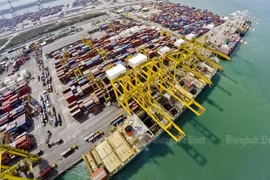
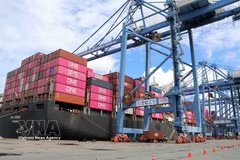
The centre marks a shift from handling larger cargo volumes to developing higher-value activities. Goods will be sorted, stored and repacked there before being sent overseas, creating skilled jobs for Malaysians.
DSI will draw on data from customs authorities, trade activities and the financial system, alongside contracts and documents uploaded by exporting companies. The platform will monitor the volume, quality, prices and destination markets of various commodities, as well as transactions between related parties.
Fines for companies failing to comply with regulations will increase tenfold to nearly 800,000 USD per day, while the maximum penalty will rise to more than 15.6 million USD.
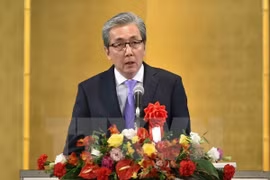
Thai Prime Minister Anutin Charnvirakul affirmed that the country’s current political stability provides a foundation for the consistent implementation of economic policies and structural reforms, enabling Thailand to make strong progress in the new economic era.
Cambodian Minister of Information Neth Pheaktra said the rapid spread of false and misleading information, coupled with advances in generative artificial intelligence (AI), is posing increasingly complex challenges to regional societies.
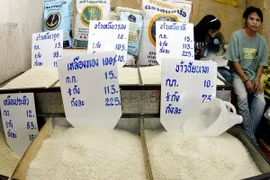
Cambodia has contracted to supply a further 87,344 tonnes to the Philippines between September and December. If all orders are fulfilled, its rice exports to the market could reach around 209,000 tonnes in 2026.
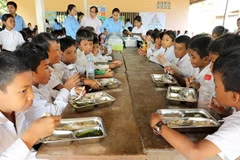
Cambodian Prime Minister Hun Manet stressed that his Government would proactively allocate budget and strengthen management capacity, with the aim of expanding the school meal programme to more than 7,000 primary schools nationwide. The move is expected to improve students' nutrition and learning conditions.