USABC President optimistic about US-Vietnam cooperation potential

The potential of cooperation between Vietnamese and US businesses this year has been increasingly enhanced, especially since the two countries upgraded bilateral relations to a Comprehensive strategic partnership for peace, cooperation and sustainable last September, said President of the US-ASEAN Business Council (USABC) Ted Osius.
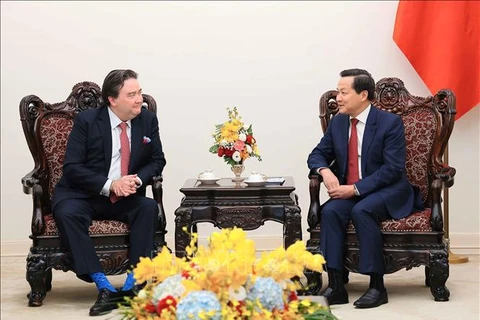
USABC President optimistic about US-Vietnam cooperation potential ảnh 1President of the US-ASEAN Business Council (USABC) Ted Osius. (Photo: VNA)
Washington D.C (VNA) – The potentialof cooperation between Vietnamese and US businesses this year has been increasinglyenhanced, especially since the two countries upgraded bilateral relations to a Comprehensivestrategic partnership for peace, cooperation and sustainable last September, said President of the US-ASEAN BusinessCouncil (USABC) Ted Osius.

Talking to the Vietnam News Agency (VNA)'s resident correspondents in Washington on February 22, he said that opportunitiesfor US businesses in the Southeast Asian country are considerable although headwinds in the global economy have been posing multiple challenges.

Osius,who is also former US Ambassador to Vietnam, said the two countries have made anumber of commitments to promoting economic ties since their relations werelifted to the Comprehensive strategic partnershipfor peace, cooperation, and sustainable development during US President Joe Biden’svisit to Vietnam in September 2023.
         
He perceived that US businessesare interested in and will invest in three areas in Vietnam, namely technology,energy, and health care.

In terms of technology, the US pledged to assist Vietnam in developing the semiconductor industry, which requires reliableenergy sources, ready water sources, and skilled manpower.

Given this, he said, the US Government is helping Vietnam to developthe workforce. The US Agency for International Development (USAID) is investing100 million USD in workforce development and recently announced an additionalcommitment to improving human resource capacity via the Arizona State University.US businesses are also highly interested in the unceasing development of the Vietnameseworkforce.

The two sides also hold substantial cooperation opportunitiesin the field of health care, which has seen surprising partnerships in thefights against SARS, HIV/AIDS, and COVID-19, the USABC leader said, adding thatUS companies want to produce pharmaceutical and medical equipment in Vietnamand make healthcare investments.

Osiusvoiced his belief in such big potential and that some of the potential willbe realised in the near future./.
VNA

See more

Toy production at a Hong Kong-invested factory (Photo: VNA)

Vietnam targets deeper market penetration in Hong Kong in 2026

Vietnam-Hong Kong trade hit 62.3 billion USD in the first 11 months of 2025, soaring 73.1% annually. Vietnamese exports to Hong Kong amounted to 36.8 billion USD, a 90.6% hike, ranking fourth among Hong Kong’s import sources, while imports from Hong Kong stood at 25.5 billion USD, up 52.9% and ranking third.

Vietnam’s start-up market enters restructuring phase

Vietnam’s start-up market enters restructuring phase

In 2026, venture capital inflows into Vietnam’s start-up ecosystem are expected to recover gradually, though in a more selective manner. VinVentures forecasts that capital will focus on start-ups that have survived the rigorous screening of 2024–2025, possess clear business models, strong commercialisation capacity, and the ability to generate real cash flows.

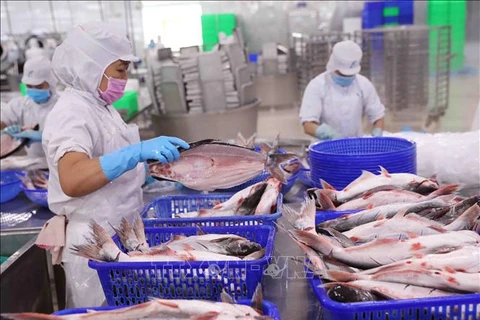
Workers process tra (pangasius) for export (Photo: VNA)

Vietnam–Singapore trade continues to thrive

For the year as a whole, Vietnam retained its position as Singapore’s 10th largest trading partner. Bilateral trade reached a record high of nearly 40 billion SGD, up 26.2% from the previous peak of 31.67 billion SGD recorded in 2024.

Eric Van Vaerenbergh, an energy expert and lecturer at the Brussels Engineering School (ECAM) (Photo: VNA)

Belgian expert optimistic about Vietnam’s economic outlook

Vietnam should move from a growth model based mainly on expanding capital and labour to one driven by productivity improvements. He said that this requires enhancing the quality of the workforce, particularly engineers, technicians, and managers in industrial sectors.

Workers at the VSIP Hai Phong industrial and urban complex, which specialises in producing electronic components for office equipment. (Photo: VNA)

Roadmap aims to improve business climate and boost competitiveness

By the end of 2026, Vietnam aims to rank among the world’s top 50 performers in the United Nations Sustainable Development Goals, advance at least three places in the International Property Rights Index, and climb at least one position in the Global Innovation Index.

Vietnam is strengthening its position in the technology value chain, becoming a major manufacturing hub for complete consumer electronics products. (Photo: VNA)

ESG standards offer opportunities to reposition Vietnam’s electronics firms

The 2025-2027 period will be a critical turning point, as exporters to the European market will be required to strictly comply with ESG standards, including net-zero emissions roadmaps, labour standards, corporate governance and transparency requirements. As a key export sector, the electronics industry is being directly and strongly affected by this shift.