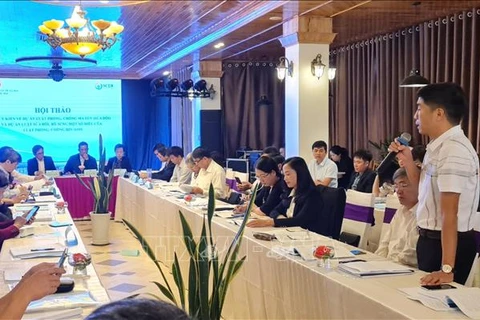
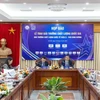
Permanent Deputy Chairwoman of the National Assembly Tong Thi Phong (standing) gives a speech at the meeting (Photo: VNA)
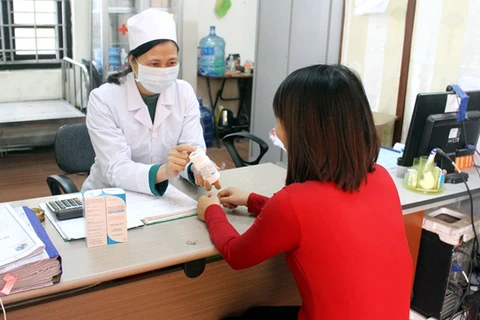
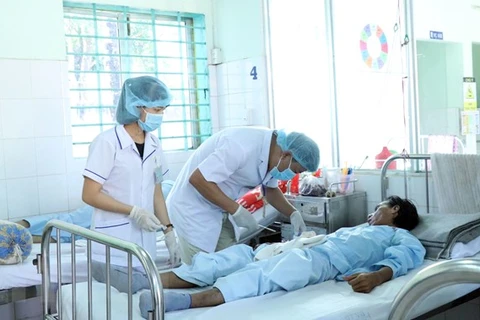
 Hanoi (VNA) - As one of four countries, alongside Germany, Switzerland and the UK, with the best HIV/AIDS treatment in the world, Vietnam has a rate of HIV-infected people receiving antiretroviral (ARV) treatment with a viral load below the inhibitory threshold reaching 96 percent, contributing to reducing HIV infection in the community, a health official has said.
Acting Minister of Health Nguyen Thanh Long made the statement at the 18th plenary meeting of the National Assembly’s Committee on Social Affairs that opened in Hanoi on September 28.
Speaking at the meeting, which examined draft amendments to the Law on HIV/AIDS Prevention and Control, Long said amending the law aimed to create a favourable legal corridor for HIV/AIDS preventive activities, contributing to reducing the number of new HIV infections and deaths, improving the effectiveness and efficiency of HIV/AIDS prevention and control to end the AIDS pandemic by 2030.
Over the past 10 years, Vietnam has reduced the number of newly infected people, the number of HIV-infected people who develop AIDS and the number of deaths related to HIV/AIDS. The country has kept the HIV infection rate in the community to below 0.3 percent.
According to UNAIDS, from 2000 up to now, Vietnam has employed preventive measures to stop 400,000 people from being infected with HIV and 150,000 people also received treatment that stopped them die from AIDS.
Achieving many positive achievements in HIV/AIDS prevention and control, however, this work still has some shortcomings, Long said.
The current law still has many limitations, with no specific regulation on who is entitled to access information about HIV-infected people, which can help spread the disease.
Therefore, the draft law adds more people who can access information about HIV-infected people to ensure the benefits of HIV-infected people in their treatment, payment of medical examination and treatment costs as well as preventing infection risks of HIV for people taking care of and treating the patients.
"The head and the person who was assigned to monitor the HIV/AIDS pandemic under a competent State agency on HIV/AIDS prevention and control at all levels" will be notified of the HIV test results for statistics and assessment the risk of HIV infection in the community, the draft reads.
People who can access information about HIV-infected people include people tasked with HIV/AIDS pandemic surveillance, people assigned to perform the assessment, payment and management on medical examination and treatment covered by health insurance for HIV-infected people, persons assigned to pay and manage information on medical examination and treatment for HIV-infected people.
At the meeting, delegates agreed with the law’s amendment and supplement.
Delegates suggested the Government and the drafting committee continue to study to ensure the draft law is consistent with the spirit of Article 14 of the Constitution on provisions related to the right of protecting personal secrets and review the uniformity and consistency of the draft with current laws.
Regarding the addition of people who can access information about HIV-infected people, Deputy Chairman of the Committee on Social Affairs Dang Thuan Phong said deputies were still divided on the matter.
Phong stated that the adjustment of this policy should harmonise the goals of State management but also protect the rights and interests of patients, especially the right to keep personal information confidential.
Luu Binh Nhuong, deputy director of the National Assembly Commission for People's Aspirations said it was impossible to use privacy concerns to reduce the role of State management because State management was for prevention and control infection and reducing the risk to society.
Nhuong agreed with the regulations to expand the list of people who can access information about HIV-infected people and the supplement was intended to serve the majority of the people in society at risk.
Also in the morning session, the National Assembly’s Committee on Social Affairs of the National Assembly gave comments on the draft amended Law on Vietnamese workers working abroad under contracts and draft amended ordinance on preferential treatment for people with great contributions to the nation./.
VNA