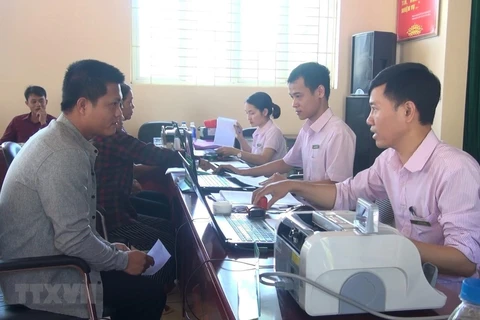
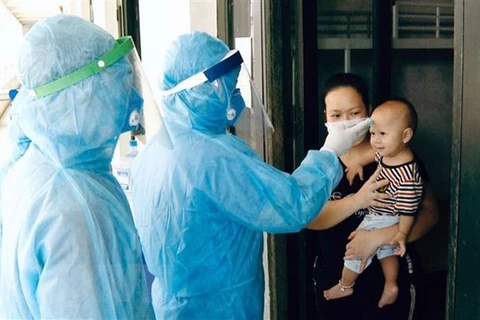
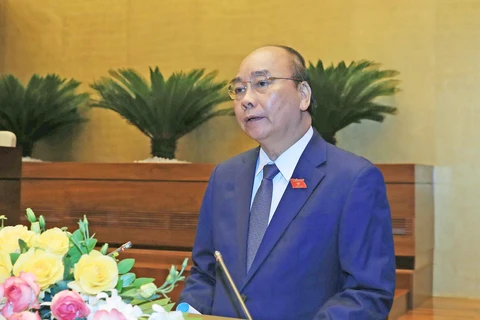
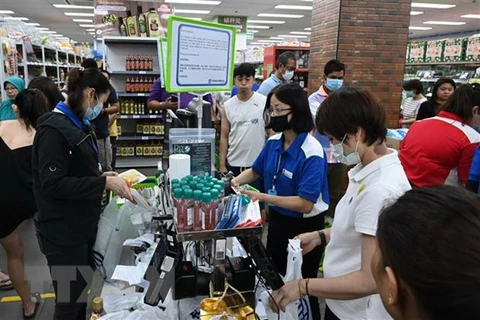
Illustrative image (Photo: internet)
 Hanoi (VNA) – With success in containing the spread of COVID-19, Vietnam now holds advantages in economic recovery, according to former Deputy Prime Minister Vu Khoan.
He wrote in a recent article that however, there are many unforeseeable factors in the world’s situation that can affect Vietnam.
Vietnam is building and on the verge of adopting socioeconomic development plans for 2021-2025 and 2021-2030 and vision towards 2045 in the “new normal situation”, he said.
He recalled the regional crisis in 1997, when Vietnam was implementing its 1991-2000 socioeconomic development strategy, the global financial crisis in 2008, during its 2001-2010 strategy, and this pandemic, just as the 2011-2020 plan is coming to an end.
The less-than-expected annual GDP growth in the ten-year strategies is mostly attributable to unexpected crises, Khoan said, adding that what will happen over the next five, ten, or 25 years is simply unpredictable.
Citing the five epidemics, including COVID-19, that have appeared in the first two decades of the 21st century, the former Deputy PM suggested adopting flexible mid-and long-term plans.
He also proposed Vietnam include “safe development” in its strategy for the post-COVID-19 period, in addition to sustainable development, with more attention paid to sectors relating to healthcare, such as bio-technology, bacteriology, preventive medicine, and the research, production and reserve of vaccine as well as medicines and medical equipment.
The former Deputy PM reiterated the value of time-honoured guiding viewpoints on the importance of internal strength and the need to develop the domestic market, support industry, along with diversifying foreign markets and international supply chains.
He highlighted a new opportunity for the country when Vietnam is considered among priority destinations as investors move their production to Southeast Asia, adding that the Politburo’s Resolution No. 50/NQ-TQ on foreign investment orientations issued in 2019 is the lodestar for the utilisation of this opportunity.
The former Deputy PM expressed a hope that such sound policies will be implemented promptly and scientifically to optimise the opportunity and help Vietnam post breakthroughs to move ahead.
Khoan presented his view on the world situation that the pandemic is taking place at the same time as fierce competition has erupted between major powers in the spheres of economy, politics, and security, and even the pandemic fight, along with climate change.
Given this, a global economic recovery looks less V-shaped or W-shaped but more U-shaped, he said, warning that the pandemic, if it breaks out again, may spark a new financial-monetary crisis due to high overspending and high bad and public debt.
Khoan forecast that during the post-COVID-19 period, the movement of goods, services, capital, and information will be rebooted but at a rather slow pace, as all countries will prioritise stimulating the domestic market.
He highlighted one trend to be adopted by many industrialised nations - relocating their production from China to other regions, especially Southeast Asia and India.
The Deputy PM pointed to the ongoing competition between unilateralism and multilateralism and expected that there would be adjustments to certain international institutions, including the WTO, and laws regulating international economic relations.
Khoan believes the sustainable development model that combines economic growth with poverty reduction and environmental protection will be maintained after the pandemic passes.
However, the model will include more measures to protect people’s health by “distancing”, he said, citing the decision taken by a number of European countries to close streets to motor cars in order to facilitate bike riding, thus improving the environment and limiting contact in public vehicles.
Khoan also spoke of the domination of the digital economy and more attention being paid to sectors relating to public healthcare.
Regarding international political-strategic relations, he said certain international political and security structures will be changed, and that the situation in some regions, including the East Sea, will become more complex.
Conflicts between major powers that had occurred prior to the outbreak of the pandemic will continue for the long-term, he predicted.
With an open economy, Vietnam is likely to be impacted by developments in the global economy, Khoan explained./.
VNA