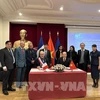
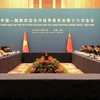
The Vietnam Supreme People’s Court (VSPC) and the Austrian Supreme Court of Justice (ASCJ) recently signed a memorandum of understanding (MoU) covering enhanced exchanges and cooperation in judicial information, judge training and judicial reform.
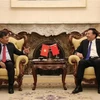
The MoU was inked following the talks between VSPC Chief Justice Truong Hoa Binh and ASCJ Vice President Elisabeth Lovrek in Vienna during the former’s working visit from July 8 – 11.
At the talks, the two sides discussed issues of mutual concern such as the role of the Supreme Courts in their respective country’s judicial and law enforcement systems, the organisation and operations of the two supreme courts, criteria and procedures for appointing judges, personnel training, and the Supreme Court’s authority over lower courts.
They noted some similarities along with differences between the court systems as well as the structure and jurisdiction of the Supreme Courts in the countries.
Their court systems are divided into four levels, which are district-level courts, federal-level courts, regional-level courts, and the Supreme Court in Austria. There are also the Constitutional Court and the Administrative Court in the European nation.
In Vietnam, the system consists of district-level courts, provincial-level courts, superior courts, and the Supreme Court.
Binh said the MoU would facilitate high-level exchanges and experience sharing in judicial reform and improving judicial practices on both sides.
During the visit, the Vietnamese delegation also held a working session with Yuri Fedotov, the United Nations’ Under General Secretary and Executive Director of the UN Office on Drugs and Crime (UNODC).
The director lauded Vietnam’s cooperation with the UNODC and confirmed the organisation’s support in the fight against drug trafficking and organised crime.-VNA
The MoU was inked following the talks between VSPC Chief Justice Truong Hoa Binh and ASCJ Vice President Elisabeth Lovrek in Vienna during the former’s working visit from July 8 – 11.
At the talks, the two sides discussed issues of mutual concern such as the role of the Supreme Courts in their respective country’s judicial and law enforcement systems, the organisation and operations of the two supreme courts, criteria and procedures for appointing judges, personnel training, and the Supreme Court’s authority over lower courts.
They noted some similarities along with differences between the court systems as well as the structure and jurisdiction of the Supreme Courts in the countries.
Their court systems are divided into four levels, which are district-level courts, federal-level courts, regional-level courts, and the Supreme Court in Austria. There are also the Constitutional Court and the Administrative Court in the European nation.
In Vietnam, the system consists of district-level courts, provincial-level courts, superior courts, and the Supreme Court.
Binh said the MoU would facilitate high-level exchanges and experience sharing in judicial reform and improving judicial practices on both sides.
During the visit, the Vietnamese delegation also held a working session with Yuri Fedotov, the United Nations’ Under General Secretary and Executive Director of the UN Office on Drugs and Crime (UNODC).
The director lauded Vietnam’s cooperation with the UNODC and confirmed the organisation’s support in the fight against drug trafficking and organised crime.-VNA