Vietnam, Cambodia strengthen anti-drug cooperation

Vietnamese and Cambodian anti-drug forces gathered for their third meeting in Ho Chi Minh City on January 5.
Vietnam, Cambodia strengthen anti-drug cooperation ảnh 1An overview of the conference (Photo: VNA)
HCM City (VNA) – Vietnamese and Cambodian anti-drug forces gathered for their third meeting in Ho Chi Minh City on January 5.

Addressing the event, Major General Nguyen Van Vien, Director of the Counter-Narcotics Police Department (C04) ) under the Public Security Ministry, said the cooperation between Vietnam and Cambodia has been fruitful.

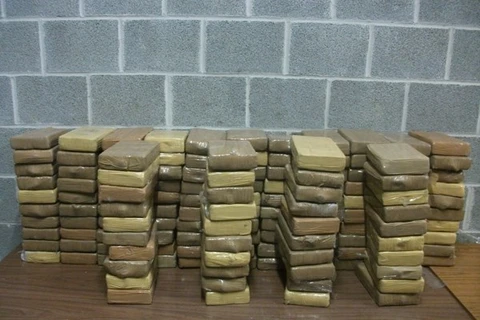
Last year, the C04 coordinated with the Anti-Drug Crime Department under Cambodia's Ministry of Interior to raid four major drug trafficking rings. Police in 10 localities along the Vietnam-Cambodia border detected more than 2,000 other cases involving more than 3,000 persons.

Lieutenant General Khing Sarat, Director of the Anti-Drug Crime Department of Cambodia, highlighted the efficiency of information exchange between the two sides at national and local levels in recent years. As a result, Cambodian authorities conducted a spate of successful raids, arrested suspects, and seized a variety of elicit drugs.

He said that in order to further the effectiveness of anti-drug crime activities along the Vietnam-Cambodia border, the Cambodian side will continue to focus on fine-tuning investigation into major cases to hunt down ring leaders. They will also endeavour to strengthen measures to control the import and trading of precursor chemicals to elicit drugs.

Major General Vien said that the two should increase the exchange of drug-related information in a regular, accurate and timely manner through hotlines between the two countries and Border Liaison Offices (BLO) in border localities.

In the time to come, the C04 will coordinate with Cambodian police to conduct joint anti-drug operations and arrest criminals, he said, adding that currently, 16 such criminals are on the run in Cambodia.

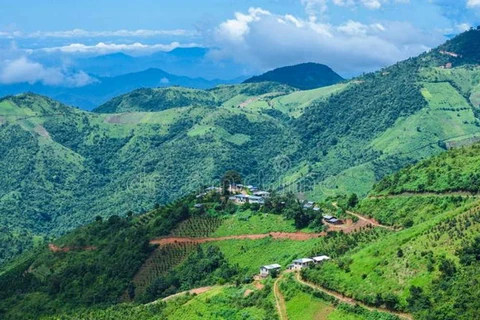
Regarding the situation in Ho Chi Minh City, Colonel Hoang Tam Hieu, Deputy Director of C04, said that the main source of drugs in the city is from the "Golden Triangle" area through Cambodia and smuggled across the border into Vietnam to be sold inside the country, especially Ho Chi Minh City, and transported to third countries and territories such as Australia, Taiwan (China) and Japan.

He said that recently, many foreigners, mostly Taiwanese, have abused Vietnam's openness and loopholes in entry-exit and import-export management to form fake companies to produce and sumggle drugs./.
VNA
See more

Cultural activities are held at the 2026 Vietnamese Language Summer Camp in Klinok village on the outskirts of Minsk, Belarus. (Photo: VNA)

Vietnamese language preserved across globe

In the new context, Politburo Resolution No. 23-NQ/TW, dated August 2, 2026, continues to place the preservation of the Vietnamese language within the strategic vision of mobilising resources from the Vietnamese community abroad and promoting Vietnamese cultural values around the world.

Overseas Vietnamese teachers participating in the 2026 training course on Vietnamese language teaching methods (Photo published VNA)

Leveraging overseas Vietnamese resources for Vietnam-France ties

As Vietnam enters a new era of prosperous and harmonious development, top leader To Lam's official visit to France will significantly contribute to the special dynamics of bilateral relations while fostering shared commitments to international peace, security, and stability.

Ambassador Nguyen Huong Tra briefs representatives of the Vietnamese communities in Belgium and Luxembourg on the country's situation. (Photo: VNA)

Overseas Vietnamese ready to contribute to national transformation

Affirming that overseas Vietnamese are an integral part of the nation and partners in its development and creation, Vietnamese Ambassador to Belgium and Head of the Vietnamese Mission to the European Union (EU) Nguyen Huong Tra pledged to listen to them openly and responsibly, and convey their recommendations to authorities at home.

The operation to remove the bomb is carried out cautiously and meticulously by military forces. (Photo: VNA)

Phu Tho: 200kg bomb safely relocated, detonated

According to a report by the Phu Tho Military Command, local residents spotted the bomb on August 31 in the Da River after the river water receded, exposing it beneath mud and soil on the riverbed. The bomb remained intact, including its fuse, and was located about 300m from a residential area.

Quang Ninh's seaport infrastructure, including the Ha Long International Cruise Port, is capable of serving large cruise ships. (Photo: VNA)

Quang Ninh 2030: Ambitious targets for a breakthrough

These objectives reflect the principle that economic development must not become detached from living standards; rather, the benefits of growth should create opportunities for all residents to share in its achievements.

A police officer guides a citizen on how to use VNeID app. (Photo: VNA)

Shift to data-driven administrative procedures needs acceleration

Under a draft decree replacing Decree 63, authorities will have to proactively pull information from databases and records for informational or technical procedures. Applicants would no longer be required to resubmit documents, and certification or information requests could not be turned into discretionary licensing through an “ask – give” mechanism.

Cuban journalist Luis Manuel Arce Isaac, author of the article published in Mexico’s Voces del Periodista magazine. (Photo: Screenshot/VNA)

Mexican journalist praises Vietnam’s profound transformation

According to the article, Vietnam’s progress over the past decades has turned President Ho Chi Minh’s aspiration for a country that would be more dignified and more beautiful into reality in ways that have far exceeded what was initially envisioned.

The Liaison Board of the Vietnamese Community in Singapore organises the annual Mid-Autumn Festival to strengthen community bonds and spread Vietnamese language and culture. (Photo: VNA)

Continued efforts made to nurture love for homeland through mother tongue

From language classrooms and community activities to digital platforms, Vietnamese is being preserved through increasingly diverse approaches. More than a means of communication, the mother tongue carries memories, culture and affection for the homeland. Ensuring that Vietnamese remains naturally present in the daily lives of overseas Vietnamese is therefore an important way to nurture their lasting bond with the Fatherland.