Vietnam Clean Energy Forum looks towards carbon neutrality

The second Vietnam Clean Energy Forum took place in Hanoi on April 7, offering a venue for managers, scientists and businesses to exchange views on mechanisms, policies, technology and financing for wind, solar and gas power projects towards carbon neutrality.
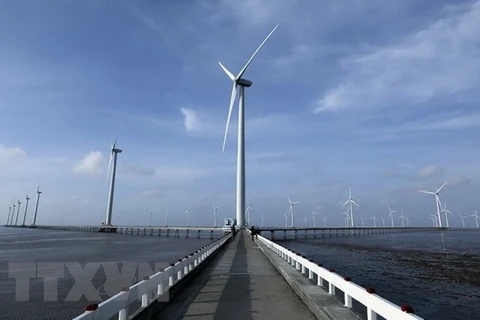
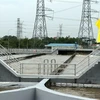
Vietnam Clean Energy Forum looks towards carbon neutrality ảnh 1Illustrative image (Photo: VNA)
Hanoi (VNA) – The second Vietnam Clean Energy Forum took place inHanoi on April 7, offering a venue for managers, scientists and businesses toexchange views on mechanisms, policies, technology and financing for wind,solar and gas power projects towards carbon neutrality.

In his opening remarks, deputy head of the Climate ChangeDepartment under the Ministry of Natural Resource and Environment Pham Van Tansaid that to realise its commitments of bringing net emissions to zero by 2050, and reducing 30 percent of methane emissions by 2030 compared to 2020 announced at the 26th United Nations Climate Change Conference of the Parties (COP26)last year, Vietnam should shift to use renewableenergies such as wind, solar and gas power, and other low-carbon sources.

Therefore, the forum was a good chance for participants todiscuss shortcomings, challenges and also opportunities for the development ofclean energy in Vietnam.

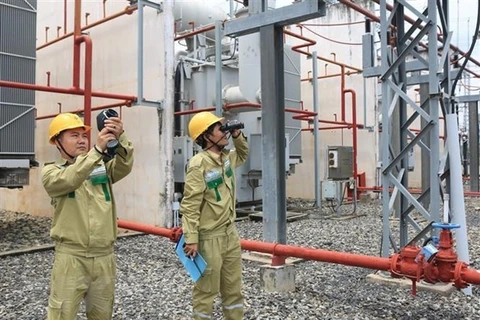
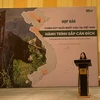
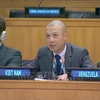
Vietnam Clean Energy Forum looks towards carbon neutrality ảnh 2Delegates participaing in the second Vietnam Clean Energy Forum. (Photo: VNA)
Hoang Trong Hieu, Deputy Chief of Office of the NationalSteering Committee for Electricity Development, stated that policiesencouraging renewable energy development have paid off. Vietnam’s renewableenergy sources have reached about 20.7 GW, accounting for more than 27 percentof its total power capacity.

However, the strong development of wind and solar powerprojects has led to an imbalance of transmission sources by region because theseprojects are mainly developed in the central and southern regions. In addition,the implementation of clean energy projects currently is facing manydifficulties related to planning, construction investment, site clearance, andfinancial mechanisms.

Pham Thi Thanh Tung, Deputy Director of Credit for EconomicSectors Department under the State Bank of Vietnam, said that by the end of2021, credit balance for green projects topped 441 trillion VND(19.3 billion USD), accounting for 4.2 percent of the total outstanding loansof the economy, up 32.5 percent compared to 2020. In particular, credit balance forrenewable energy projects surpassed 212 trillion VND, or 47 percent of that ofgreen projects. Credit institutions face many difficulties in handling dossiersrelated to renewable energy projects because they must take into account theproject's efficiency. To solve the problem, Vietnam needs a breakthrough policysuch as the formation of a renewable energy fund to create favourableconditions for investors.

Within the framework of the forum, Top 10 prestigious IPP (independentpower project) investors in Vietnam in 2021 and TOP 10 Enterprises with thebest solar, wind power technologies, equipment, and services in Vietnam 2021were honoured./.
VNA

See more

Quang Tri recently received two endangered pangolins from local resident. (Photo published by VNA)

Two pangolins handed over to authorities in Quang Tri

At around 8:30 pm on April 12, Le Thanh Tung, a resident of Thuong Nghia hamlet in Cam Lo commune, and his friend spotted the two pangolins, weighing over 4 kg, while working near the Cam Lo–La Son Expressway.

A view of Phong Nha - Ke Bang National Park in Da Nang city (Photo: VNA)

Phong Nha – Ke Bang: untapped biological treasure in Truong Son mountains

Unlike ecosystems where species inventories are largely complete, Phong Nha–Ke Bang National Park remains scientifically “open,” with each survey revealing new findings. Recent studies - from local research projects to international collaborations - have recorded additional bird species and identified the rare parasitic plant Sapria himalayana, which only survives in intact primary forests.

The interface of Vietnam Weather KTTV mobile application (Photo: baochinhphu,vn)

Application of dangerous weather warning introduced

All unusual weather events, from widespread thunderstorms, lightning strikes, landslides, flash floods, tropical depressions to strong winds at sea, are continuously updated from official data sources of the NCMHF and meteorological stations and prominently displayed on the main interface.

An overview of the kick-off meeting for the “Sustainable Management of Substances Controlled by the Montreal Protocol” project (Photo: VNA)

Vietnam launches 13 mln USD project to phase out ozone-depleting substances

Funded by the Multilateral Fund for the Implementation of the Montreal Protocol and implemented through the World Bank (WB) and the United Nations Environment Programme (UNEP), the project aims to help Vietnam meet its international commitments in managing and phasing out controlled substances. It will run from 2026 to 2031 with a total budget of over 13 million USD.

Tram Chim National Park and the Mekong Conservancy Foundation (MCF) organise the workshop on sustainable restoration of wetland ecosystems in the Mekong Delta on March 24. (Photo: VNA)

Solutions sought to restore Mekong Delta wetland ecosystems

Experts at the workshop described wetlands as the “ecological heart” of the Mekong Delta, playing a vital role in water storage and regulation, climate moderation, carbon sequestration, biodiversity conservation, and livelihoods for millions of people through aquaculture, agriculture, and ecotourism. These ecosystems also help reduce disaster risks and enhance climate resilience.

Deputy Minister of Agriculture and Environment Le Cong Thanh speaks at the ceremony to launch major environmental campaign. (Photo: VNA)

Vietnam calls for collective action on water, air, climate and sustainable future

Deputy Minister of Agriculture and Environment Le Cong Thanh underscored that water, climate, and energy are fundamental pillars of sustainable development. In Vietnam, water resources and weather patterns influence every aspect of life, from food and water security to livelihoods, ecosystem stability, and economic growth.