Vietnam harvests seven golds on December 15

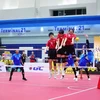
Vietnamese athletes won seven gold medals on December 15 at the ongoing SEA Games 27 in Myanmar , bringing the country’s total number of golds at the event to 36.
Vietnamese athletes won seven gold medals on December 15 at the ongoingSEA Games 27 in Myanmar , bringing the country’s total number ofgolds at the event to 36.

The Pencak silatteam contributed three out of the seven gold medals, thanks to LeSi Kien (men’s 85kg), Nguyen Duy Tuyen (men’s 80kg), and Nguyen Thi Yen(women’s 75kg).

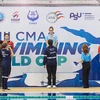
16-year-old swimmer Lam QuangNhat brought a nice surprise when he finished first at 15 minutes and39.44 seconds in the men’s 1,500m freestyle event to earn gold.

Meanwhile, 53-year-old player Dang Dinh Tien, the oldest athlete ofthe Vietnamese delegation at this SEA Games, also added a gold in theone cushion carom single event to the country’s medal tally.

The shooting team went away with two gold medals with one in themale team’s 10m air pistol and the other in the men’s 10m air pistol byHoang Xuan Vinh.

On the same day, the Vietnamesewomen’s football team beat the host Myanmar 1 – 0 to rank first inGroup A and pocketed a ticket to the semifinal. Meanwhile, the men’steam earned an emphatic 5 – 0 victory against Laos , rekindling thehope of a place in the next round. Vietnam must win Malaysia inthe next match to go through to the semifinals.

Vietnamese athletes also brought home 9 silver and 6 bronze medals on Dec. 15 alone.

At the end of the day, Vietnam ranked third with 36 golds, 32silvers and 41 bronzes, following Thailand (45 golds) and Myanmar(38 golds).-VNA

See more

At the event “Vietnamese Language in the heart of Kyushu, Japan” (Photo: VNA)

Vietnamese in Japan revive mother tongue among young generations

While the number of Vietnamese-origin children in Japan is surging, opportunities to actually speak Vietnamese in daily life are vanishing fast. Many children can understand the language but default to Japanese in response, gradually relegating their mother tongue to a secondary role, sometimes even treating it as a “second foreign language” inside their own houses.

A tribute to Hung Kings in Ho Chi Minh City (Photo: VNA)

Hung Kings’ Commemoration Day 2026 to spread sacred values, foster national unity

Following the merger of Phu Tho, Vinh Phuc, and Hoa Binh provinces into the new Phu Tho province last year, the Hung Kings Temple Festival has taken on heightened significance. It now serves not only as a tribute to the ancestral homeland but also a unified cultural platform that extends sacred ancestral values to Vietnamese communities at home and abroad.

A traditional art performance at Bach Ma temple in Hanoi (Photo: VNA)

Traditional arts hold untapped economic power

Traditional arts embody deep aesthetic values, worldviews, and national identity, shaping the country’s distinctive “aesthetic identity” and foundational cultural tastes

A performance at the opening ceremony of the Hung Kings Temple Festival and the 2026 Ancestral Land Culture and Tourism Week on late April 17 (Photo: VNA)

Hung Kings Temple Festival, associated tourism week kick off

The annual festival serves as a major national cultural event, offering an opportunity for people across Vietnam and overseas Vietnamese communities to pay tribute to their ancestors, express gratitude, and strengthen the great national solidarity.

A ritual at Hue Nam Temple Festival (Photo: VNA)

Hue Nam Temple Festival: From imperial relic to distinctive cultural celebration in Hue

Historically known as Ngoc Tran Son Tu, the temple was renamed Hue Nam during the reign of King Dong Khanh in the late 19th century, symbolising royal gratitude to the Mother Goddess. It is also the only temple in Hue that harmoniously combines royal ceremonial elements with folk religious practices, creating a distinctive blend of court ritual and popular belief.

Participants in the 20th Cong hien (Devotion) Awards presentation ceremony in Hanoi on April 15 (Photo: VNA)

Devotion Awards mark two decades of honouring excellence in music, sports

Nguyen Thien Thuat, Editor-in-Chief of the The Thao & Van Hoa newspaper and Head of the organising board of the awards, said, noting that their achievements reflect the spirit of the Politburo’s Resolution No. 80, which emphasises preserving national cultural values while selectively absorbing the essence of world culture.

Artisans and students take part in cultural activities and exchanges in the Xoan singing performance space at Hung Lo ancient communal house in Phu Tho province (Photo: VNA)

Ancestral legends revived through contemporary performance

Beyond cultural value, well-organised festival programmes linked with tourism and media can contribute to the development of cultural industries and enhance Vietnam’s cultural soft power, positioning heritage-based events as distinctive national cultural brands in the international arena.

Khue Van Cac (Khue Van Pavilion) stands as a defining cultural symbol of Hanoi, closely associated with Vietnam’s long-standing tradition of valuing education and honouring knowledge. (Photo: VNA)

Greater efforts needed for heritage to shape Hanoi’s identity

As suggested by UNESCO experts, heritage should be approached as an integrated system encompassing space, people and everyday life. This perspective can inform urban planning, cultural tourism development and the creation of clear economic drivers.