Vietnam hosts int’l conference on tackling plastic waste pollution in oceans

The Vietnam Administration of Sea and Islands, in coordination with the UN Environment Programme and the World Wide Fund for Nature, hosted an international conference in both online and in-person formats on solutions to handling plastic waste in East Asian seas from November 24-26.
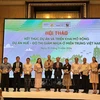
Vietnam hosts int’l conference on tackling plastic waste pollution in oceans ảnh 1An overview of the conference (Source: VNA)

Hanoi (VNA) – The Vietnam Administration of Seaand Islands, in coordination with the UN Environment Programme and the WorldWide Fund for Nature, hosted an international conference in both online andin-person formats on solutions to handling plastic waste in East Asian seasfrom November 24-26.

Addressing the event on November 26, Deputy Minister ofNatural Resources and Environment Le Minh Ngan called for joint efforts by allparties, including policymakers, management officials, businesses and consumersto tackle the issue, which has posed serious impacts on the ecosystem andenvironment, especially the oceans.

Ngan said that due to the outbreak of COVID-19 pandemic, theworld is facing another source of pollution from medical masks, especially inthe context that many waste treatment plants have suspended operations due tothe pandemic.

The pandemic has led to the increase use of single-useproducts as part of measures to minimize COVID-19 spreading, he noted, addingthat the collection and recycling of these products have also been affected.

He stressed that current cooperation initiatives and models shouldplay a bigger role in facilitating the exchange of knowledge and experienceregarding best practice and methods in policy making, development and transferof technology and capacity building in each country as well as betweencountries.

The official expressed his hope that countries and internationalorganisations will continue strengthening cooperation with and support forVietnam in preventing and reducing plastic waste, thus contributing to the globalefforts in responding to one of the biggest challenges in the current era.

At the event, Ngan and representatives from the governmentsof ASEAN member countries and three partners of ASEAN as well as domestic and internationalorganisations underlined the need for effective coordination among sectors atdifferent levels in taking specific actions to deal with the challenges ofplastic waste pollution and marine debris.

Within the conference’s framework, Vietnam introduced aproject to reduce marine plastic waste, which is being implemented in ninecoastal localities with the aim to minimize marine pollution through thesupport in building guidance to implement prioritized policies related to plasticwaste, among others.

Duringthree days from November 24-26, the event included four plenary and 10 thematicdiscussions on measures to prevent the wasteful use of plastics and prevent thedischarge of waste to the ocean./.
VNA
See more

The forum takes place in Hanoi on August 25, 2026. (Photo: VNA)

Vietnam, RoK promote cooperation to deliver on net-zero commitments

Sectors such as semiconductor manufacturing, nuclear power, science and advanced technologies are playing an increasingly important role in national competitiveness and economic development of each country. They also offer considerable room for Vietnam and the RoK to expand professional exchanges, share experience and promote cooperation, particularly among their energy experts.

Storm Narra's projected path as of 7:00 on August 22. (Photo: National Centre for Hydro-Meteorological Forecasting)

Storm brings heavy rains to northern Vietnam

Storm Narra, the fourth to hit the East Sea this year, brought strong winds and heavy rains to northern Vietnam on early August 22, with some areas forecast to receive more than 500mm of rain as the storm moves slowly over the northern waters of the East Sea.

A view of the meeting between Phu Tho authorities and a visiting delegation from Germany's KfW Development Bank in the province on August 20, 2026. (Photo: VNA)

Phu Tho, German bank discuss wastewater treatment plan for Da River's left bank

The project is being implemented in the former Hoa Binh city, now Hoa Binh ward. It has a total investment of 688.7 billion VND (26.38 million USD), including 507.3 billion VND in ODA and 181.4 billion VND in counterpart funding. Major components include a wastewater treatment plant, pumping stations, a collection network, and connection infrastructure.

Construction workers reinforce steel and pour concrete to cover the underground drainage channel, helping collect rainwater and tackle flooding in Da Nang. (Photo: VNA)

A new “shield” against climate change

Smart urban areas are no longer simply about technology; they are becoming a tool that enables authorities to forecast risks, adapt quickly and protect their residents.

Vietnam is exerting efforts to cope with climate change. (Illustrative photo: VNA)

Vietnam approves carbon credit pact with Singapore under Paris Agreement

Signed on September 16, 2025, the Implementation Agreement on carbon credits collaboration under Article 6 of the Paris Agreement on climate change affirms Vietnam and Singapore’s pioneering role and commitment to close cooperation in the international carbon market, making a substantive contribution to global climate response.

A view of Vo Cuong ward, Bac Ninh province (Photo: VNA)

Bac Ninh earmarks over 1.7 billion USD for environmental protection

By 2030, Bac Ninh aims to ensure that all operating industrial clusters and industrial parks have centralised wastewater treatment systems meeting standards, while at least 95% of wastewater in Grade-I urban areas and 70% in Grade-II urban areas is collected and treated to required standards.

Many inland canals in Can Tho city dries up following a prolonged period of extreme heat. (Photo: VNA)

Government adopts action programme on environmental protection, climate resilience

The programme aims to translate the Party's orientations into concrete actions while strengthening environmental governance, enhancing climate resilience, and promoting a green, circular and low-carbon economy. It will serve as the basis for ministries, sectors and localities to formulate implementation plans for the 2026–2030 period, with a vision to 2045.