Vietnam-Mongolia comprehensive partnership poised for substantive growth

In recent years, the Vietnam-Mongolia relationship has witnessed dynamic development with many notable achievements. Political and diplomatic ties have been strengthened through regular exchanges of high-level delegations and the maintenance of cooperation mechanisms.

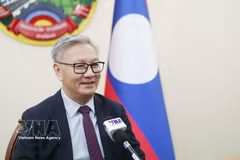
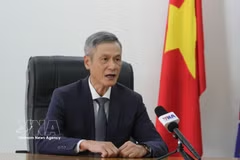
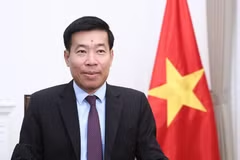
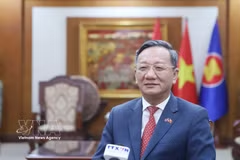
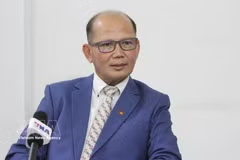
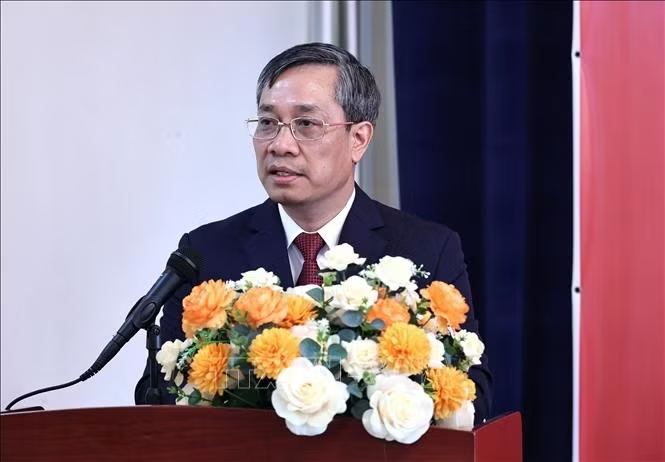
Vietnamese Ambassador to Mongolia Nguyen Tuan Thanh. (Photo: VNA)

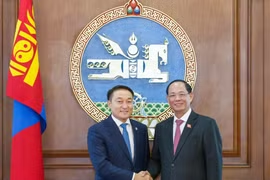
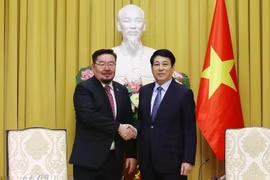
Hanoi (VNA) – The ongoing visit to Mongolia by Sen. Lieut. Gen. Tran Quang Phuong, member of the Party Central Committee and Vice Chairman of the National Assembly (NA), is expected to give new momentum to the Vietnam-Mongolia Comprehensive Partnership and make bilateral ties deeper and more substantive.

Speaking to the Vietnam News Agency, Vietnamese Ambassador to Mongolia Nguyen Tuan Thanh highlighted the significance of the September 30-October 3 trip and the future direction of bilateral cooperation.

According to the diplomat, Vietnam and Mongolia share a long-standing friendship and have enjoyed cooperation across many fields. During the state visit of Party General Secretary and State President To Lam to Mongolia in 2024, the two countries elevated their relations to a Comprehensive Partnership, committing to expanding cooperation in economy, trade, culture, education, law, security and defence, among others.

Thanh stressed that cooperation between the legislatures of the two countries has always played an important role in strengthening mutual understanding and political trust, thereby laying a solid foundation for collaboration in other spheres. Phuong’s visit is expected to further materialise the common perceptions reached by high-ranking leaders of both nations.

First, the trip will reinforce political trust and consolidate the Comprehensive Partnership through high-level meetings and parliamentary dialogues, affirming the priority both sides give to bilateral ties.

Second, it will deepen cooperation between the two parliaments by strengthening exchanges between specialised committees, friendship parliamentary groups, and parliamentarians, especially women and young legislators. This will help ensure that commitments made by the two countries’ leaders are implemented effectively.

Third, the visit is expected to boost trade, investment and business connectivity. Enterprises from both sides will have opportunities to explore markets, exchange information on investment incentives, and facilitate stronger flows of goods in areas of strength.

Fourth, it will help enhance cooperation in culture and education, and people-to-people exchanges to foster mutual understanding and support for Vietnamese citizens studying and working in Mongolia.

Fifth, security and defence cooperation will be advanced, including joint efforts in law enforcement and experience-sharing in addressing common challenges such as climate change, non-traditional security issues, and transnational crime.

Finally, the visit will help enhance Vietnam's global position and foster its international cooperation via coordination at multilateral forums such as the United Nations, the Asia-Europe Parliamentary Partnership Meeting, and the Asia-Pacific Parliamentary Forum.

In recent years, the Vietnam-Mongolia relationship has witnessed dynamic development with many notable achievements. Political and diplomatic ties have been strengthened through regular exchanges of high-level delegations and the maintenance of cooperation mechanisms such as the political consultation and the Inter-Governmental Committee on Economy, Trade, Science and Technology.

Economic and trade relations have also seen encouraging progress, with two-way trade increasing significantly compared to previous years. The two sides have signed various agreements on economic, trade and agricultural cooperation, creating stable supply. Mongolia has exported goat and sheep meat to Vietnam, while Vietnam has shipped poultry meat and eggs to Mongolia.

Cultural, educational and people-to-people exchanges have been promoted, with both sides expanding scholarships, student and lecturer exchanges, and cultural and sports activities. The visa exemption policy for tourists and efforts to open direct flights between Ulaanbaatar and major Vietnamese cities such as Hanoi, Ho Chi Minh City, Phu Quoc, and Nha Trang have further facilitated travel and tourism.

Information technology and digital transformation have emerged as promising new areas of cooperation. Vietnam and Mongolia have begun exchanging experience in artificial intelligence (AI), e-government and digital public services. Mongolia has expressed keen interest in partnering with Vietnam in AI development, digital economy, start-ups and new technologies.

The two countries also share common concerns about climate change and environmental protection. Mongolia will host the 17th session of the Conference of the Parties to the UN Convention to Combat Desertification (COP17) in 2026, an area of strong potential cooperation with Vietnam.

To strengthen the Comprehensive Partnership, Thanh suggested several measures including expanding trade and striving for a balanced trade structure, with Vietnam exporting consumer goods, processed agricultural products and technology items, while Mongolia capitalises on its strengths in animal husbandry and agriculture. Logistics and transport connectivity, particularly rail and air links, should be enhanced, with efforts to maintain direct flights and streamline customs procedures.

The two countries should deepen cooperation in digital technology, AI, data centres and start-ups, while sharing experience in e-government. Collaboration in agriculture and food security should also be expanded to ensure stable supply and sustainable growth.

On environmental cooperation, Vietnam could support Mongolia in developing green models, renewable energy and efficient resource use.

At the same time, parliamentary cooperation should continue to be promoted through legislative exchanges, oversight activities and the protection of citizens’ rights. People-to-people contacts, student exchanges and tourism cooperation will also be further encouraged to enhance mutual understanding and ties between the two nations./.
VNA

See more

☕ Afternoon briefing on October 7

☕ Afternoon briefing on October 7

Vietnam advancing parliamentary diplomacy at IPU-153, the APEC 2027 National Committee’s 27 members unveiled, and Vietnam's national brand value jumping 45% to over 462 billion USD are among news highlights on October 7.

Officers and members of Level-2 Field Hospital Rotation 7, who recently returned home after completing their duties at the United Nations peacekeeping mission in South Sudan, pay tribute to President Ho Chi Minh and report on their achievements at the Ho Chi Minh Museum – Ho Chi Minh City Branch on October 7, 2026. (Photo: VNA)

Vietnamese peacekeeping force pays tribute to President Ho Chi Minh

Addressing the ceremony, Major General Pham Manh Thang, Director of the Vietnam Department of Peacekeeping Operations, stressed that Vietnam has consistently regarded the deployment of personnel to UN peacekeeping operations as not only a defence diplomacy task but also a political responsibility, reflecting the Party, State and military’s foreign policy of peace, independence, self-reliance and proactive international integration.

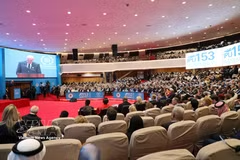
The opening session of the 153rd Assembly of the Inter-Parliamentary Union (IPU-153) in Arusha, Tanzania, on October 5, 2026 (Photo: VNA)

Vietnam advances parliamentary diplomacy at IPU-153

Vice President of the National Assembly (NA) Nguyen Hong Dien held bilateral meetings with government and parliamentary leaders from Tanzania, Malaysia, Australia, Russia and Algeria on October 5 on the sidelines of the 153rd Assembly of the Inter-Parliamentary Union (IPU-153), which is taking place in Arusha, Tanzania.

Standing Deputy Prime Minister Pham Gia Tuc, who is also Chairman of the APEC 2027 National Committee (Photo: VNA)

APEC 2027 National Committee’s 27 members unveiled

The 27-member committee will be led by Deputy PM Tuc, with Minister of Foreign Affairs Le Hoai Trung as Vice Chairman. Members include Minister of Science and Technology Vu Hai Quan, deputy ministers and other officials.

Deputy Foreign Minister Nguyen Manh Cuong (Photo: The Ministry of Foreign Affairs)

Vietnam’s ties with Laos, Cambodia grow substantively, effectively: Deputy FM

The visits affirm the great importance and high priority Vietnam attaches to its relations with the two neighbours. They are expected to further deepen the great friendship, special solidarity, comprehensive cooperation and strategic cohesion between Vietnam and Laos, and the good neighbourliness, traditional friendship, comprehensive cooperation and long-term sustainability between Vietnam and Cambodia.

☀️ Morning digest on October 7

☀️ Morning digest on October 7

General Secretary and President To Lam's talks with President of Panama José Raúl Mulino, a forum on prospects for Vietnam–Tanzania economic cooperation, and the 2026 "I Love My Fatherland" journey drawing over 7.9 million young people are among news highlights on October 6 evening.

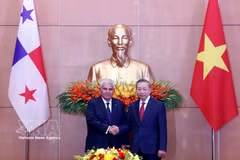
General Secretary of the Communist Party of Vietnam Central Committee and President To Lam (right) and President of Panama José Raúl Mulino at their meeting in Hanoi on October 6. (Photo: VNA)

Top Vietnamese, Panamanian leaders hold talks in Hanoi

General Secretary and President Lam believed that the two countries will continue tapping their potential for cooperation in trade, agriculture, maritime affairs, aviation, logistics and digital transformation, thus making bilateral ties more substantive, effective and sustainable for the benefit of their people and contributing to peace, cooperation and development in both regions.

General Secretary of the Communist Party of Vietnam Central Committee and President To Lam and his spouse welcome Panamanian President José Raúl Mulino and his spouse (Photo: VNA)

Vietnam, Panama cast themselves as gateways between Southeast Asia and Latin America

In his speech, General Secretary and President Lam stressed that Mulino's official visit holds special significance for bilateral ties. He expressed his belief that the visit will not only resume high-level contacts after a long gap but also give new momentum to ties, moving them into a more substantive, effective and deeper phase.

General Secretary of the CPV Central Committee and President To Lam and President of Panama José Raúl Mulino meet with the press immediately after their talks (Photo: VNA)

Vietnamese, Panamanian leaders meet the press following talks

Both sides agreed that there is ample room for cooperation, particularly in trade, investment and services. They pledged to step up joint work in the economic, trade, investment, agriculture, port logistics, finance, banking, tourism and transport sectors, as well as other areas of mutual strength. They also plan to continue negotiating agreements on investment protection, aviation and other areas to create a more favourable framework for expanding cooperation.

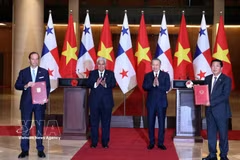
General Secretary of the Communist Party of Vietnam Central Committee and President To Lam (second, right) and Panama President José Raúl Mulino (second, left) witness the exchange of an agreement on maritime transport cooperation between the Governments of Vietnam and Panama (Photo: VNA)

Vietnam, Panama exchange cooperation documents witnessed by top leaders

The documents include an agreement on maritime transport cooperation between the Governments of Vietnam and Panama, an agreement on cooperation in combating transnational crime, a memorandum of understanding (MoU) on agricultural cooperation, and an MoU on tourism cooperation between the Vietnam National Authority of Tourism and the Panama Tourism Authority.

Uch Leang, Acting Director of the Department of Asia, Africa and Middle East Studies at the Royal Academy of Cambodia’s Institute of International Relations speaks to Vietnam News Agency correspondents in Phnom Penh (Photo: VNA)

Vietnam, Cambodia strengthen connectivity, create new momentum for growth

The visit’s focus is expected to be on translating high-level agreements into economic and infrastructure connectivity projects and practical cooperation that benefit people and businesses, said Uch Leang, Acting Director of the Department of Asia, Africa and Middle East Studies at the Royal Academy of Cambodia’s Institute of International Relations.