Hanoi (VNS/VNA) - Vietnam needs to drastically raise measures to promote the development of circular economy in order to take up opportunities for accelerating socio-economic growth and promoting sustainable development.
That was the clear message during a conference held by the Vietnam Institute of Economics (VIE) in Hanoi on September 25.
Sustainable development, digital transformation, the green economy and a circular economy are major trends in the world, presenting not only opportunities but also challenges for Vietnam, Nguyen Duc Minh, Deputy Chairman of the Vietnam Academy of Social Sciences, said.
It is imperative to identify roadblocks to a circular economy and raise measures to promote the development of this model, Minh said.
Deputy Director of the Institute of Strategy and Policy on Natural Resources and Environment under the Ministry of Natural Resources and Environment, Mai Thanh Dung, said that a national action plan to implement circular economy by 2030 is expected to be issued in next few weeks.
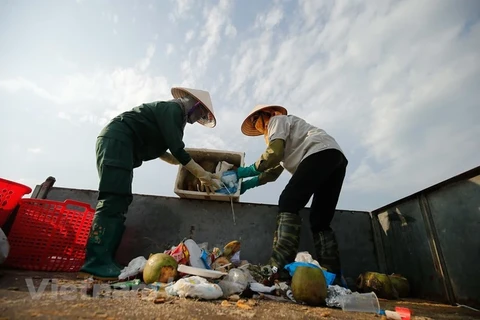
The action plan would aim at promoting the efficient use of resources, materials, energy saving and the development of renewable energy, together with extending product life cycles, reducing waste and reducing negative impacts on the environment.
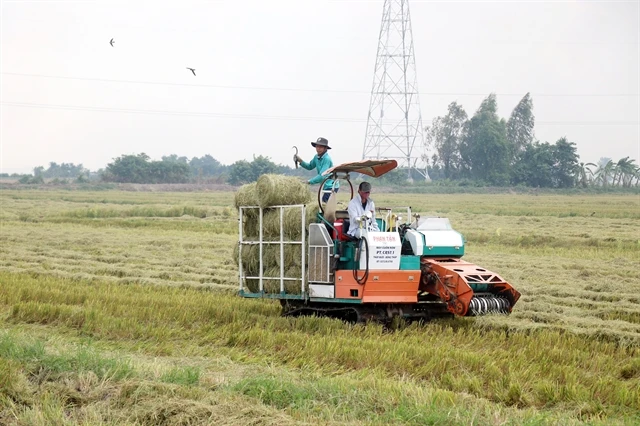
Prioritised sectors would include agriculture, forestry, timber, fishery, energy, mining, chemicals, manufacturing and processing, construction, transport and tourism.
“The action plan will work. Enterprises will be excited because the circular economy will bring them benefits. However, it is important to enhance the coordination between ministries, industries and enterprises so they go together,” Dung said.
According to Tran Thi Hong Minh, Director of the Central Institute for Economic Management (CIEM), the world is showing a greater interest in the circular economy model, which dates back decades, because it is becoming more feasible in the context of the fourth industrial revolution.
There are still different definitions, viewpoints and approaches to the circular economy, demonstrating that this model has significant room for growth, she said.
A circular economy becomes indispensable with requirements for sustainable development and Vietnam’s strong commitment at COP 26 to achieve net zero by 2050, Minh added.
Vietnam developed a policy framework for circular economy development, including the Law on Environmental Protection 2020, Decree No 08/2022/ND-CP and Decision No 687/QD-TTg dated on June 7, 2022, on approving the project of developing a circular economy in Vietnam.
The circular economy brings significant opportunities, Minh said, pointing out that this model will create important impetus to restructure the economy, improve labour productivity, accelerate industrialisation and modernisation, as well as promoting the participation in the global value chain.
It also creates conditions for Vietnam to better exploit opportunities from free trade agreements (FTAs).
“The early development of policy and roadmap for circular economy will enable Vietnam to get access to green finance,” Minh added.
However, there are roadblocks to the implementation of circular economy in Vietnam, she pointed out, which include inadequate awareness within local authorities and enterprises and limited capacity, resources and technology and lack of human resource.
“It is important that circular economy create impetus for innovations and improve labour productivity in order to persuade enterprises and investors to take action.”
Any circular economy should be first piloted to gradually improve the legal framework for long-term development, she added.
Sectors which should be piloted are agriculture, processing industry, energy and building materials.
The pilot framework should include policies for industrial and economic zones, green taxonomy, green credit, green finance, science and technology, human resource development and land, she said.
Senior economist at BIDV Can Van Luc said that the commitments made at COP26 require huge investments in renewable energy, waste management, green agriculture, low-emission transportation, water management and climate change adaptation.
However, Vietnam lacks an adequate and consistent legal framework for a circular economy, she said.
Specifically, Luc pointed out that there have been no detailed regulations on green taxonomy and certification as base to implement green finance, green credit, green tax and green investment. Besides, there is an absence of coordination mechanism and incentives for green growth while the demand for capital is huge.
The ecosystem for green growth, including human resources, infrastructure, finance, science, technology and innovations, information and data, remains limited and fragmented.
Vietnam should encourage energy saving, enhance waste management and change customer habits, Luc said.
The action plan for circular economy together with mechanisms for pilot implementation should be issued early. It is also necessary to introduce green taxonomy and prioritises sectors, he said.
Policies such as tax and credit incentives should be raised together with the development of green finance, green credit, bonds and stocks and green investment funds, as well as policy to change habit of consumers and encourage innovations.
According to Nguyen Huu Xuyen from the Ministry of Science and Technology, science, technology and innovation (STI) play an important role in promoting the development of circular economy.
STI should be integrated in all projects on developing circular economy, green economy and sustainable development and promoted to accelerate the transition from traditional economic model to circular economy, in high-tech low-emission agriculture, for example.
Vietnam also needs to develop a list of clean, advanced, low-emission technologies in different industries in order to attract investment./.