Vietnam rolls out climate-friendly cooling solutions

Vietnam is one of the first 63 countries to join the Global Cooling Pledge proposed by President of the UN Climate Change Conference of the Parties (COP28) Sultan Al Jaber within the framework of COP28 recently held in Dubai, the United Arab Emirates (UAE).
Vietnam rolls out climate-friendly cooling solutions ảnh 1At a wind power farm in Ninh Thuan (Photo: VNA)

Hanoi (VNA) – Vietnam is one of the first 63 countries to join the Global Cooling Pledge proposed by President of the UN Climate Change Conference of the Parties (COP28) Sultan Al Jaber within the framework of COP28 recently held in Dubai, the United Arab Emirates (UAE).

Under the pledge, the global cooling sector must reduce greenhouse gas emissions by at least 68% by 2050 compared to 2022, helping to maintain the global average temperature increase at the threshold of 1.5 degrees Celsius in line with the objective of achieving net-zero global emissions by 2050.

As one of the countries hardest hit by climate change, coupled with a significant increase in the use of cooling devices in recent years, Vietnam has been aware of the importance of taking adaptive actions to address climate change and protect the environment.

According to the Department of Climate Change under the Ministry of Natural Resources and Environment, sustainable cooling requirements have been integrated into the tasks and solutions outlined in the National Strategy on Climate Change until 2050 and the updated Nationally Determined Contributions (NDCs) for 2022.

The department worked with partners and signed Memoranda of Understanding on cooperation with the UN Environment Programme (UNEP) and the Global Green Growth Institute (GGGI) in order to enhance the country’s capacity of implementing the NDCs.

It built policies and programmes to step up the progress of the NDCs in two priority areas of climate change response and sustainable cooling in Vietnam’s urban areas.

Vietnam rolls out climate-friendly cooling solutions ảnh 2Widespread intense heat in Hanoi (Photo: VNA)

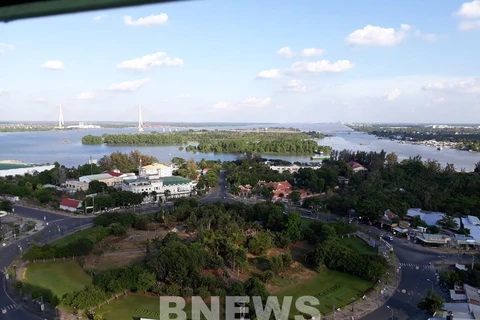
To promote climate-friendly cooling solutions against extreme heat in Vietnamese cities, the department in collaboration with the UNEP and the GGGI launched a programme on sustainable urban cooling in Vietnam's urban areas, with support from the Clean Cooling Collaborative. It is being piloted in the Mekong Delta city of Can Tho, Tam Ky city in the central province of Quang Nam and Dong Hoi city in the central province of Quang Binh.

Additionally, the department and the UNEP have been working on a programme named "NDC Action Project – Facilitating the Implementation of Climate-Resilient and Low-Carbon Development aligned with National and Global Goals".

During the 2020-2025 period, Vietnam aims to achieve a 35% reduction in the baseline consumption of hydrochlorofluorocarbons (HCFCs), phasing it out until the complete end of HCFC import by 2040./.
VNA

See more

A view of Phong Nha - Ke Bang National Park in Da Nang city (Photo: VNA)

Phong Nha – Ke Bang: untapped biological treasure in Truong Son mountains

Unlike ecosystems where species inventories are largely complete, Phong Nha–Ke Bang National Park remains scientifically “open,” with each survey revealing new findings. Recent studies - from local research projects to international collaborations - have recorded additional bird species and identified the rare parasitic plant Sapria himalayana, which only survives in intact primary forests.

The interface of Vietnam Weather KTTV mobile application (Photo: baochinhphu,vn)

Application of dangerous weather warning introduced

All unusual weather events, from widespread thunderstorms, lightning strikes, landslides, flash floods, tropical depressions to strong winds at sea, are continuously updated from official data sources of the NCMHF and meteorological stations and prominently displayed on the main interface.

An overview of the kick-off meeting for the “Sustainable Management of Substances Controlled by the Montreal Protocol” project (Photo: VNA)

Vietnam launches 13 mln USD project to phase out ozone-depleting substances

Funded by the Multilateral Fund for the Implementation of the Montreal Protocol and implemented through the World Bank (WB) and the United Nations Environment Programme (UNEP), the project aims to help Vietnam meet its international commitments in managing and phasing out controlled substances. It will run from 2026 to 2031 with a total budget of over 13 million USD.

Tram Chim National Park and the Mekong Conservancy Foundation (MCF) organise the workshop on sustainable restoration of wetland ecosystems in the Mekong Delta on March 24. (Photo: VNA)

Solutions sought to restore Mekong Delta wetland ecosystems

Experts at the workshop described wetlands as the “ecological heart” of the Mekong Delta, playing a vital role in water storage and regulation, climate moderation, carbon sequestration, biodiversity conservation, and livelihoods for millions of people through aquaculture, agriculture, and ecotourism. These ecosystems also help reduce disaster risks and enhance climate resilience.

Deputy Minister of Agriculture and Environment Le Cong Thanh speaks at the ceremony to launch major environmental campaign. (Photo: VNA)

Vietnam calls for collective action on water, air, climate and sustainable future

Deputy Minister of Agriculture and Environment Le Cong Thanh underscored that water, climate, and energy are fundamental pillars of sustainable development. In Vietnam, water resources and weather patterns influence every aspect of life, from food and water security to livelihoods, ecosystem stability, and economic growth.

The population of trac (Dalbergia cochinchinensis) trees is strictly protected in the Dak Uy special-use forest. (Photo: VNA)

Vietnam highlights forests’ role in sustainable growth on International Day of Forests

According to Director of the Forestry and Forest Protection Department Tran Quang Bao, forests hold a strategic position in Vietnam’s development. They provide livelihoods for millions of people, particularly ethnic minorities and communities living in mountainous and forested areas, while contributing to environmental protection and disaster prevention.