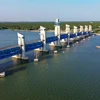
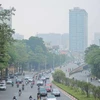
A corner of Can Tho city (Photo: VNA)
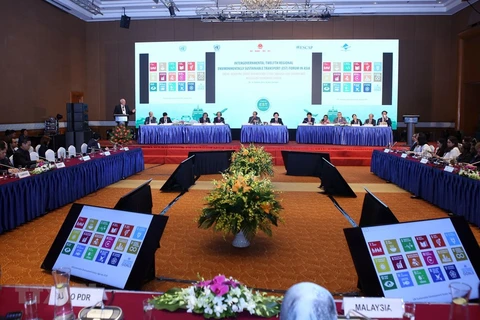
 Jointly organised by the Department of Climate Change under the Ministry of Natural Resources and Environment (MoNRE), the United Nations Environment Programme (UNEP), and the Global Green Growth Institute (GGGI), the event offered a venue for representatives from relevant ministries, sectors, agencies, organisations, and businesses, and Vietnamese and international experts to discuss and propose solutions to cool urban areas in Vietnam.
Addressing the event, Nguyen Tuan Quang, Deputy Director of the Department of Climate Change, said sustainable cooling requirements have been included in the tasks and solutions of the National Strategy on Climate Change until 2050, and Vietnam's updated Nationally Determined Contributions (NDC).
The department signed a memorandum of understanding with the UNEP and the GGGI to strengthen Vietnam's capacity to implement the “Intended Nationally Determined Contributions" (INDC) report on climate change, Quang said.
Climate-friendly investment plans have been developed, while green investment and suitable financing mechanisms have been strengthened for sustainable cooling projects in urban areas, he added.
To promote climate-friendly cooling solutions to prevent extreme heat in Vietnamese cities, the department has coordinated with the UNEP and the GGGI with the sponsorship of the sustainable cooling partnership programme to implement the sustainable urban cooling programme in urban areas in Vietnam, which is being piloted at the Mekong Delta city of Can Tho, Tam Ky city of central Quang Nam province, and Dong Hoi city of central Quang Binh province.
The department and the UNEP have also jointly implemented “the NDC Action Project: Facilitating the Implementation of Climate-resilient and Low-carbon Development Aligned with National and Global Goals”, Quang added.
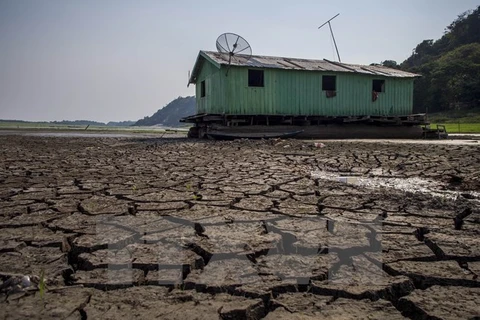
In 2020, the MoNRE published an updated climate change scenario, which showed that the manifestations of climate change such as increasing temperature, changing rainfall, sea level rise and increasing extreme weather events occur faster and more frequently.
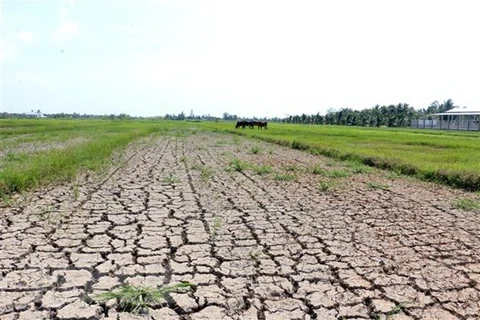
The number of hot days tends to increase nationwide, and the number of drought months increases in the northern region. The rising temperature coupled with the urban heat island effect make Vietnamese cities located in urban areas most at risk of experiencing extreme heat waves in the globe.
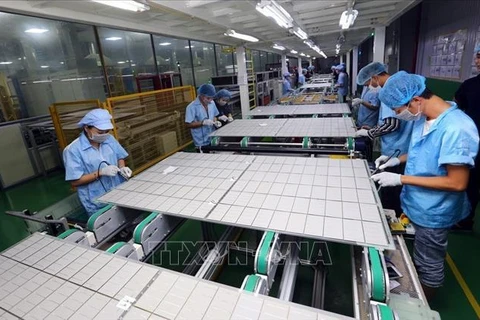
Therefore, the need for sustainable cooling solutions in urban areas becomes urgent in the world and in Vietnam. Efficient and sustainable cooling in cities can help countries promote poverty reduction, reduce food loss, improve health, manage energy needs and respond to climate change./.
VNA