Halal products from a Vietnamese firm showcased on the sidelines of a conference in Hanoi. (Photo: VNA)
 Nguoi Lao Dong (The Labourer) newspaper reported Kelly Luong, Director of Beyond World Company, said her enterprise is teaming up with the Investment and Trade Promotion Centre of Ho Chi Minh City (ITPC). Together, they will organise a trip for Vietnamese businesses to Malaysia to explore the halal market and meet directly with some importers of halal products there.
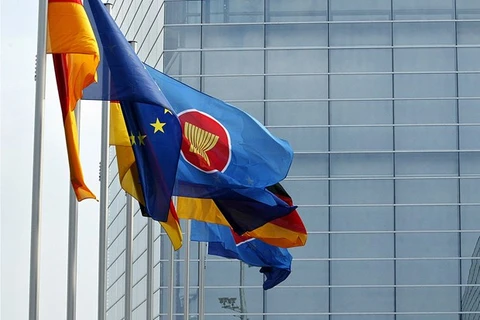
After a seminar on promoting exports to the Malaysian market held in HCM City in June, many exporters looking to provide halal products to ASEAN markets contacted her company. Her firm successfully connected several Vietnamese agricultural and food processing enterprises to sell halal products to Malaysia, including big brands such as Bidrico and TH True Milk.
According to the Vietnamese ambassadors to Malaysia and Indonesia, the supply chain disruption caused by the COVID-19 pandemic and the Russia-Ukraine tensions opened up unprecedented opportunities for Vietnamese exporters.
For example, Malaysia is short on chicken and rice, so it wants to expand its imports of these items from Vietnam. Particularly for rice, the country has raised the import quota of Vietnamese rice from 520,000 tonnes to 700,000 tonnes each year, because Russia and Ukraine have stopped exporting wheat.
In terms of the Indonesian market, Tran Phu Lu, Deputy Director of ITPC, said that this country, with a population of 270 million, is one of the lucrative import markets for Vietnam.
Two-way trade saw a yearly increase of 40% yearly to 11.4 billion USD. Trade in the first seven months of 2022 surpassed 8 billion USD, up 23% year-on-year, with seafood and coffee being items with a large export amount.
Many businesses have regarded Indonesia as an easier market than the US, Europe, and Japan. The similarity in culture, close geographical distance, and preferential tariffs within the bloc have also been named as advantages for Vietnamese goods to penetrate this market, Lu said.
Difficult to compete on price
Despite opportunities available in the ASEAN halal food market, Vietnamese exporters have to date exported only a small amount of halal products to some countries in the region.
Nguyen Ngoc Luan, Founder and CEO of Meet More Coffee, told Nguoi Lao Dong that his company had yet to receive orders to export agricultural products to ASEAN markets such as Malaysia, Indonesia and Brunei.
Luan said it was difficult for his firm and buyers of such countries to find a common voice. In addition to the requirement for halal certification and a separate production line for halal products, the two sides had to agree on the selling price.
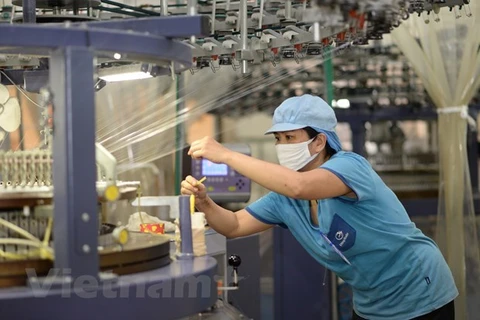
Vietnamese enterprises lag behind some neighbouring countries, such as Thailand, in deep processing technology, so it was hard for them to compete on price. Although the ASEAN halal market has much potential, his enterprise would conquer the regional market only after it successfully penetrated markets far away, such as the US and the EU.
Meanwhile, a seafood processing enterprise director in HCM City also said he had not found an opportunity to sell goods to halal markets in ASEAN despite successfully exporting to the Middle East for many years.
The director, who wanted to be anonymous, blamed this unsatisfactory performance on the fact that ASEAN countries had many similarities in products, so Vietnamese goods did not have a competitive advantage in price.
Truong Tien Dũng, Standing Vice Chairman of the Food and Foodstuff Association of HCM City, said most Indonesian and Malaysian buyers want Vietnamese businesses to build new factories to produce goods for them, as these importers are not satisfied with the current separate production line for halal products in domestic enterprises' factories.
However, it was not feasible for Vietnamese enterprises to invest in a separate factory to serve small orders when they take the first steps to penetrate new markets, Dung said.
Tran Viet Thai, Vietnamese Ambassador to Malaysia, urged the enterprises to have specific strategies to enter this halal market from consulting, training, cooperation and investment.
Thai also said Vietnam needs a unified agency to head the halal market. The Ministry of Agriculture and Rural Development could propose to the Government to build this agency, making it easier for ambassadors to connect./.
VNA