Vietnam targets green, organic, multi-value crop industry

In recent years, the crop industry has demonstrated its crucial role in ensuring national food security, job creation, and increasing farmer incomes. It has become a key production area of the agriculture sector, with many competitive products that help increase export value.

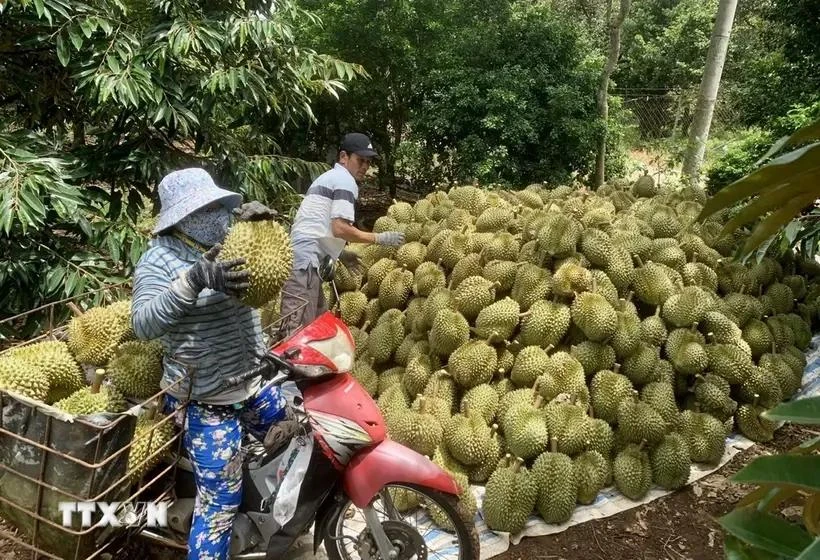
Harvesting organically-produced durians. (Photo: VNA)

Hanoi (VNA) - In recent years, the crop industry has demonstrated its crucial role in ensuring national food security, job creation, and increasing farmer incomes. It has become a key production area of the agriculture sector, with many competitive products that help increase export value.

According to the Department of Crop Production under the Ministry of Agriculture and Rural Development (MARD), many technical advancements, new varieties, and effective cultivation processes that adapt to climate change have been recognised and applied in production, contributing to controlling diseases and ensuring productivity and yield, and economic efficiency.

Many localities have focused on expanding large-scale production, applying high technology, organic cultivation methods, and environmentally friendly practices to ensure biological safety and disease control. These efforts have met the increasingly high demand for quality and food safety for domestic consumption and export.

Statistics show that in 2023, crop production value grew by 3%, accounting for 63% of the total value of agricultural production, with annual crops increasing by 2.22% and perennial crops rising by 4.26%.

The export value of crop products reached 26 billion USD, up 15% year-on-year. Rice, coffee, cashews, fruits and vegetables, and rubber had an export value of over 2 billion USD each. The average production value per hectare of cultivated land reached 125 million VND (over 5,000 USD).

Last year, the Prime Minister issued a decision approving a strategy to develop plant cultivation to 2050, aiming to turn it into a complete and professional technical-economic sector with highly competitive products, meeting requirements in food safety, security, and other needs of the economy, securing high export values. The strategy is expected to be a motivation for the cultivation sector to reap more success in the future.

Specifically, the growth rate of plant cultivation production is expected to reach 2.2-2.5% per year by 2030, while the average of added value in the crop processing industry is 8-10% per year.

The rate of crop product value produced under the cooperative and linkage forms is hoped to reach 30-35% of the total value of the sector, while the average value of crop products per hectare of farming land is expected to hit 150-160 million VND.

At the same time, the rice farming area will be kept stable at 3.56 million ha with an expected output of over 35 million tonnes of the grain. Meanwhile, the area of specialty coffee will rise to 11,500 ha by 2030 with an output of about 5,000 tonnes.

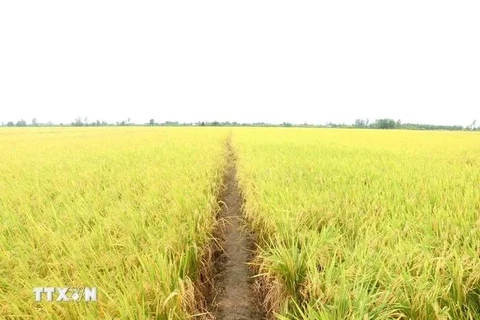
By 2050, cultivation is hoped to become a modern technical economic sector among the top in the region and the world. Rice farming will become a high-tech industry that will include organic practices to remain environmentally friendly./.
VNA

See more

The Quang Tri coastal road project, spanning nearly 55km, is among key projects with regional connectivity that play an important role in promoting socio-economic development in the central province of Quang Tri. The project is expected to be completed by the end of 2026.(Photo: VNA)

Public investment disbursement slow despite record capital scale

As of February 28, total disbursed capital reached 55.74 trillion VND, equivalent to 5.6% of the plan assigned by the Prime Minister. Of the figure, disbursement of the central budget was estimated at 10.18 trillion VND, or 2.9% of the plan, while that of local budgets totalled 45.56 trillion VND, reaching 7% of the target.

Delegates taste UK food (Photo: VNA)

Taste of UK week promotes British foods in Vietnam

The “Taste of the UK” food week, held for the first time in Ho Chi Minh City from February 26 to March 11, is an opportunity to promote British food products and strengthen their presence in Vietnam, while giving local consumers a chance to experience the diversity of UK cuisine.

A customer purchases E5RON92 bioethanol fuel at a PVOIL gas station on Thai Thinh street, Hanoi (Photo: VNA)

Retail fuel prices rise sharply in March 5 adjustment

According to the Ministry of Industry and Trade, the global fuel market during the latest price adjustment period from February 26 to March 4, 2026 was influenced by several major factors, including the escalating military conflict between the US – Israel coalition and Iran.

Workers at a textile factory in Hanoi (Photo: VNA)

Supporting industries seek fresh growth momentum

Against a backdrop of global uncertainty and supply chain restructuring, the Government has introduced a range of measures aimed at injecting new momentum into domestic manufacturing. New provisions covering workforce training, testing and certification, trade promotion and technology upgrades have been implemented.

Workers package fruits at the factory of Vina T&T Group (Photo: nhandan.vn)

Vietnamese exporters adapt to escalating Middle East conflict

The Ministry of Industry and Trade’s Export-Import Department forecasts upward pressure on global prices for consumer goods, fuel, and crude oil in the coming time. Such hikes could exert indirect but broad negative effects on Vietnam’s overall production and trade, with particular exposure in exports destined for the Middle East.

The MoIT will closely monitor global oil prices, output, inventories and trade flows to adjust imports and domestic supply accordingly. - Illustrative image (Photo: VNA)

Vietnam triggers fuel contingency plan over Middle East crisis

The Ministry of Industry and Trade will closely monitor global oil prices, output, inventories and trade flows to adjust imports and domestic supply accordingly. It will also intensify oversight of key traders’ compliance with their 2026 minimum reserve obligations.

Workers process tra fish for export. (Photo: VNA)

Agro-forestry-fishery exports up over 17% in first two months

Of the total export value in the January–February period, agricultural products accounted for 6.09 billion USD, up 17.1% year-on-year. Seafood exports reached 1.76 billion USD, marking a sharp increase of 23.3%, while forestry products brought in 2.82 billion USD, up 7.4%.

Many private businesses are investing in the service and real estate sectors in Da Nang. (Photo: VNA)

Da Nang augments efforts to attract high-quality investments

Da Nang has consistently implemented business support policies and a selective investment attraction strategy, prioritising high technology, smart city building and sustainable development, thereby strengthening investor confidence and enhancing the city’s competitiveness in the new development phase.

Export activities at the Cai Mep - Thi Vai port cluster (Photo: VNA)

Southern region opens wide to new wave of US investment

Since 2025, US enterprises have increasingly explored investment opportunities across provinces in the Southern Key Economic Region. Ho Chi Minh City has emerged as a leading destination, highlighted by multiple cooperation agreements concluded in late 2025.

Visitors explore Vietnamese furniture products at HawaExpo 2026. (Photo: VNA)

Ho Chi Minh City’s HawaExpo 2026 triples in scale

Held under the theme “Gateway to Vietnam Furniture Prowess” and featuring more than 2,500 booths, the four-day event is expected to serve as a gateway to exploring the genuine capabilities of Vietnam’s wood and furniture industry, as well as a strategic trading hub for international markets.

Deputy Governor of the State Bank of Vietnam Pham Thanh Ha answers reporters’ questions. (Photo: VNA)

SBV vows agile policy response amid global headwinds

In the coming period, the SBV will calibrate interest rate management in line with macroeconomic developments and inflation trends, while requiring credit institutions to publicly disclose lending rates to enhance transparency.