Vietnam to receive over 5.6 million doses of COVID-19 vaccines in two months

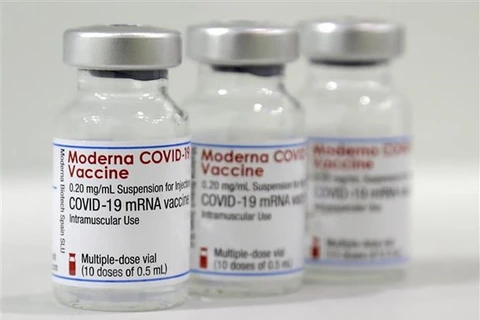
Vietnam will receive 5,657,000 doses of COVID-19 vaccine in March and April, all made by AstraZeneca, according to the National Expanded Immunisation Programme.
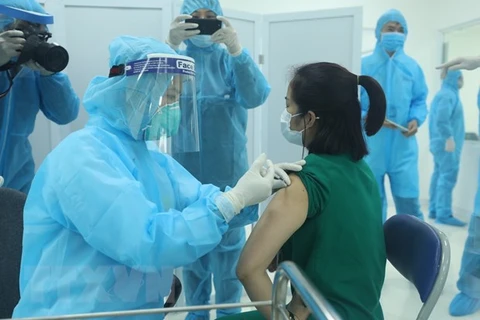
Vietnam to receive over 5.6 million doses of COVID-19 vaccines in two months ảnh 1Giving a COVID-19 shot to a woman at Thanh Nhan Hospital in Hanoi (Photo: VNA)

Hanoi (VNA) – Vietnam will receive 5,657,000 dosesof COVID-19 vaccine in March and April, all made by AstraZeneca, according tothe National Expanded Immunisation Programme.

Of the amount, 4,177,000 doses will be supplied by COVAXFacility via the UN Children’s Fund (UNICEF), with 1,373,800 doses to arrive onMarch 25 and another 2,803,200 doses in April.

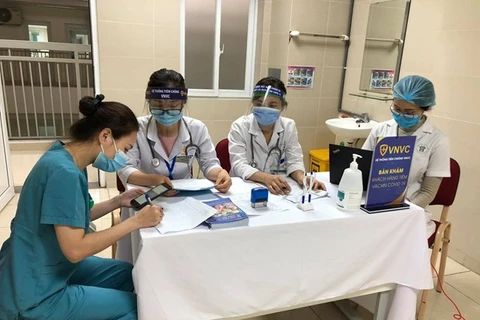
Meanwhile, 1.48 million doses bought by the Health Ministry via VietnamVaccine SJC (VNVC) will also be delivered in April.  

The COVAX Facility is the global pooledprocurement mechanism for COVID-19 vaccines through which COVAX will ensurefair and equitable access to vaccines for all 190 participating economies,using an allocation framework formulated by WHO.

Vietnam received the first batch of 117,600doses of COVID-19 on February 24, and launched its COVID-19 inoculation driveon March 8 morning, administering the AstraZeneca vaccine to medical workers inHanoi, Ho Chi Minh City and northern Hai Duong province – the country’s biggestpandemic hotspot at present./.

VNA

See more

The copyright crackdown is broadly viewed as an inevitable step in Vietnam’s cultural industry development. (Illustrative photo: VNA)

Healthy digital content market in the making

The sharper crackdown is rapidly redrawing how online entertainment is distributed and consumed, while gradually reshaping public awareness and responsibility toward copyright protection.

A view of Place Ho Chi Minh in Persan, France. (Photo: VNA)

Place preserving memories of President Ho Chi Minh in France

Although there is little publicly available documentation confirming exactly when Place Ho Chi Minh was established, French urban historians suggest that most streets and public spaces named after the Vietnamese leader in France emerged between the 1960s and 1980s, during the height of anti-war movements and solidarity campaigns supporting Vietnam across working-class towns and left-leaning suburbs around Paris.

Vietnamese Ambassador to Bangladesh Nguyen Manh Cuong speaks at the seminar. (Photo: VNA)

President Ho Chi Minh’s thought on national unity remains relevant today

President Ho Chi Minh's ideology of national unity continues to carry profound significance amid growing global challenges, including conflicts, social divisions and economic instability. His message of solidarity, consensus and placing national interests above sectional differences remains a valuable lesson for many developing nations.

Assoc. Prof. Dr. Nguyen Duc Son presents the decision establishing the Vietnamese Language Proficiency Test Council in Japan to a representative of the Vietnam Studies Centre in Japan. (Photo: VNA)

Japan hosts first standardised Vietnamese language proficiency test

As bilateral ties between Vietnam and Japan continue to expand, demand for Vietnamese language learning in Japan has also grown rapidly among OVs, educational institutions, businesses and Japanese people interested in Vietnam. Against this backdrop, the introduction of a standardised proficiency test is expected to provide an official and widely recognised benchmark for Vietnamese language skills.

The “I Love My Fatherland" Journey 2026 kicks off in Nghe An province on May 16. (Photo: VNA)

"I Love My Fatherland” journey features diverse activities

The “I Love My Fatherland” journey will span seven stages across historical and cultural sites and “red addresses” nationwide. There will be a combination of education on traditions, field-based programmes, and digital communications.