Vietnam, US promote cinema development cooperation

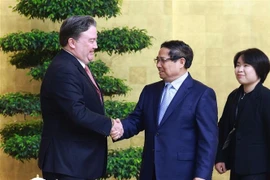
Ambassador Dang Hoang Giang, Vietnamese Permanent Representative to the UN, affirmed that cinema plays a vital role as a cultural bridge, helping the two peoples become closer and understand each other over the 30 years of normalisation, development, and enhancement of bilateral relations.

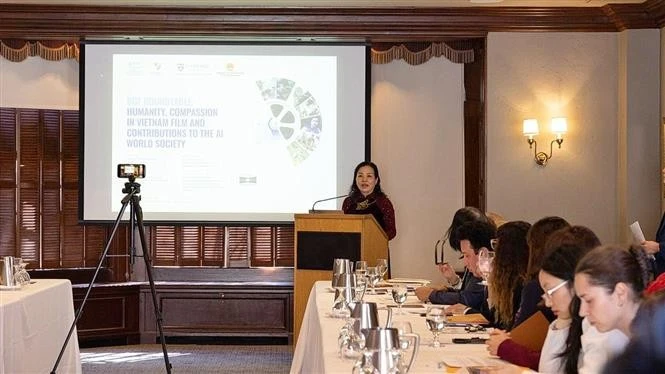
Dr. Ngo Phuong Lan, Chairwoman of the Vietnam Film Development Association (Photo: VNA)

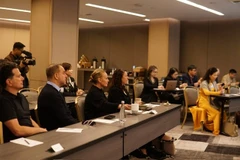
New York (VNA) - A roundtable on Vietnam-US cooperation in cinema development amid the AI and digital revolution was held on March 12 at Harvard University in Massachusetts by the Permanent Mission of Vietnam to the United Nations (UN), the Vietnam Film Development Association (VFDA), and the Boston Global Forum (BGF).

This event, part of a series of diplomatic and cultural activities to celebrate the 30th anniversary of the establishment of Vietnam-US diplomatic relations (1995-2025), drew the participation of scholars from the Harvard University, Columbia University, and Massachusetts Institute of Technology (MIT), filmmakers, businesses in the film industry, as well as experts in digital technology and artificial intelligence (AI) from both Vietnam and the US.

In his opening speech, Ambassador Dang Hoang Giang, Vietnamese Permanent Representative to the UN, affirmed that cinema plays a vital role as a cultural bridge, helping the two peoples become closer and understand each other over the 30 years of normalisation, development, and enhancement of bilateral relations.

He appreciated the contributions of American-Vietnamese directors as well as young Vietnamese filmmakers trained in the US who, upon returning to Vietnam, brought with them valuable knowledge and expertise from the world’s leading film industry, to create Vietnamese cinematic works with international significance.

Dr. Ngo Phuong Lan, Chairwoman of the VFDA, highlighted the core values of Vietnamese cinema, such as humanity, compassion, sacrifice, and selflessness, which are clearly reflected in classic works like “Canh dong hoang” (The Abandoned Field: Fire Free Zone) and “Bao gio cho den thang Muoi” (When the Tenth Month Comes).

Lan shared the strong development of Vietnamese cinema in recent years and introduced new policies and regulations that are increasingly favourable for international filmmakers to collaborate and work in the country.

In the digital age and with the rapid development of AI, Vietnamese cinema faces both opportunities and challenges, she stated, adding that while AI can assist and replace humans in many processes, it cannot replace the emotions and the depths of humanity that individuals bring to cinematic works.

Participants discussed opportunities and measures to strengthen cooperation between Vietnam and the US in the field of cinema, as well as the impact of AI on the film industry today and in the future.

On this occasion, both sides announced several initiatives to promote cooperation and connect the cinema industries of the two countries, including the establishment of the Vietnam-US film development friends group and a plan to create an AI World Society (AIWS) Film Park./.
VNA

See more

A performance at the Vietnam–Korea Festival 2026 in Da Nang city (Photo: VNA)

Vietnam–Korea Festival 2026 kicks off in Da Nang

Now in its fifth edition, the festival has cemented its place as Da Nang’s signature annual diplomatic event, spotlighting the distinct cultures of both nations, fostering friendship and driving cooperation with Korean localities and partners.

A performance at the opening ceremony of the 2026 Hanoi International Martial Arts Festival on August 7 (Photo: VNA)

Hanoi opens international martial arts festival

The event attracts about 2,000 martial artists of 66 delegations, including seven international delegations from six countries, namely Indonesia, Russia, France, Germany, Switzerland and Morocco.

The statue of Vietnam's King Ly Thai To ( (974 - 1028) in Bonghwa county (Photo: VNA)

RoK to develop K-Vietnam Valley project linked to Ly Dynasty heritage

With the designation in place, Bonghwa will carry out eight specialised projects worth a combined 347.6 billion KRW (245.1 million USD) from 2026 to 2030 – among them the K-Vietnam Valley itself, tourism development around Changpyeong Reservoir, rental smart farms, and a Baekdudaegan healing ‘pet village.’

The organising committee presents awards to outstanding martial artists at the festival. (Photo: VNA)

9th Int’l Festival of Vietnamese Traditional Martial Arts wraps up

The ninth International Festival of Vietnamese Traditional Martial Arts has fostered the martial spirit, strengthened national pride, promoted cultural exchanges and reinforced the aspiration to bring Vietnamese traditional martial arts to a wider international audience.

An appetising bowl of My Quang features a rich combination of ingredients. (Photo: VNA)

Da Nang to host festival honouring Quang Nam-style noodle soup

My Quang is not only a signature dish of the Quang region but also reflects the history, culture and daily life of communities in central Vietnam. With its diverse ingredients, preparation methods and distinctive flavours, the noodle soup has become one of Vietnam's best-known culinary specialities, helping strengthen Da Nang's position on the culinary tourism map.

Hanoi’s traditional silk weaving craft continues to be preserved and developed today. (Photo: VNA)

Van Phuc silk weaving village officially recognised as Hanoi tourist destination

With its millennia-old heritage and growing integration of preservation and innovation, Van Phuc silk weaving village is poised to become a distinctive cultural destination, helping promote Hanoi’s sustainable cultural tourism and bring the quintessence of Vietnamese silk weaving closer to domestic and international visitors.

Minister of Construction Tran Hong Minh speaks at the session (Photo: VNA)

Lawmakers mull over changes to architecture law

On architectural management, the draft Law amending and supplementing several articles of the Law on Architecture clarifies the concept of “national cultural identity in architecture”, tying design to the preservation and promotion of regional heritage. It pushes architecture that mirrors local identity and fits each locality’s natural, historical and social conditions, while setting criteria to identify, assess and protect architecturally valuable buildings as a distinct form of cultural heritage.