Vietnam working to improve efficiency of law implementation on human rights: Expert

After more than 35 years of renewal, the Vietnamese State has established a legal system to regulate social relationships, with a focus on building relatively comprehensive laws on human rights which align with the country's development realities and gradually become compatible with international regulations on human rights, according to an expert.

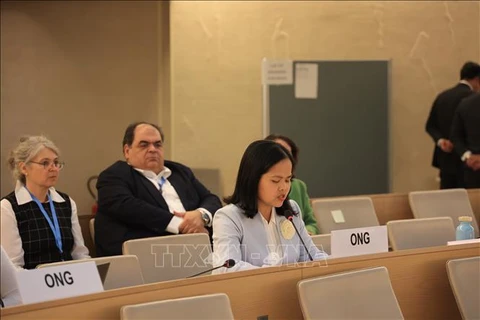
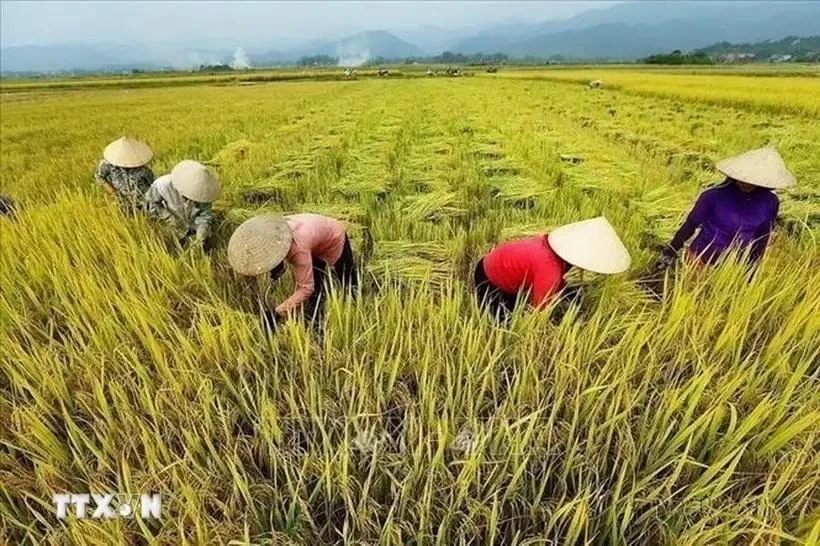
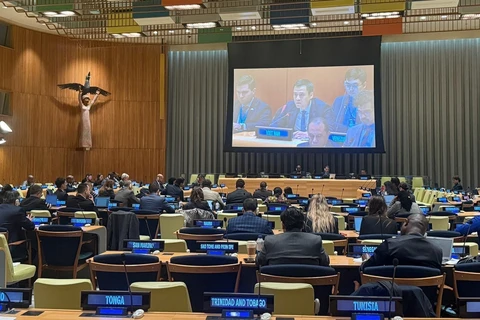
Illustrative image (Photo: VNA)

Hanoi (VNA) - After more than 35 years of renewal, the Vietnamese State has established a legal system to regulate social relationships, with a focus on building relatively comprehensive laws on human rights which align with the country's development realities and gradually become compatible with international regulations on human rights, according to an expert.

Speaking at a meeting on human rights work on October 24, Assoc. Prof., Dr. Tuong Duy Kien, Director of the Institute for Human Rights under the Ho Chi Minh National Academy of Politics, said that in its 13th tenure, the National Assembly adopted the 2013 Constitution, which is considered a pinnacle in constitutional activities for the protection of human rights. To concretise the constitutional principles, during the 2016–2021 term alone, the legislature and its Standing Committee enacted 72 laws, two ordinances, and numerous resolutions containing relevant legal provisions.

Among these, there are laws that play significant roles in the legal system, including new laws and policies that are introduced for the first time, have a substantial and comprehensive impact on socio-economic life, and respond to practical demands in a timely way.

However, alongside the results, the legal system, particularly those regarding human rights, still shows various limitations, he said, noting the 13th National Party Congress pointed out that the legal system has some provisions that are not consistent and do not meet practical requirements in a timely fashion. Compliance with the law is generally not strict; discipline and rule of law often overlooked, violations not addressed promptly, and sanctions not sufficiently deterrent. Administrative and judicial reforms have not fully met the demands of national development.

According to the expert, no matter how comprehensive the Constitution and laws may be, if they are not strictly enforced, the Party and State's sound policies and guidelines on human rights will not come into reality.

Therefore, upholding the rule of law and strengthening legal discipline in implementing the Constitution and laws on human rights is an urgent requirement at present, Kien said, stressing the need to shift the strategic directive focus from prioritising the building and perfection of laws to improving and organising the enforcement of laws, ensuring a seamless and close connection between law-making and law implementation.

Accordingly, the competent authorities need to regularly review legal documents to identify and eliminate those that conflict with the provisions on human rights outlined in the Constitution and laws, while enhancing efforts in communications, dissemination, and education of laws concerning human rights, he stated.

The orientation towards 2030, with a vision for 2045, should concentrate on building and perfecting laws that ensure the implementation of civil and political rights, as well as economic, social, and cultural rights, including the rights of vulnerable groups such as women, children, the elderly, people with disabilities, and the poor.

In addition, it is essential to strengthen the organisation and apparatus for law implementation, clearly define the powers and responsibilities of state agencies in protecting human rights, enhance the role of lawyers and develop a comprehensive range of legal services to improve citizens' access to justice and legal information regarding human rights, and increase the effectiveness of state management in international cooperation on legal and judicial matters, added the expert./.

VNA

See more

Prime Minister Pham Minh Chinh talks to people receiving medical services at the Yen Khuong health station in Thanh Hoa province on November 9. (Photo: VNA)

PM visits residents, armed forces in Thanh Hoa's border commune

In Yen Khuong commune, the PM called for greater attention to school health, nutrition for children and the elderly, and the development of a civil-military medical cooperation model, not only to serve local residents but also to support people living across the border in Laos.

Party General Secretary To Lam (front, fourth from left) and officials mark the start of construction on the Na Ngoi Primary and Junior Secondary Boarding School in Na Ngoi commune, Nghe An province, on October 11, 2025. (Photo: VNA)

Work starts on inter-level boarding schools in border areas

The simultaneous beginning of construction on 72 schools, with the participation of leaders of the Government, ministries, sectors, and localities, is meant to reflect the strong determination and close coordination across the entire political system in caring for students in border areas.

Co.opmart Hue staff pack relief goods to ensure they reach those in need as quickly as possible. (Photo courtesy of Saigon Co.op)

Saigon Co.op rushes to deliver essential goods to storm-hit areas

The Saigon Union of Trading Cooperatives (Saigon Co.op) has urgently deployed an emergency support package, sending tens of tonnes of essential goods and relief teams to provinces hit by by recent historic storms and floods across central and northern Vietnam.

Local residents take the donated breeding cows home. (Photo: VNA)

Breeding cows presented to poor households along Vietnam–Cambodia border

Accordingly, leaders of the Border Guard High Command and Tay Ninh province of Vietnam, and Svay Teap district in Svay Rieng province of Cambodia presented 20 breeding cows, valued at 20 million VND (760 USD) each, to 20 households - 10 in Long Thuan commune (Tay Ninh) and 10 in Monorom commune of Svay Teap district.

Tuyen Quang province's tax officer assist people in carrying out tax payment procedures. (Photo: Nhandan.vn)

Tuyen Quang works hard to maximise state revenue in 2025

Tuyen Quang’s state budget revenue was estimated at more than 5.55 trillion VND (210.8 million USD) in the first 10 months of 2025, reaching 91% of the target assigned by the Prime Minister and 62.5% of the plan set by the provincial People’s Committee.

A ceremony in response to Vietnam Law Day held in Khuong Mai secondary school in Hanoi (Photo: nhandan.vn)

Vietnam Law Day to be observed in Hanoi

A national-scale ceremony marking Vietnam Law Day (November 9) is scheduled for November 7 afternoon in Hanoi, offering a chance for every citizen to uphold the spirit of respecting the Constitution and law, fostering a culture of legal compliance for the goal of wealthy people and a strong, democratic, equitable, and civilised nation.

The success of the Russian October Revolution had a profound impact on revolutionary movements around the world, including in Vietnam. Under the light of Marxism–Leninism and the October Revolution, Nguyen Ai Quoc found in it a “miraculous handbook,” the path to national salvation for the Vietnamese people. In the photo: The people of Hanoi seized the Residential Palace of the Tonkin Governor – the headquarters of the French-backed administration in northern Vietnam, marking the success of the August Revolution in Vietnam on August 19, 1945. (Photo: VNA Archives)

Russian October Revolution opens a window into Vietnam

On the eve of the 108th anniversary of the October Revolution, through a bilingual presentation by lecturer Hong Hoa and documentary footage, the question of how a revolution that took place in faraway Russia in 1917 could help an Asian nation like Vietnam achieve independence and freedom in 1945 was vividly explained to students born a century after the event.