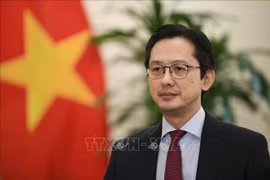
New York (VNA) – Progress in human rights can only be achieved by maintaining peace and stability, respecting the rule of law at both the international and national levels, and ensuring respect for the principles of national sovereignty and non-interference in internal affairs, said Ambassador Dang Hoang Giang, Permanent Representative of Vietnam to the UN.
At a debate of the Committee on Social, Humanitarian and Cultural Issues (Third Committee) of the 79th session of UN General Assembly in New York on October 22, the diplomat further said that for promoting and protecting human rights, it is essential to prioritise addressing urgent issues faced by people and to place people at the centre of all policies, adding that dialogue, cooperation, and mutual respect, rather than politicisation and confrontation, are the most effective ways to ensure human rights, contributing to promoting inclusive and sustainable development, and leaving no one behind.
He stated that Vietnam's struggle for national independence and reunification, and its efforts in socio-economic development all aim at the highest goal of ensuring the lives and rights of the Vietnamese people.
Remaining steadfast and consistent with this goal has helped Vietnam overcome numerous difficulties and challenges, becoming one of the most dynamic and rapidly developing economies in the world, he went on.
Giang highlighted the positive results Vietnam achieved in recent times, which are clearly reflected in its National Report under the fourth cycle of the Universal Periodic Review (UPR) approved by the UN Human Rights Council on September 27, 2024, affirming that human rights are not only a fundamental value but also a key aspect in Vietnam’s international cooperation policy.
He took the occasion to announce Vietnam's decision to run for a seat at the UNHRC for the 2026-2028 term, and called for support from other countries.
Delegates said the protection and promotion of human rights worldwide are facing multidimensional and complex challenges due to the impacts of war, conflicts, economic crises, and rising poverty and inequality. They underlined the need to strengthen solidarity, cooperation, and dialogue, and to pool resources to accelerate the implementation of the 2030 Agenda for sustainable development, towards addressing these challenges and advance human rights./.
See more
Indonesia designates 31 mln ha of waters as conservation areas
Head of the Convention and Marine Resource Balance working team at the ministry’s Directorate of Ecosystem Conservation Ahmad Sofiullah said this week that it is a strategic effort to ensure the sustainability of Indonesia’s marine ecosystems.
Singapore targets at least 40% reduction in emissions from aviation fuels
Singapore aims to have sustainable aviation fuel (SAF) account for 1% of total jet fuel consumption at Changi and Seletar airports in 2027, rising to 3-5% by 2030.
Cambodia launches “Clean Phnom Penh 2026” campaign
Cambodia has launched the “Clean Phnom Penh 2026” campaign to raise public awareness, promote a civilised lifestyle and foster positive social behavioural standards.
Indonesia to share forest fire control experience at COP31
At COP31, Indonesia plans to host 67 dialogue sessions at its pavilion, focusing on clean energy transition, green industry, nature-based solutions, climate finance and climate justice.
Cambodia applies modern technology to dolphin conservation
The project is being supported by the World Wildlife Fund For Nature (WWF) and the Lancang–Mekong Cooperation Special Fund.
Oil stockpiling cooperation can save ASEAN hundreds of millions of USD annually: ERIA
Recent fluctuations in global energy markets highlighted the need for ASEAN member states to improve preparedness and cooperation. Stockpiling cooperation will enable ASEAN to strengthen energy security while optimising costs through resource sharing.
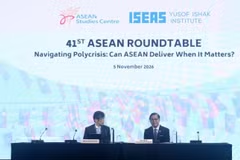
Thailand calls on ASEAN to proactively address polycrisis
Thai Deputy Prime Minister and Minister of Foreign Affairs Sihasak Phuangketkeow noted that no single member state could tackle challenges ranging from major-power competition and economic fragmentation to climate change and energy and food security on its own. Regional cooperation is therefore a strategic imperative, enabling ASEAN not only to overcome crises but also to sustain its development momentum.
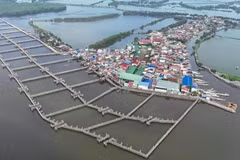
Philippines harnesses natural ecosystems to combat rising sea levels
Rather than relying entirely on concrete sea walls and embankments, the project combines bamboo poles, tree branches and oyster shells to reduce wave energy, trap sediment and create favourable conditions for mangrove restoration.
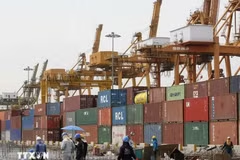
Malaysia steps up transport infrastructure investment to become global logistics hub
The centre marks a shift from handling larger cargo volumes to developing higher-value activities. Goods will be sorted, stored and repacked there before being sent overseas, creating skilled jobs for Malaysians.
Indonesia to launch commodity export monitoring platform next year
DSI will draw on data from customs authorities, trade activities and the financial system, alongside contracts and documents uploaded by exporting companies. The platform will monitor the volume, quality, prices and destination markets of various commodities, as well as transactions between related parties.
Singapore tightens cross-border haze pollution law
Fines for companies failing to comply with regulations will increase tenfold to nearly 800,000 USD per day, while the maximum penalty will rise to more than 15.6 million USD.
Thailand rolls out three-pillar strategy to create new growth momentum
Thai Prime Minister Anutin Charnvirakul affirmed that the country’s current political stability provides a foundation for the consistent implementation of economic policies and structural reforms, enabling Thailand to make strong progress in the new economic era.
Cambodia calls for stronger ASEAN cooperation to combat misinformation
Cambodian Minister of Information Neth Pheaktra said the rapid spread of false and misleading information, coupled with advances in generative artificial intelligence (AI), is posing increasingly complex challenges to regional societies.
Philippines increases rice imports from Cambodia
Cambodia has contracted to supply a further 87,344 tonnes to the Philippines between September and December. If all orders are fulfilled, its rice exports to the market could reach around 209,000 tonnes in 2026.
Cambodia expands school meal programme
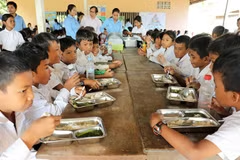
Cambodian Prime Minister Hun Manet stressed that his Government would proactively allocate budget and strengthen management capacity, with the aim of expanding the school meal programme to more than 7,000 primary schools nationwide. The move is expected to improve students' nutrition and learning conditions.
Indonesia attracts fresh data centre investment amid AI boom
Indonesia’s data centre market is expanding rapidly. According to a report by Research and Markets, the market was valued at approximately 2.81 billion USD in 2025 and is projected to reach 6.08 billion USD by 2031.
Cambodia, EU strengthen investment cooperation
In his opening remarks, Deputy Prime Minister and First Vice President of the Council for the Development of Cambodia (CDC) Sun Chanthol highlighted the Cambodian Government's efforts to improve the investment climate and facilitate trade, stressing the importance of close public-private cooperation in promoting Cambodia as an attractive investment destination.
Women play key role in building united, resilient, sustainable ASEAN Community
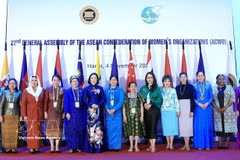
Hosted by the Vietnam Women’s Union (VWU), the 22nd ACWO General Assembly marked another milestone in ACWO’s cooperation and development, allowing ASEAN women’s organisations to strengthen solidarity and mutual trust, share experience and identify cooperation priorities for the region’s next stage of development.
Thailand targets 11 million long-haul visitors in 2027
For 2026, the Tourism Authority of Thailand has maintained its target of welcoming 10.7 million visitors from these markets and generating 690 billion THB in revenue.
Thailand urges households to prepare 72-hour emergency bags
Thailand’s Department of Disaster Prevention and Mitigation recommended that households include six categories of essential items in their emergency kits: medicine and health, food and water, communications and tools, documents and cash, hygiene, and clothing.