Malaysia plans to increase investment in waste-to-energy production

Malaysia’s Ministry of Plantation and Commodities on October 22 proposed investing in new technologies and infrastructure to more efficiently convert waste from palm oil production into biomass energy.

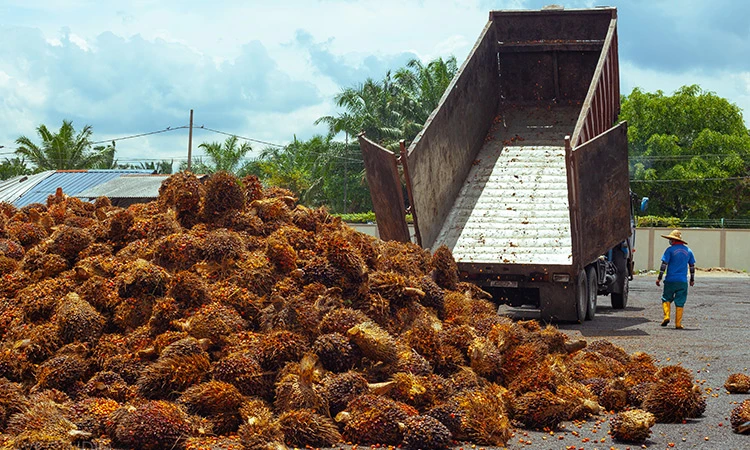
At a palm oil mill in Malaysia (Photo: sulpom.com)

Kuala Lumpur (VNA) – Malaysia’s Ministry of Plantation and Commodities on October 22 proposed investing in new technologies and infrastructure to more efficiently convert waste from palm oil production into biomass energy.

On the sidelines of the Oils and Fat Conference 2024 which was organised by the Malaysian Oil Scientists and Technologists Association, Minister of Plantation and Commodities Johari Abdul Ghani said that waste industry materials like empty fruit bunches (EFB), mesocarp fibre, and palm kernel shells could be burned and turned into energy.

The minister emphasised that palm oil mills generate effluent that could be converted into energy through methane capture. Integrating these organic materials into the agricultural cycle creates a closed-loop system, he said.

Malaysia, the world’s second largest producer of palm oil, just after Indonesia, has pledged to achieve net-zero by 2050. It has committed to retire coal-fired power plants by 2044 as part of its energy transition and climate change policy.

Malaysia is home to 446 palm oil mills, which could hypothetically generate up to 2,230 megawatt of electricity from renewable energy if each mill could produce up to five megawatt. A 2,000-megawatt power plant today would cost 8-9 billion MYR (1.85-2.08 billion USD).

Johari said that waste-to-energy production also addresses typical issues like waste segregation and supply adequacy, which often hinder recycling efforts. This approach is key to mitigating biodiversity loss and combating climate change while ensuring the long-term sustainability of the palm oil industry.

However, he noted that there are several challenges, including having transmission lines reach the palm oil mills to feed the electricity generated into the grid before it could be sold./.
VNA

See more

The scene of a crane collapse in Samut Sakhon province, Thailand, on January 15, 2026. (Photo: Xinhua/VNA)

Another crane collapses in Thailand

The latest incident took place in Samut Sakhon province near the capital Bangkok, where a crane involved in the construction of an elevated highway fell onto the road beneath.

Cambodian Prime Minister Hun Manet (Photo: Xinhua/VNA)

Cambodian PM declares crackdown on cyber scams

The Cambodian PM noted the strict measures against online scams in the past are a testament to the government's political commitment to combating this transnational crime, which is a common concern for Cambodia, the region, and the world.

Foreign tourists in Bangkok, Thailand. (Photo: Xinhua/VNA)

International arrivals to Thailand surge in early 2026

Thailand welcomed 1,121,549 international visitors in the first 11 days of 2026, generating an estimated 55.03 billion THB (approximately 1.59 billion USD) in tourism revenue, according to figures released by the Ministry of Tourism and Sports on January 13.

Tourists visit the Plain of Jars in Xiengkhouang, Laos.(Photo: VNA)

Laos named among world’s top travel destinations for 2026: TravelPulse

Known for being one of Southeast Asia’s best kept secrets, experts said 2026 will be the year for Laos to start attracting discerning travelers. Traversed by the Mekong River, Laos features mountainous terrain, French colonial architecture and an abundance of Buddhist monasteries.

A commemorative publication titled “50 Years of Germany – Vietnam Relations: Partners in the Past, Present and Future”, published in 2025, offers a timely and comprehensive reflection not only on the 50th anniversary but also on the two countries' strategic path ahead. (Illustrative photo: the Vietnamese – German University)

German economic cooperation ministry praises Vietnam’s development

Commenting on the German Government’s prominent reference to Vietnam’s achievements in a key policy document shaping the future direction of its development policy, Dr Kambiz Ghawami, President of Germany’s World University Service (WUS), described this as highly significant.

Indonesia’s meat industry faces widespread job loss risks (Photo:en.infosawit.com)

Indonesia’s meat industry faces risk of mass layoffs

The Indonesian Meat Entrepreneurs and Processors Association (APPDI) said the total beef import quota for private companies this year has been cut to 30,000 tonnes, down sharply from 180,000 tonnes in 2025. The figure accounts for only a small fraction of Indonesia’s overall import plan of 297,000 tonnes of beef and buffalo meat for 2026.

Vietnamese Minister of National Defence General Phan Van Giang (left) and Lao Minister of National Defence Senior Lieutenant General Khamlieng Outhakaysone (Photo: VNA)

Laos focuses on building comprehensive all-people national defence posture

Reporting on defence and security work over the past five years, he noted that despite numerous challenges, Laos has recorded significant achievements under the direct, comprehensive and resolute leadership of the LPRP, the guidance of the Central Commission for Defence–Security, the solidarity and efforts of administrations at all levels, sectors, local authorities and the Lao people, along with cooperation from strategic partners.