Vietnamese consumer goods makers pay more attention to green production

Most of Vietnamese businesses have acknowledged the importance of sustainable production to their competitiveness and long-term development in the context of the growing green consumption trend.

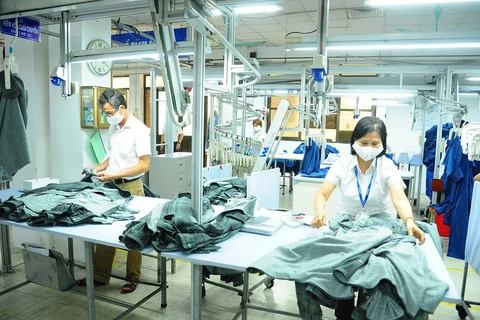
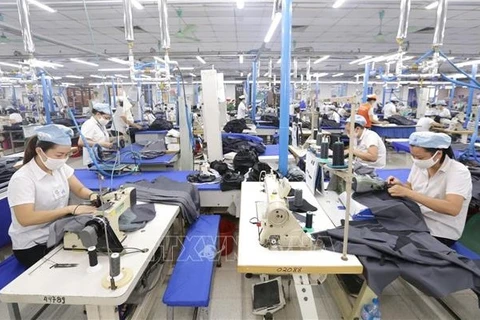
Illustrative image (Source: VnEconomy)

Hanoi (VNA) – Most of Vietnamese businesses have acknowledged the importance of sustainable production to their competitiveness and long-term development in the context of the growing green consumption trend.

Distributors, especially supermarkets, have been greening their process, cutting down on intermediate packaging and waste, offering environmentally friendly products, said Ta Dinh Thi, Vice Chairman of the National Assembly's Committee for Science, Technology and Environment.

However, he said, they still find it hard to access capital and technologies to pursue their green strategies, apart from difficulties in market expansion, recycling, and implementing the circular economy model.

Savvy consumers, who are putting environment issues at the heart of their spending decisions, have offered a source of encouragement for enterprises to continue their green production.

Ho Tung Bach, Deputy Director of the Consumer Protection Department under the National Competition Commission at the Ministry of Industry and Trade, cited a latest report showing that revenue from green products has grown about 15% annually over the past time, showing the heightened awareness and actions of consumers.

According to the ministry, the demand for green goods in Vietnam expanded by 15% each year during the 2021-2023 period, and up to 72% of Vietnamese consumers are willing to pay more for such products.

Bach stressed that the Government has issued various policies and measures stipulating the role of businesses in sustainable production and consumption, while giving them information and financial support.

The official also pointed out challenges to green production and consumption, including huge resources which push up product prices, the prevalence of fake advertisements that hurt consumer confidence, and the fierce competition with imported products.

Against the back drop, on-the-spot materials and seasonal production models are among the advantages of Vietnamese firms, he said./.
VNA

See more

The Nguyen Van Linh–Nguyen Huu Tho intersection fully opens both underpasses to traffic, helping ease congestion in the area. (Photo: VNA)

Ho Chi Minh City pushes for full public investment disbursement

Ho Chi Minh City was allocated a record 147.599 trillion VND (5.6 billion USD) in public investment capital for 2026, up 22.6% from last year and accounting for nearly 14.6% of the nation’s total public investment budget. However, disbursement by the end of April remained below the national average.

Visitors explore Quang Tri province’s OCOP products (Photo: VNA)

Quang Tri links OCOP products with tourism to expand farm produce markets

The central province currently has 160 OCOP products developed by cooperatives, cooperative groups and businesses, including two five-star and 31 four-star products. These locally distinctive products are gradually becoming "ambassadors" showcasing Quang Tri’s culture and identity to domestic and international visitors.

Work starts on Hanoi’s Red River Landscape Boulevard Axis project on December 19, 2025. (Photo: VNA)

Hanoi approves nearly 28-bln-USD Red River landscape boulevard project

Covering more than 11,400 hectares and requiring an estimated 736.96 trillion VND (nearly 28 billion USD), the project is expected to reshape urban development along both banks of the Red River over the coming decades while improving transport connectivity and public spaces in the capital.

Deputy Prime Minister Nguyen Van Thang and delegates perform the ground-breaking ceremony for the Northwest Dien Bien Phu New Urban Area, Resort and Sports Complex project. (Photo: VNA)

Vingroup launches largest-ever urban development project in Dien Bien

Under the master plan, the project will span more than 228.5ha and accommodate around 12,000 residents. It is designed under a “city within a city” model integrating residential areas, commercial and service facilities, resorts, schools, healthcare services, public spaces and sports infrastructure.

Deputy Prime Minister Nguyen Van Thang and delegates press the button to launch construction of the Dien Bien Phu cultural-historical tourism and cable car complex project in Dien Bien province on May 10, 2026. (Photo: VNA)

Dien Bien Phu cultural-historical tourism, cable car complex project launched

The project aims to effectively tap the area’s natural landscapes, geographical advantages and distinctive historical value, while creating a high-quality tourism product with strong competitiveness. It is also intended to preserve, honour and promote the value of the Dien Bien Phu Victory special national historical relic site.

Politburo member Nguyen Duy Ngoc (third, right), who is Standing Deputy Head of the Central Steering Committee for Science-Technology Development, Innovation and Digital Transformation, holds a working session with the Colombo Port City Management Board. (Photo: VNA)

Vietnam studies Colombo smart port city model

Ngoc praised Sri Lanka’s orientations in developing seaport infrastructure, digital infrastructure, digital economy and international service centres, describing them as valuable references for Vietnam in developing strategic infrastructure, innovation centres, smart urban areas and digital economy ecosystems.

Tan Cang – Cat Lai Port in Ho Chi Minh City (Photo: VNA)

MoIT issues decision recognising Vietnam Logistics Day

The move is aimed at raising awareness across government agencies, businesses and the wider public of the vital role logistics services play in socio-economic development, international integration and strengthening national competitiveness.