Vietnamese iced coffee among world's best coffees: TasteAtlas

Vietnamese iced coffee has been named as one of the best coffee in the world by TasteAtlas, an international food magazine.
Vietnamese iced coffee among world's best coffees: TasteAtlas ảnh 1Vietnamese iced coffee is rated 4.6 out of 5 stars by culinary experts. (www.tasteatlas.com)

Hanoi (VNA) – Vietnamese iced coffee has been named as one of the best coffee in the world by TasteAtlas, an international foodmagazine.

Vietnamese iced coffee is rated 4.6 out of 5 stars by culinary experts, equivalent to Ristretto of Italy.

According toTasteAtlas, Vietnamese iced coffee is a drink that combines strong coffee,condensed milk, and ice.

“It is traditionally made with medium orcoarse ground Vietnamese-grown coffee, typically the Robusta variety, which isbrewed using a drip phin filter—inwhich the coffee is brewed and then slowly dripped in the cup,” it said.

The magazine revealedthat it is usually served in a tall glass, adding that there is also a versionthat combines only coffee and ice (ca phe da).

Sharing the first positionwith Vietnamese iced coffee is Ristretto of Italy, which means restrictions inItalian, is half of a single shot of espresso.

It differs froma standard espresso, not only in the amount of water used for its preparation but also in flavour, which is less bitter than regular espresso, according to TasteAtlas.

The colour of Ristretto is reminiscent of dark chocolate, it said, addingthat Ristretto is typically served straight in a demitasse cup

Other types of coffee that are on thelist of TasteAtlas’s top 10 best-rated coffees in the world are Cappuccino of Italy, Frappe ofGreece, Macchiato of Italy, Freddo Cappuccino of Greece, Espresso of Italy and Turkish coffee, and Cortado of Spain./.
VNA

See more

Ly Hoang Nam is Asia's No. 1 pickleball player. (Photo: webthethao.vn)

Ly Hoang Nam tops Asian pickleball rankings

Vietnam boasts five players in the DUPR Asian top 10, with Nam leading the rankings on 6,267 points ahead of competitors from the Philippines, India, Hong Kong (China) and Chinese Taipei.

Visitors to the booth of the Vietnamese Embassy at the Embassies Food and Culture Festival held in Prague, the Czech Republic, on June 6 (Photo: VNA)

Vietnamese culture, cuisine leave lasting impression in Czech Republic

Featuring more than 100 booths representing diverse cultures from around the world, the festival transformed the heart of Prague into a vibrant multicultural space where visitors could sample traditional dishes, enjoy folk performances, listen to traditional music and experience unique cultural showcases from different continents.

Vietnamese artists play traditional musical instruments at the festival held in Karlovy Vary city, the Czech Republic, on June 5. (Photo: VNA)

Vietnam culture, cuisine showcased in Czech Republic

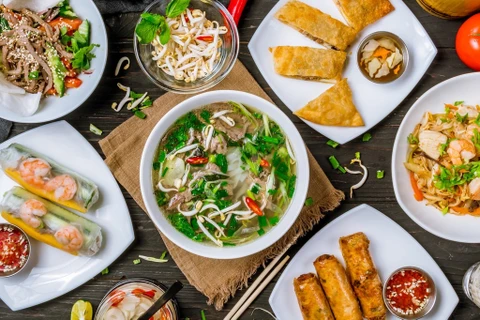
The festival featured more than 20 booths offering traditional Vietnamese dishes, including "pho" and spring rolls, alongside activities promoting Ao Dai (Vietnamese traditonal long dress). One of the highlights was the presentation of complimentary Ao Dai to Czech residents and international visitors.

The Nguyen Dynasty (1802-1945) imperial throne, a recognised national treasure of Vietnam, officially returns to public display at Thai Hoa Palace in Hue Imperial Citadel on June 4 (Photo: VNA)

Nguyen Dynasty throne returns to Hue Imperial Citadel after restoration

The throne has been reinstated at its original central position inside Thai Hoa Palace, the ceremonial heart of the former imperial court. Its return has attracted significant interest from visitors and heritage enthusiasts eager to see one of Vietnam’s most important royal artefacts back on display.

People join the “Ho Van Lantern Festival Night” programme at the special national relic site of the Van Mieu–Quoc Tu Giam (Temple of Literature) in Hanoi. (Photo: VNA)

Night-time economy drives growth of Hanoi’s cultural industries

Under the Politburo’s Resolution No. 80-NQ/TW on the development of Vietnamese culture, Hanoi has been given fresh opportunities to leverage its cultural, historical, tourism and creative assets. The city’s recently approved project on developing the night-time economy for 2026–2030, with a vision to 2045, is expected to create momentum for cultural industry growth while enhancing Hanoi’s standing as a creative and modern city with a distinctive identity.

Efforts made to preserve, promote values of Non Nuoc Cao Bang Global Geopark

Efforts made to preserve, promote values of Non Nuoc Cao Bang Global Geopark

First recognised by UNESCO on April 12, 2018, the Non Nuoc Cao Bang Global Geopark in the northern province of Cao Bang is a land shaped by more than 500 million years of geological history. Covering over 3,683 sq.km and encompassing all or part of 36 communes and wards, the geopark is home to numerous scenic landscapes, as well as historical and cultural sites of exceptional value.

Scenic views of Da Nang featured in the film "Love in Vietnam" (Photo: VNA)

Da Nang Asian Film Festival 2026 set to launch with expanded international focus

Through this coordinated effort, Da Nang aims to establish DANAFF not only as an annual film event but also as a distinctive cultural landmark, helping position the city as a reputable destination for regional film and cultural events and enhancing its international profile, Vice Chairwoman of the municipal People’s Committee Nguyen Thi Anh Thi, said.

Co Bo Temple in Thanh Hoa province (Photo: nhandan.vn)

Thanh Hoa taps spiritual heritage to boost cultural tourism

Experts have called for stronger implementation of heritage management regulations under the Cultural Heritage Law, clearer responsibilities for site management boards and stricter action against activities that distort cultural traditions.

Ambassador Do Hung Viet, Vietnam's Permanent Representative to the United Nations, and his spouse introduce Vietnamese dishes to visitors at the 2026 UN International Bazaar in New York on June 3. (Photo: VNA)

Vietnam leaves strong impression at 2026 UN International Bazaar

A wide range of traditional handicrafts reflecting Vietnam’s rich cultural heritage, including ceramics, lacquerware, silk products, brocade textiles and other items, attracted considerable attention from visitors. Many products sold out early in the day.