Vietnam's high-speed rail ambition: A national leap into new era

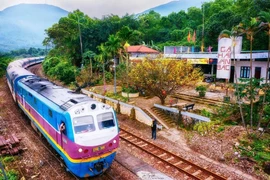
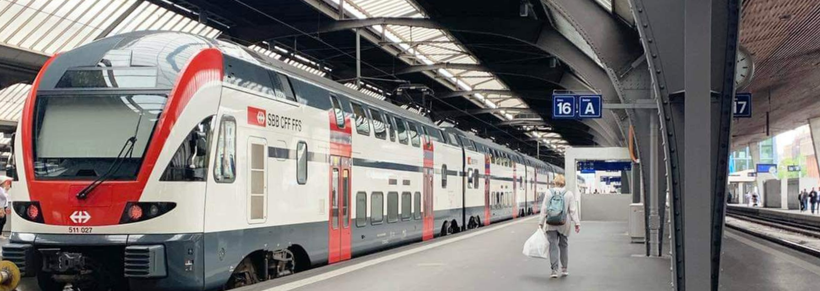
The North–South high-speed railway project stands as a symbol of a new era of national rise. (Illustrative photo: VietnamPlus)

Hanoi (VNA) - The planned North–South high-speed railway is poised to shrink distance between localities, ease infrastructure pressure on overburdened cities, and drive the next wave of economic growth.

For more than a century, Vietnam’s railway infrastructure has remained largely unchanged since its original construction under French colonial rule. In an era of modern transit systems, this legacy has left Vietnam’s railways with an increasingly marginal role in passenger and freight transport, overshadowed by road and air.

Therefore, the Party and the State have identified the investment in constructing the North–South high-speed railway as a strategic objective, laying the groundwork for Vietnam to become a developed, high-income nation, comparable to many others around the world.

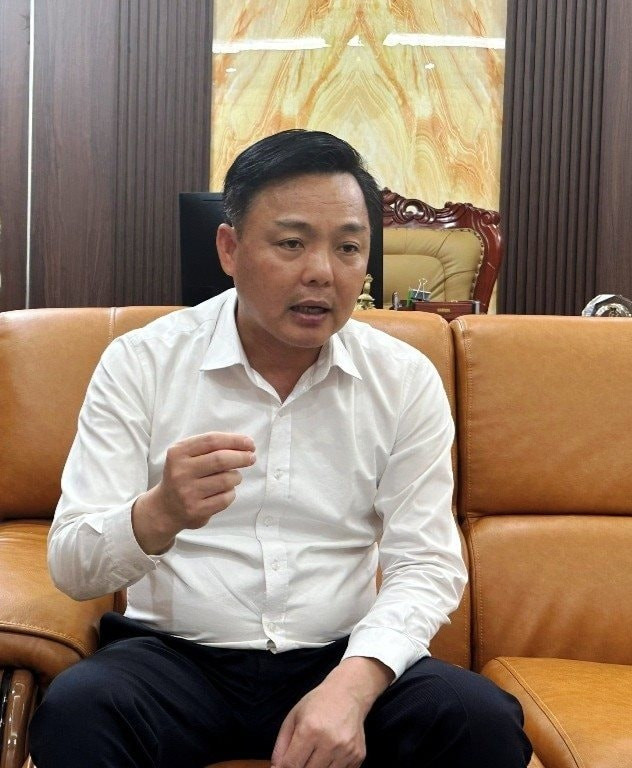
“On 30 November 2024, the National Assembly approved the investment policy for the North–South high-speed railway project. This is a historic milestone for the railway sector, affirming the role and importance of rail transport in the country’s development,” stressed Hoang Gia Khanh, General Director of Vietnam Railways Corporation (VNR).
2.jpg
Hoang Gia Khanh, General Director of the Vietnam Railways Corporation. (Photo: VietnamPlus)

Khanh has spent his career in rail transport, rising from train operations to the helm of the national railway company. To see the travel time reduced from over 30 hours to just 5 hours and 30 minutes captures the spirit of renewal the sector has been striving for, according to Khanh.

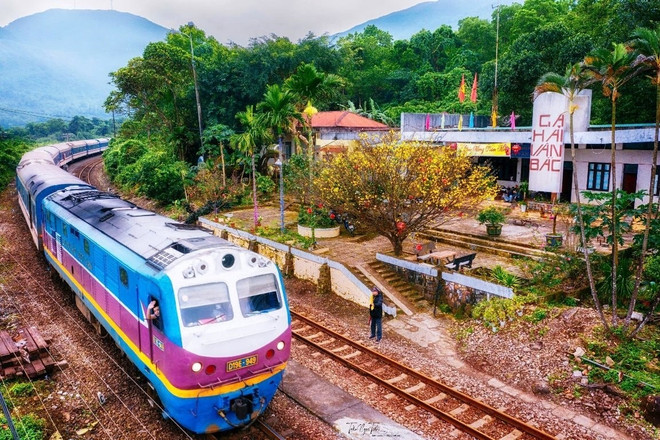
Despite the end of war nearly five decades ago, no new railway line in Vietnam has been built to modern, commercial standards, he noted. Most of the country’s 1,000mm gauge, single-track lines are a legacy of colonial engineering.
3.jpg
The railway infrastructure remains outdated and worn, with tracks still built to the narrow-gauge standards introduced during the French colonial era. (Photo: VietnamPlus)

Bui Xuan Phong, former Chairman of the Vietnam Railway Economics and Transport Association, said the North–South high-speed railway is a project for the future. It also serves as a “lifeline” for the existing 1,700km-long North–South railway – now over a century old, severely degraded, outdated, and frequently paralysed during the rainy season.

Nguyen Xuan Thuy, former Director of the Transport Publishing House, shared optimism that the 23 stations along the future North–South high-speed railway will open up new spaces and development opportunities for localities.

“Around these stations, new urban areas and industrial zones will take shape, based on local planning strategies, enabling more effective use of land resources,” he noted.
4.jpg
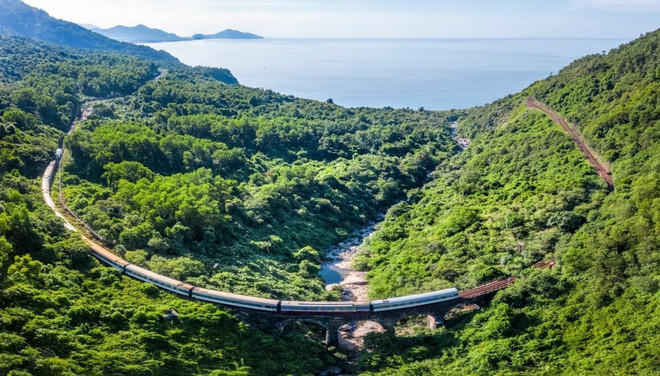
Without a modern replacement, the railway sector will continue to lose passengers and investment. (Photo: VietnamPlus)

Deputy Minister of Construction Nguyen Danh Huy affirmed that the high-speed railway line offers the advantages of large-volume, fast, reliable, and convenient transport. It will also play a key role in shortening the distance between regions, helping to ease the pressure of population concentration and overloaded infrastructure in major cities such as Hanoi and Ho Chi Minh City.

The official said investing in the high-speed railway line will create a construction market worth about 33.5 billion USD. If the national railway and urban railway systems are included, the total value could reach 75.6 billion USD, along with the creation of millions of jobs. With appropriate technology transfer, Vietnam has the potential to develop a modern domestic railway industry.

The development of high-speed rail is a foundational step for the growth of the railway industry and supporting industries, Huy assessed.
5.jpg
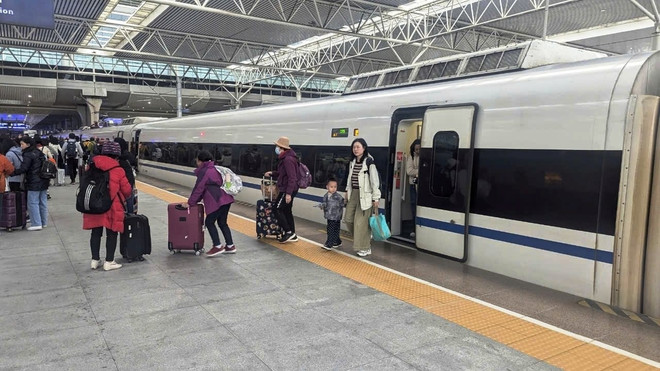
The high-speed railway line is expected to shorten the distance between regions. (Illustrative photo: VietnamPlus)

For VNR General Director Khanh, the railway remains one of the most vital forms of transportation. In comparison to other modes, rail offers a unique combination of high freight capacity, operational efficiency, reliable safety standards, and moderate costs. By 2050, demand for freight transport along the North–South corridor is projected to exceed 18.2 million tonnes per year, while passenger transport could reach a staggering 122.7 million journeys annually.
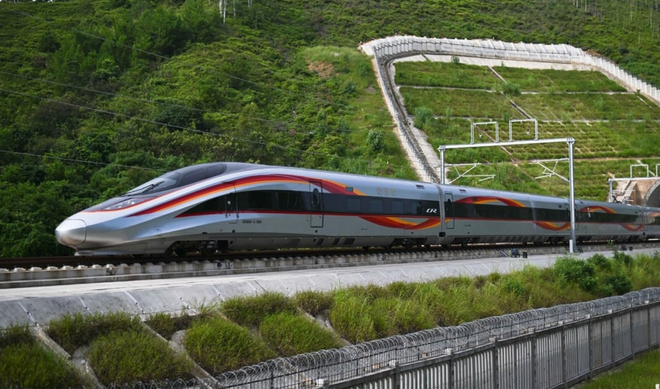
6.png
The high-speed railway will primarily serve passenger transport, but will also support freight services when required. (Photo: VietnamPlus)

Khanh recommended that in addition to constructing the new high-speed line, continued investment in upgrading the existing railway network remains essential, particularly for heavy industries and specialised freight such as liquefied gases and petroleum.

The high-speed railway will primarily serve passenger transport, but will also support freight services when required, he added.
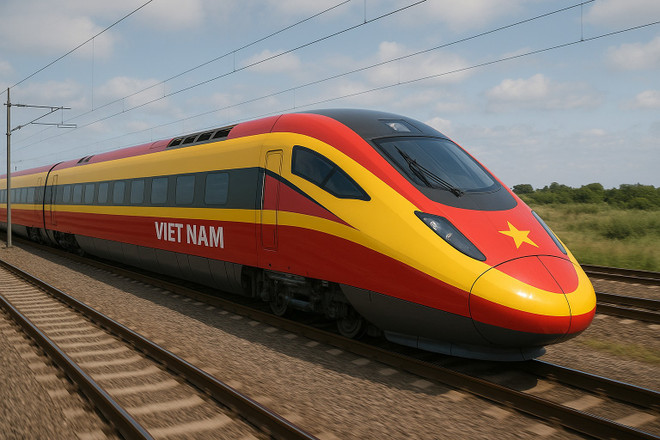
7.png
The North–South high-speed railway project is poised to become a powerful engine driving Vietnam’s socio-economic transformation. (Photo: VietnamPlus)

According to Minister of Construction Tran Hong Minh, the Government aims to submit a feasibility study to the Prime Minister by the fourth quarter of 2026. Following approval, the process of selecting contractors will commence, with ground expected to be broken on the project by late 2027./.
VNA

See more

Many vessels have installed additional vessel monitoring systems to ensure uninterrupted information connectivity with shore-based stations during fishing trips. (Photo: VNA)

Decisive moment of fight against IUU fishing violations

Under the close direction of the Prime Minister, coastal localities nationwide, particularly in central Vietnam, are urgently implementing assigned tasks with clear schedules and milestones, delivering tangible weekly progress.

Prime Minister Pham Minh Chinh speaks at the 26th meeting of the National Steering Committee for Combating Illegal, Unreported and Unregulated (IUU) Fishing. (Photo: VNA)

Local leaders must be held accountable for IUU fishing violations: PM

PM Chinh requested the Government Inspectorate to promptly identify localities that lack determination or fail to handle violations thoroughly, including cases where vessels not meeting legal requirements are still allowed to leave ports, and to clarify responsibilities and impose sanctions without delay.

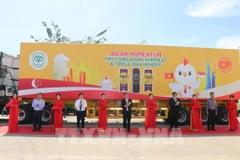
The ribbon-cutting ceremony marking the export of C.P. Vietnam's first container shipment to Singapore. (Photo: VNA)

C.P. Vietnam exports first processed chicken batch to Singapore

The CPV Food Binh Phuoc plant operates a closed-loop system and holds international certifications, including HACCP, BRC, ISO 22000, and Halal. Before reaching Singapore, the company’s processed chicken was already exported to Japan, Hong Kong (China), Cambodia, and Laos, with Japan alone importing 10,000 tonnes by November 2025.

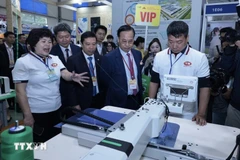
Delegates visit a booth at the exhibition (Photo: VNA)

HanoiTex & HanoiFabric 2025 kicks off

Running until December 18, HanoiTex & HanoiFabric is expected to contribute to sustainable development and stronger international integration of Vietnam’s textile and garment industry.

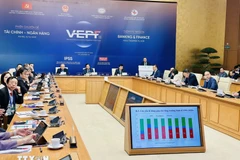
The thematic session on finance and banking of the Viet­nam Eco­nomy in 2025 and Pro­spects in 2026 Forum (VEPF). (Photo: VNA)

Vietnam economic forum 2025: balancing high growth and sustainability

At the thematic session on finance and banking, delegates focused on solutions for financial resources and eco­nomic growth tar­gets in the 2026-2030 period. The effective mobilisation of financial resources was identified as a key prerequisite for Vietnam to realise its target of double-digit economic growth during this phase.

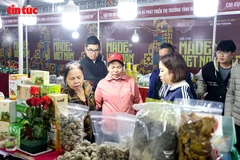
Local residents and visitors tour and shop at a fair. (Photo: VNA)

Made in Vietnam Fair set to open in Hanoi

The Made in Vietnam Fair will showcase a wide range of products, including industrial and consumer goods, processed foods, agricultural produce and handicrafts, with the participation of distribution systems, e-commerce platforms, digital platforms and digital financial solution providers operating in Vietnam.

2025 a good year for Vietnam’s securities sector: SSC

2025 a good year for Vietnam’s securities sector: SSC

During the year, the SSC made significant progress in improving the legal and policy framework. Institutional work was implemented in a coordinated manner, including the issuance of two decrees, one resolution, seven circulars and three major schemes. At the same time, the regulator strengthened policy dialogue and expanded cooperation with international organisations to support the market upgrade process.

Vietnam shows strong FDI performance in the first 11 months of 2025 (Source: vtv.vn)

Vietnam shifting FDI attraction focus from volume to quality

As production relocation to Southeast Asia accelerates and competition for FDI intensifies, Vietnam faces increasing pressure from regional rivals such as India, Malaysia and Indonesia, which are offering bold tax incentives and developing specialised industrial parks. This reality requires Vietnam to shift its focus from attracting large volumes of capital to drawing high-quality investment, prioritising core technologies, innovation, value chain linkages and higher localisation rates.

Vice Chairman of the Ho Chi Minh City People’s Committee Hoang Nguyen Dinh inspects IUU fishing prevention efforts at Hung Thai Port in Long Hai commune. (Photo: VNA)

Ho Chi Minh City steps up oversight of unqualified fishing vessels

HCM City currently has 4,475 fishing vessels, all of which have been registered and updated on the VNFishbase system. Among them, 4,268 vessels, or 95.37%, have been granted fishing licences, while 207 unqualified vessels are being strictly managed and kept ashore.

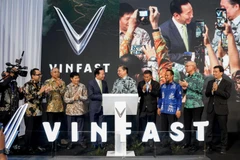
Airlangga Hartarto (fifth from right), Indonesian Coordinating Minister for Economic Affairs, and CEO of VinFast Asia Pham Sanh Chau (sixth from right) at the plant opening ceremony on December 15. (Photo: VinFast)

VinFast inaugurates EV plant in Indonesia

The VinFast Subang plant was completed and put into operation just 17 months after groundbreaking, demonstrating the company's rapid execution capability and strong implementation capacity. This is VinFast's fourth operational facility worldwide, and its first plant in Indonesia and Southeast Asia outside of Vietnam.