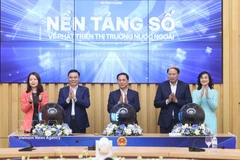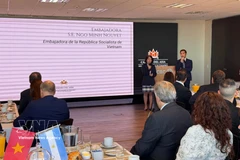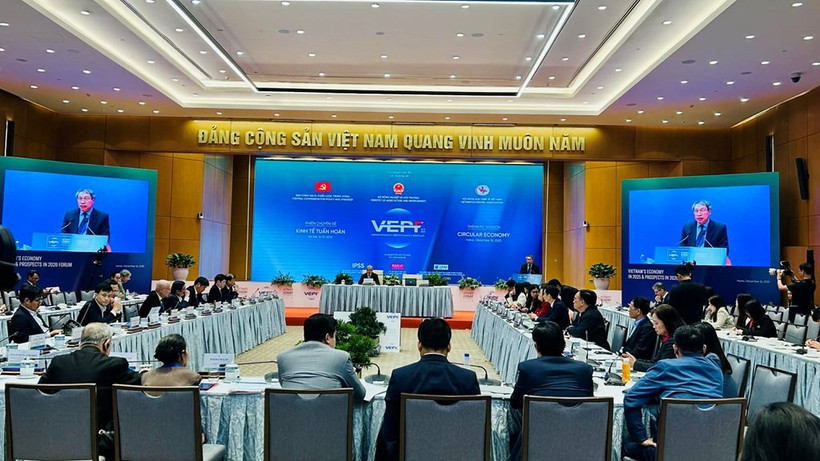
Hanoi (VNA) – The potential and measures for advancing the circular economy were the focus at a panel discussion of the Vietnam’s Economy in 2025 and Prospects in 2026 Forum (VEPF), co-hosted by the Party Central Committee’s Commission for Policies and Strategies and the Government on December 16.
A representative of the United Nations Development Programme (UNDP) said Vietnam still has substantial room to improve resource efficiency, cut waste, and promote industries that create green value. The consumer plastics sector, for example, generates large volumes of plastic waste but has yet to fully utilise these materials, while the country continues to import significant quantities of scrap each year. Better use of domestic waste streams could considerably accelerate the development of the circular economy.
Vietnam generates around 25 million tonnes of solid waste annually, while agricultural by-products alone reach about 150 million tonnes—six times the volume of solid waste. If left unrecycled, these by-products represent a major economic loss. A similar problem could be seen in construction materials or industrial wastewater.
A representative of the United Nations Industrial Development Organisation (UNIDO) said the agency has supported the transformation of six eco-industrial parks in Hai Phong, Dong Nai, Da Nang, Tay Ninh, and Bac Ninh, with both State-owned and foreign-invested enterprises participating in. The industrial symbiosis model offers strong potential as companies within the same zones can use each other’s waste as production inputs.
Early implementation faced challenges in terms of persuading businesses to engage in, reviewing legal frameworks, and assessing economic efficiency. Over time, however, understanding improved and tangible results emerged, the representative stated.
Over the past decade, industrial parks such as Hiep Phuoc have reused steel, waste paper, and sand for non-fired bricks, meeting three of the six criteria for industrial symbiosis. Businesses cited legal procedures, particularly environmental licensing, as the main obstacle. With support from management authorities, the initiative has expanded to involve nine companies over four years.
Representing the business sector, Ngo Minh Hai of TH Group said the company has pursued sustainable development from the outset as a core value aligned with public health and environmental protection. TH’s investments focus on high and green technologies, with closed-loop chains in dairy processing. The group has replaced fossil fuels with biomass boilers and expanded the use of solar power to support clean energy.
Hai said that in the coming period, the group plans to implement closed-loop agricultural production, treating livestock waste as a resource to produce organic fertiliser, improve soil quality, and reduce chemical inputs. TH is also promoting green packaging solutions, including the collection of milk cartons for recycling and reductions in single-use packaging.
Investment in the circular economy, he noted, helps lower costs by optimising material inputs.
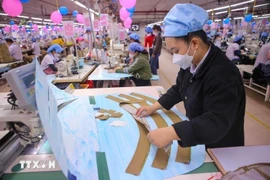
Hoang Manh Cam, head of strategy at the Vietnam National Textile and Garment Group, said weaker consumer demand has reduced per-capita consumption, pushing the industry to shift towards higher-value niches and extend product life cycles, including in the second-hand market. The firm is also upgrading older machinery to extend equipment life and achieve cost savings.
Le Thanh Tung of the Vietnam Joint Stock Commercial Bank for Industry and Trade (VietinBank) said the bank has expanded green financial products by simplifying lending procedures, digitalising access to credit, and integrating green criteria into credit decisions. Businesses meeting sustainability standards are prioritised, particularly in green agriculture.
VietinBank has also launched a green deposit programme worth around 10 trillion VND (379.6 million USD) and pledged long-term support for enterprises undergoing a green transition./.