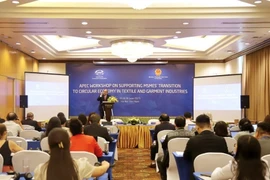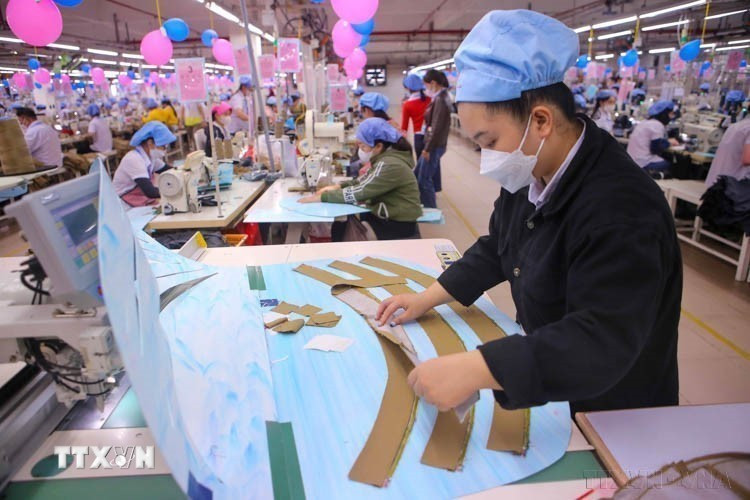
HCM City (VNA) – The transition to a circular economy model is a mandatory step for Vietnam’s garment and textile industry, billed as a key for the sector to develop sustainably and gain competitive advantage in the future, according to insiders.
As one of Vietnam’s export pillars, the industry has relentlessly pursued a circular economy, eyeing intensive growth through innovation, technology application, productivity improvement, and reduction of reliance on low-skilled labour for 2025-2030.
Experts said adopting a circular economy in the sector aims at eliminating raw materials and microfiber pollution, increasing product lifecycles, recycling efficiently, utilising efficient raw materials and fuels, and transitioning to renewable energy. The foundation, they stated, lies in the removal of raw materials and plastic microfiber emissions.
Assoc.Prof.Dr. Nguyen Thi Thanh Phuong, Director of the Environmental Industry Institute of HCM City Union of Science and Technology Associations, said ensuring raw materials are safe is crucial to enabling circulation and avoiding negative impacts throughout the production process, usage, and post-consumption.
To transition towards circular economy principles, textile enterprises must reduce the use of fossil fuel-based fibers, increase recycled polyester ratios, develop regenerative cellulose fibers to replace polyester, design products with single-material fibers like 100% cotton or 100% polyester for easier recycling, and substitute biological materials for polyester. Research show that while conventional polyester requires 500 – 1,000 years for complete decomposition, recycled polyester materials can achieve 68.8% degradation within only 180 days when buried in soil.
Phuong suggested companies shift to water-based dyes that are less toxic and more biodegradable, applying new dyeing technologies like supercritical CO₂ dyeing, foam dyeing, and plasma dyeing techniques.
According to the Vietnam Textile & Apparel Association (Vitas), several firms are diversifying their products, including environmentally-friendly items, recycled products, and high-value goods with closed-loop production. They have paid due attention to sustainable development practices and enhanced the use of such recycled materials as polyester, viscose, and cotton.
Phuong laid stress on the need for a programme to focus efforts and investments on recycling common materials and improving sorting technologies to enhance recycling quality.
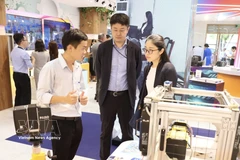
Enterprises should invest in technologies that support waste reduction and reuse, such as wastewater recycling systems, heat recovery technologies from wastewater, automatic fabric scrap sorting systems, waterless dyeing technologies, and low-chemical dyeing methods.
As a key player in the textile industry, the Vietnam National Textile and Garment Group (Vinatex) set targets of double-digit growth, sustainable development, and a unique export brand by 2030. Its Chairman, Le Tien Truong, outlined key solutions including digital and green transformation, investment in advanced technologies, business restructuring, domestic and international market development, enhanced management models, and comprehensive human resources development.
Currently, Vinatex's green product ratio reaches 25%, with the entire system producing recycled raw material fibers that increase annually. The production model has shifted from traditional pure processing (cut-make-trim) towards high-value-added methods. The corporation has invested in research and development centres for green products and functional fabrics, proactively adapting to globalisation trends.
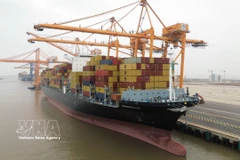
The industry plays a vital role in the national economy, with export turnover of 44 billion USD in 2024, maintaining the world's second position. The industry aims for 47-48 billion USD in export revenue this year. To date, Vietnamese textiles have been present in 132 markets, with the US being the largest buyer, followed by the CPTPP market, the EU, the Republic of Korea, and China.
The circular economy direction for Vietnamese textiles aims at sustainable development, environmental protection, and human health preservation, contributing to national and global net zero targets while leveraging opportunities to enhance competitiveness and maintain leading export positions through meeting strict green product standards from importers./.
VNA