Vietnam promotes circular economy transition in textile sector

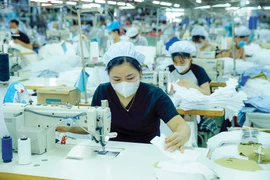
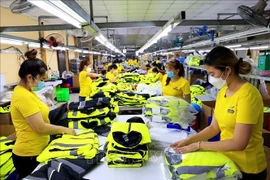
Vietnam's textile and footwear sector targets annual export growth of 7.5–8% from 2021 to 2025, with turnover expected to reach 50–52 billion USD by 2025 and 68–70 billion USD by 2030.

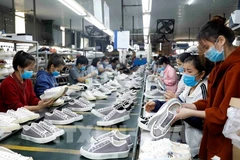
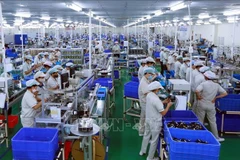
An overview of the workshop (Photo: VNA)

Hanoi (VNA) – A two-day APEC workshop has been held in Hanoi, focusing on supporting small and medium-sized enterprises (SMEs) in the textile and garment industry to transition towards a circular economy.

Jointly organised by Vietnam’s Ministry of Industry and Trade and the Asia-Pacific Economic Cooperation (APEC) Secretariat on June 5-6, the workshop brought together government officials, UN representatives, international associations, researchers, and textile enterprises from ASEAN countries, China, and Peru.

Pham Quynh Mai, Deputy Director of the ministry's Multilateral Trade Policy Department, said the APEC workshop was a practical initiative under the APEC framework aimed at providing solutions to help micro, small and medium-sized enterprises (MSMEs) adopt circular business models.

She emphasised the urgent need to transition to a circular economy, as the textile industry faces mounting pressure to meet standards for sustainability, carbon reduction, and supply chain transparency.

Despite their size, MSMEs play a vital role in the sector, particularly in developing economies where they dominate employment and exports, Mai said.

The workshop shared experience on how MSMEs in the textile and garment sector have tackled challenges in adopting circular business models to drive sustainable growth and transformation.

pham-quynh-mai.jpg
Pham Quynh Mai, Deputy Director of the ministry's Multilateral Trade Policy Department, speaks at the event. (Photo: VNA)

Delegates also highlighted the need for coordinated efforts from governments, international organisations, the private sector, and businesses themselves.

Carlos Obando from the APEC Secretariat stressed that circular economy models offer opportunities to reduce waste and enhance value through technological innovation.

Truong Van Cam, Vice President and General Secretary of the Vietnam Textile and Apparel Association (VITAS), noted the industry’s strengths, including stable macroeconomic conditions, skilled labour, and advantages from new-generation FTAs. However, he acknowledged growing challenges such as pressure to shift from fast fashion to sustainable fashion and meet international climate commitments.

To address these, VITAS proposed several circular economy measures, including waterless dyeing technology, replacing fossil fuel boilers with electric ones, rooftop solar systems, waste and fabric recycling, and workforce reskilling.

According to the International Trade Centre, MSMEs account for over 90% of global textile companies and are active across the entire value chain—from weaving and dyeing to garment assembly and upcycling.

In Vietnam, the government has approved a textile and footwear development strategy to 2035, targeting annual export growth of 7.5–8% from 2021 to 2025, with turnover expected to reach 50–52 billion USD by 2025 and 68–70 billion USD by 2030. Localisation rates are set to increase to up to 60% by 2030./.
VNA

See more

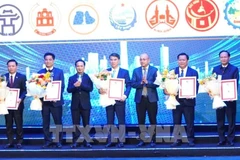
Certificates of membership in the Vietnam International Financial Centre in Da Nang are awarded at the conference on January 9. (Photo: VNA)

Da Nang continues targeted investment promotion approaches

According to Chairman of the Da Nang People’s Committee Pham Duc An, the city prioritises building sustainable economic ecosystems and focuses on key breakthrough sectors with strong spillover effects, including high technology and digital transformation, logistics, urban infrastructure, finance, processing and manufacturing industries, high-tech agriculture, and the pharmaceutical and medicinal herb industry.

In 2025, Hyundai sales reached 53,229 vehicles across the Vietnamese market. (Illustrative photo: Yonhap/VNA)

Hyundai sales in Vietnam rise almost 23% in December

In 2025, sales reached 53,229 vehicles across the market, a result considered a testament to the efforts by TC Group, Hyundai Thanh Cong, and the entire Hyundai dealership network nationwide amidst a volatile market.

Hydroponic vegetable cultivation model at the High-Tech Agricultural Park (Photo daibieunhandan.vn)

HCM City accelerates shift toward ecological urban agriculture

​The city’s agricultural sector is undergoing a strong transformation, restructuring toward higher value-added and sustainable development. In recent years, the sector has maintained steady growth, with agricultural, forestry and fisheries output rising by an estimated 2.5% annually.

Illustrative photo (Photo: VNA)

Dong Nai to launch major projects ahead of 14th National Party Congress

The launch of work on these projects represents an important political event for the province as they demonstrate the strong commitment of the entire political system to developing a comprehensive and modern infrastructure network, enhancing inter-regional connectivity, and addressing social welfare needs.

Illustrative image (Photo: VNA)

Lam Dong ready for nationwide economic census 2026

The entire process needs to reassure respondents that statistical activities operate independently, information is protected under the Statistics Law, and all data collection is completely separate from tax management.

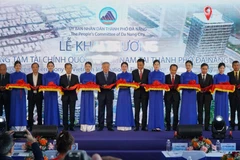
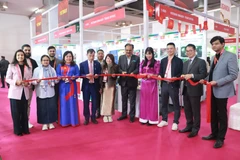
Officials cut the ribbon to inaugurate the IFC Da Nang. (Photo: VNA)

Vietnam launches International Financial Centre in Da Nang

The Government has clearly defined the development orientation of the International Financial Centre in Da Nang as a modern international financial hub closely linked with the innovation ecosystem, digital technology, and sustainable finance.

Officers of the Thanh Hai Border Guard Station (Phu Thuy ward, Lam Dong province) patrol and monitor fishing vessels entering and leaving the port. (Photo: VNA)

Lam Dong steps up oversight to curb IUU fishing

As of early January 2026, the province had 8,210 registered fishing vessels, with more than 90% holding valid fishing licences, according to the department. A total of 8,115 vessels, or 98.76%, have been updated in the National Population Database, while 1,773 out of 1,941 vessels measuring 15 metres or longer have been granted food safety certificates, accounting for 91.34%.

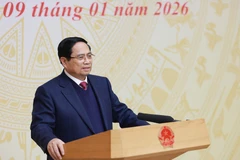
Prime Minister Pham Minh Chinh speaks at the national conference on accelerating public investment for 2025 and 2026 (Photo: VNA)

People’s legitimate rights, interests must never be overlooked in public investment: PM

The Prime Minister underlined that public investment has consistently been identified as a key political task, with public investment disbursement results serving as one of the criteria for evaluating officials under Party regulations. Through state spending, public investment directly boosts aggregate demand and serves as an effective tool for regulating and stabilising the macroeconomy while safeguarding major economic balances.