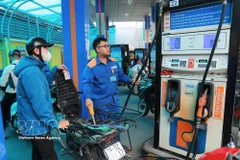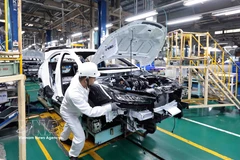
Hanoi (VNA) - As global competition intensifies across digital, underground, maritime, and outer-space domains, the Politburo’s Resolution 79-NQ/TW has emerged like a “call to arms” for the state-run economic sector – the backbone of national economy, to evolve beyond its traditional “pillar of support” role. It casts state-owned enterprises (SOEs) in a more clear light as pathfinders, leaders and drivers of growth engines that will carry the country into a new era.
A “pivot” in governance thinking
Nearly four decades after Doi Moi (renewal), the state sector has functioned as the economy’s “barometer”, preserving macroeconomic stability during the most difficult times. But history never stands still. Intensifying strategic competition, rapid digital transformation, and continuous restructuring of global supply chains means that simply acting as a “shield” is no longer enough. Resolution 79 sets a higher bar, requiring the state economy to become a drill that shatters traditional growth constraints.
At the heart of the resolution is an expansion of the state sector’s operational domain. This goes well beyond traditional capital and asset management to include resources, strategic infrastructure, maritime zones, underground space, digital ecosystem, and emerging frontiers. The state economy plays a decisive role as it creates foundational conditions for the development of other economic sectors. In other words, it is the strategic platform that allows the entire economy to make a breakthrough.
But that platform will only be truly solid if it rests on a new governance foundation.
The resolution confronts a core bottleneck that has persisted for years: the persistence of administrative-style oversight in enterprise operations. It calls for a clear transition from direct control to enabling facilitation, from heavy intervention to empowerment, and from pre-approval processes to post-event supervision.
Clearly separating the state’s ownership function from day-to-day corporate governance is not merely a technical adjustment, but a fundamental pivot in thinking. SOEs can no longer remain trapped in the vicious circle of “both playing and refereeing”, nor can they grow if every business decision must await approval under a permission-based mechanism.
Notably, the mechanism that allows for the establishment of venture capital funds, together with a framework to protect officials who dare to think and act for the common good, constitutes a strong political commitment to dismantle the fear of mistakes and fear of responsibility - an “invisible drag” that has stifled development opportunities.
For the first time, the inclusion of concepts such as the “space economy”, “low-altitude economy,” and “underground space” in a strategic vision shows that the Party has placed the state economy on the axis of future development, where competition is no longer about scale alone, but about technology and the capacity to create new development spaces.
“Lead cranes” and challenge of driving growth
Resolution 79 makes no attempt to hide its ambition in setting clear targets: by 2030, around 50 SOEs are expected to rank among Southeast Asia’s 500 largest companies, with one to three entering the global top 500. All SOEs are targeted to operate on fully digital platforms adhering to OECD governance standards.
Behind these numbers lies not only an aspiration for scale, but an aspiration for stature. OECD standards are not merely a set of governance rules. They are a passport for Vietnamese SOEs to enter the global arena: more transparent, more professional, and more accessible to capital flows, technology, and strategic partners. More importantly, they provide a pathway for enterprises to move from passivity to proactivity, from market followers to rule-shapers.
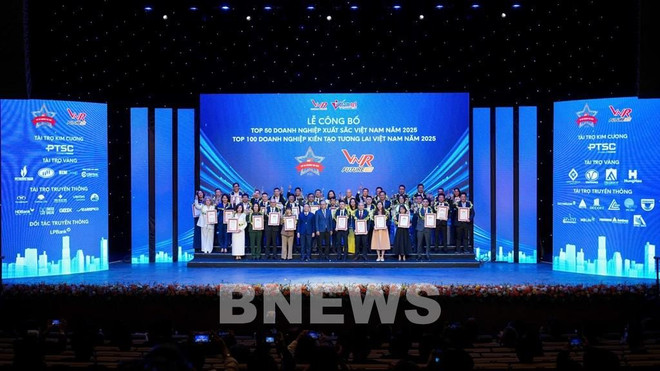
A well-governed SOE does not stand alone. It becomes a central axis of an entire production ecosystem, drawing numerous domestic firms into supply chains and forming industrial clusters with real competitive strength.
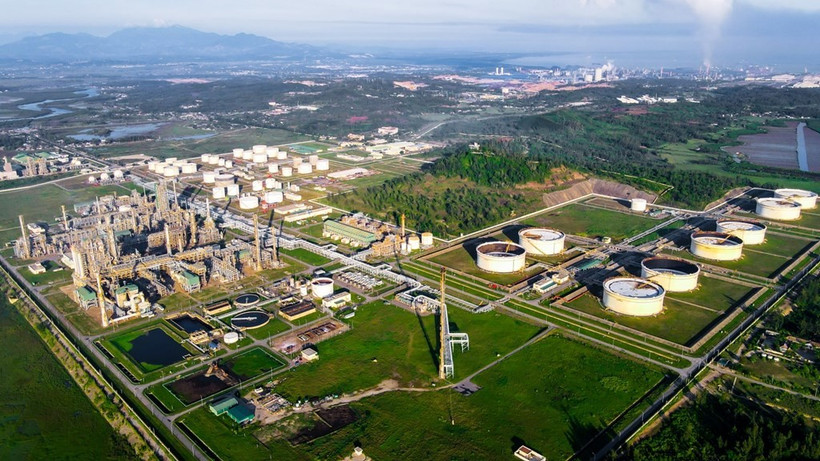
That is why the “lead crane” mindset in Resolution 79 is not about spreading resources evenly, but about concentrating them on spearhead sectors: energy, digital infrastructure, telecommunications, manufacturing, and national defence-security. Flagship entities such as Viettel, PVN, EVN, and key state-owned commercial banks are positioned not merely to grow for themselves, but to lift the entire flock into flight.
True measure lies in action
A sound Resolution does not automatically translate into reality. The journey from ideas to practice is always arduous, and execution capacity is decisive. To bring Resolution 79 to life, it must be swiftly turned into laws, especially those governing state capital in enterprises, with a view to reducing administrative meddling in business operations while bolstering discipline through institutional framework and transparency.
The spirit of “local decision-making, local implementation, local accountability”, repeatedly stressed by Prime Minister Pham Minh Chinh, must be applied consistently. For SOEs, genuine autonomy must be granted to boards of members, while power is checked through mechanisms and public disclosure.
Above all, workforce must be treated as the linchpin of the linchpin. SOEs can only go far if they become talent magnets, offering room to capable professionals to perform and be rewarded commensurately with the results and value they create.
Resolution 79 is not only about SOEs. At a deeper level, it is about how Vietnam reorganises its development drivers in a world that is changing at breakneck speed.
When these “lead cranes” truly spread their wings, they shoulder not only economic duties but also the nation's aspirations for self-reliance and progress. Speaking at a recent conference between Government members and localities to launch 2026 tasks, Party General Secretary To Lam said Vietnam now possesses the conditions, capabilities, willpower, and determination to enter a new era. Resolution 79 is precisely the launchpad for the state economy to truly become a solid foundation, enabling the country to move forward steadily on a path of rapid and sustainable development./.