Breakthrough from two pillars: Strengthening SOEs and fueling the private sector

Economic experts say that for state-owned enterprises (SOEs) to truly become “healthy,” corporate governance must be reformed in line with international practices and standards.

Hanoi (VNA) - At the 9th session of the 15th National Assembly, delegates held lively discussions on financial measures to spur growth, highlighting the complementary roles of SOEs and the private sector.

Party and National Assembly resolutions affirm SOEs as leaders in critical industries, while the private sector is considered the most important driver of the economy. Raising SOE efficiency and strongly supporting private businesses reflects the determination of policymakers to unlock resources and power both sectors to drive growth and breakthroughs in the coming period.

petro1.jpg
Petrovietnam General Director Le Ngoc Son inspects the construction site of the Block B Gas Field Development Project. (Photo: Vietnam+)

Unlocking the potential of SOEs

As of early 2024, SOEs managed assets worth more than 4 quadrillion VND, state investment capital exceeding 1.75 quadrillion VND, and nearly 1 million jobs, according to the Ministry of Finance. They remain dominant in key sectors of the economy.

But their performance has been mixed. Capital and assets have not been fully tapped, as major investment decisions are still bound by regulations that limit enterprise autonomy. National Assembly deputies stressed the need to accelerate equitization and divestment, improve oversight mechanisms, and hold leaders accountable for restructuring.

Finance Minister Nguyen Van Thang admitted that SOEs have yet to fully adopt international governance standards, hindered by outdated regulations and mindsets.

petro-2.jpg
Petrovietnam focuses on expanding the market for its products and services. (Photo: Vietnam+)

He underscored the importance of revising the Law on Management and Use of State Capital (Law No. 69) and called for reforms to increase autonomy, transparency, accountability, and professional management.

On the other hand, on June 5, 2025, the Prime Minister issued Official Dispatch No. 4941/VPCP-ĐMDN, assigning the Ministry of Finance to take the lead, in coordination with relevant agencies, in finalizing the project, studying, and proposing the issuance of a Politburo Resolution on the development of state-owned enterprises.

Deputy Prime Minister Nguyen Chi Dung emphasized the need to clarify SOEs’ role and mission under Resolution 68-NQ/TW, while aligning with international standards and best practices.

Fueling private sector growth

Alongside SOE reform, boosting private enterprise remains a top priority. Politburo Resolution 68 and National Assembly resolutions set a strategic target of 2 million operating enterprises by 2030.

Delegates called for easing land and infrastructure access, prioritizing high-tech firms, and expanding support for startups, green projects, and disadvantaged regions. They also urged financial incentives such as preferential loans, tax breaks, and targeted subsidies.

Minister Thang said the Ministry of Finance has already integrated tax and investment incentives for SMEs and will continue to refine the legal framework, support startups, and mobilize private capital through public-private partnerships (PPP). Recent PPP reforms now allow the state to cover up to 50–60% of project costs, creating opportunities for smaller firms to participate.

thu-tuong-1.jpg
An agricultural producer in Thai Binh presents new rice seeds to Prime Minister Pham Minh Chinh. (Photo: Duong Giang/VNA)

To encourage household-to-enterprise transformation, the Minister proposed offering support, including free software, boosted promotion and three years of corporate income tax exemption. He also pledged to simplify compliance procedures and provide training to ease the transition.

The Minister confirmed that the Ministry is working to institutionalize Politburo Resolution 68 and National Assembly Resolution 198, and will present comprehensive amendments to enterprise-related laws at the 10th session of the National Assembly./.
See more

Illustrative image (Photo: VNA)

Vietnam consolidates position as one of Asia’s economic bright spots

Next year, Vietnam is expected not only to maintain a high growth rate relative to the region but also to further reinforce its status as one of Asia’s economic bright spots thanks to macroeconomic stability, a dynamic domestic market, and a clear orientation towards attracting strategic investments.

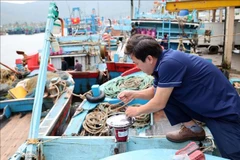
Many vessels have installed additional vessel monitoring systems to ensure uninterrupted information connectivity with shore-based stations during fishing trips. (Photo: VNA)

Decisive moment of fight against IUU fishing violations

Under the close direction of the Prime Minister, coastal localities nationwide, particularly in central Vietnam, are urgently implementing assigned tasks with clear schedules and milestones, delivering tangible weekly progress.

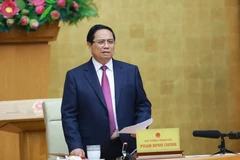
Prime Minister Pham Minh Chinh speaks at the 26th meeting of the National Steering Committee for Combating Illegal, Unreported and Unregulated (IUU) Fishing. (Photo: VNA)

Local leaders must be held accountable for IUU fishing violations: PM

PM Chinh requested the Government Inspectorate to promptly identify localities that lack determination or fail to handle violations thoroughly, including cases where vessels not meeting legal requirements are still allowed to leave ports, and to clarify responsibilities and impose sanctions without delay.

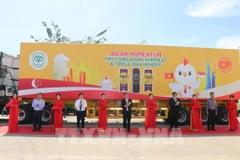
The ribbon-cutting ceremony marking the export of C.P. Vietnam's first container shipment to Singapore. (Photo: VNA)

C.P. Vietnam exports first processed chicken batch to Singapore

The CPV Food Binh Phuoc plant operates a closed-loop system and holds international certifications, including HACCP, BRC, ISO 22000, and Halal. Before reaching Singapore, the company’s processed chicken was already exported to Japan, Hong Kong (China), Cambodia, and Laos, with Japan alone importing 10,000 tonnes by November 2025.

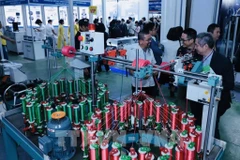
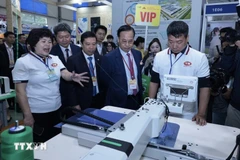
Delegates visit a booth at the exhibition (Photo: VNA)

HanoiTex & HanoiFabric 2025 kicks off

Running until December 18, HanoiTex & HanoiFabric is expected to contribute to sustainable development and stronger international integration of Vietnam’s textile and garment industry.

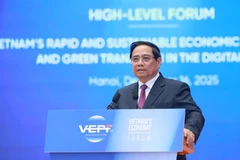
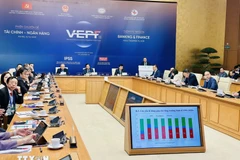
The thematic session on finance and banking of the Viet­nam Eco­nomy in 2025 and Pro­spects in 2026 Forum (VEPF). (Photo: VNA)

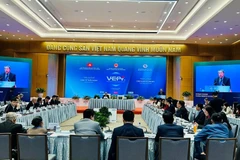
Vietnam economic forum 2025: balancing high growth and sustainability

At the thematic session on finance and banking, delegates focused on solutions for financial resources and eco­nomic growth tar­gets in the 2026-2030 period. The effective mobilisation of financial resources was identified as a key prerequisite for Vietnam to realise its target of double-digit economic growth during this phase.

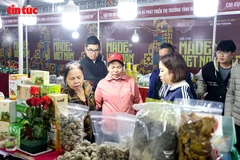
Local residents and visitors tour and shop at a fair. (Photo: VNA)

Made in Vietnam Fair set to open in Hanoi

The Made in Vietnam Fair will showcase a wide range of products, including industrial and consumer goods, processed foods, agricultural produce and handicrafts, with the participation of distribution systems, e-commerce platforms, digital platforms and digital financial solution providers operating in Vietnam.

2025 a good year for Vietnam’s securities sector: SSC

2025 a good year for Vietnam’s securities sector: SSC

During the year, the SSC made significant progress in improving the legal and policy framework. Institutional work was implemented in a coordinated manner, including the issuance of two decrees, one resolution, seven circulars and three major schemes. At the same time, the regulator strengthened policy dialogue and expanded cooperation with international organisations to support the market upgrade process.

Vietnam shows strong FDI performance in the first 11 months of 2025 (Source: vtv.vn)

Vietnam shifting FDI attraction focus from volume to quality

As production relocation to Southeast Asia accelerates and competition for FDI intensifies, Vietnam faces increasing pressure from regional rivals such as India, Malaysia and Indonesia, which are offering bold tax incentives and developing specialised industrial parks. This reality requires Vietnam to shift its focus from attracting large volumes of capital to drawing high-quality investment, prioritising core technologies, innovation, value chain linkages and higher localisation rates.