Hanoi (VNA) – The Swiss-funded Trade Policy and Export Promotion (SwissTrade) Project has supported hundreds of small and medium-sized enterprises (SMEs) in improving competitiveness and joining global value chains through innovative export promotion initiatives, according to Bui Huy Son, Director of the Project Management Unit under the Ministry of Industry and Trade (MoIT).
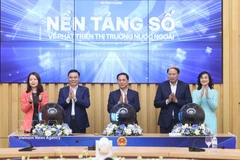
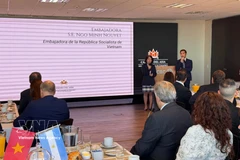
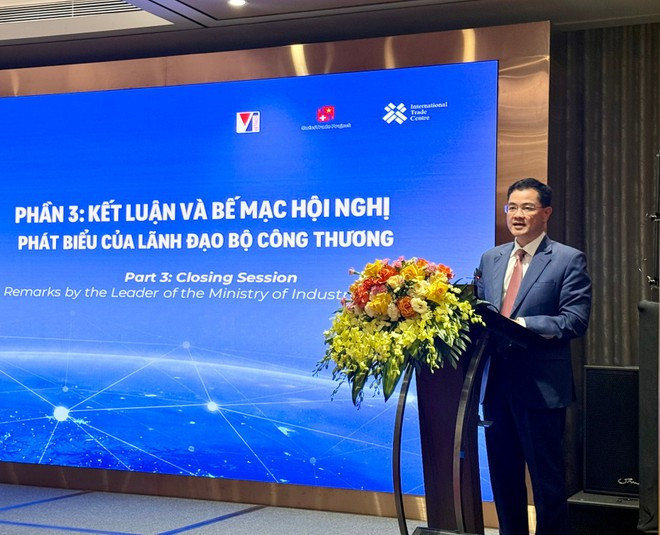
Speaking at the project closing conference on December 16, Son, who is also Director of the MoIT's Department of Planning, Finance and Enterprise Management, said SwissTrade’s three closely linked components had helped the ministry develop and submit to the Prime Minister the Strategy on Import and Export of Goods to 2030. The strategy provides a long-term trade policy framework based on data and international standards, while a pilot public–private dialogue mechanism has created a more effective channel for engagement between the Government and the business community.
These efforts have contributed to Vietnam’s export turnover rising from 371 billion USD in 2021 to an estimated 480 billion USD in 2025, reinforcing trade’s role as a key driver of economic growth, employment and sustainable poverty reduction, he said.
Looking ahead, Son expressed his hope that the free trade agreement between Vietnam and the European Free Trade Association (EFTA), with Switzerland playing a central role, would be signed in 2026, helping to foster stronger trade and investment ties.
Aldo De Luca, Chargé d’Affaires ad interim of the Swiss Embassy in Vietnam, said the project had enhanced Vietnam’s export resilience and competitiveness amid increasing volatility in global trade. He noted that SwissTrade had contributed to more transparent, evidence-based trade policymaking with stronger stakeholder participation, while also providing forums for Vietnamese businesses to prepare for new market opportunities.
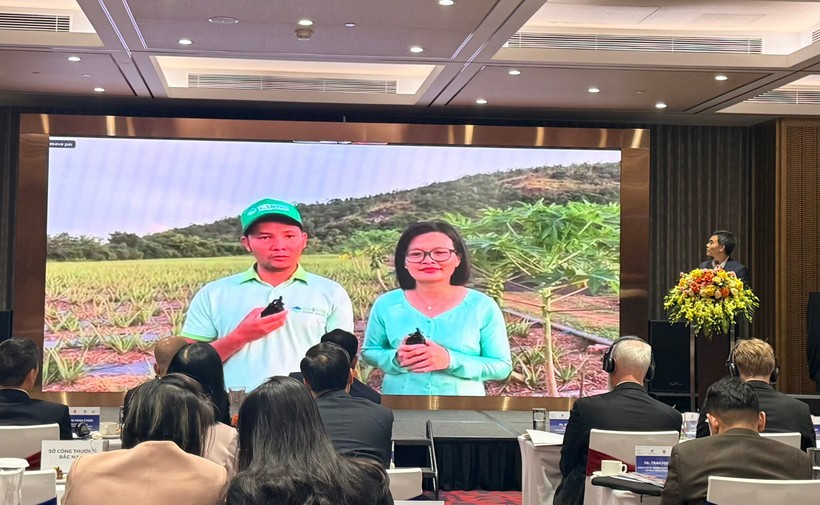
Hoang Minh Chien, Deputy Director of the MoIT’s Vietnam Trade Promotion Agency, said a key highlight of Component 3 was the Innovation and Competitiveness Support Programme, which established a framework for selecting and financing innovative export promotion initiatives. Two rounds calling for proposals attracted 91 submissions from 63 organisations, with 11 initiatives selected for implementation in 2024–2025, focusing on digital transformation, green trade promotion and international market connectivity.
Component 3 also prioritised capacity-building for business support organisations and the trade promotion system at both central and local levels. Hundreds of officials have been trained in project management and trade promotion in the context of digital transformation and sustainable development, improving the quality of support services for SMEs.
Representing project beneficiaries, Tran Thanh Hai, Deputy Director of the MoIT’s Agency of Foreign Trade, said Vietnam’s exports have grown robustly in recent years, with average annual growth of 12–15%, placing the country among the world’s top 20 exporting economies and enabling it to maintain a trade surplus that supports exchange rate stability and foreign exchange reserves.
However, he warned that exports have also faced mounting challenges, including a slow global economic recovery, rising protectionism and stricter requirements related to sustainability, traceability and emissions reduction, alongside structural constraints such as reliance on imported inputs and a narrow range of key markets.
In this context, the Agency of Foreign Trade has taken the lead in developing the Strategy on Import and Export of Goods to 2030 with support from SwissTrade, producing 10 sectoral and cross-sectoral strategies integrated into its implementation plan and accompanied by capacity-building for officials. Hai expressed his hope that continued cooperation among stakeholders would deliver tangible benefits for Vietnam’s trade development in the years ahead./.