Garment-textile sector adjusts development strategy to adapt to global volatility

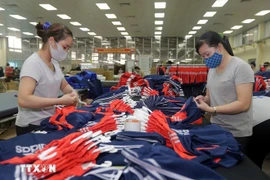
In 2025, Vietnam’s textile and garment exports are estimated at 46 billion USD, up 5.6% year on year, helping the country remain among the world’s top three textile and garment exporters

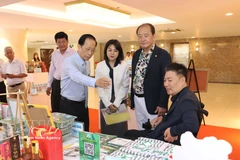
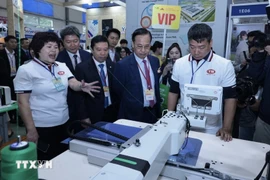
A booth shoiwcasing waving technology at the HanoiTex & HanoiFabric 2025. (Photo: VNA)

Hanoi (VNA) – The garment and textile sector of Vietnam has recalibrated its development strategy amid rapid changes in policies, markets and supply chains, said Vietnam Textile and Apparel Association (VITAS) Chairman Vu Duc Giang at a seminar held on December 16 as part of the HanoiTex & HanoiFabric 2025.

Giang noted that rising logistics costs, stricter compliance requirements, shifting purchasing policies in major markets, tariff measures and sustainability demands are exerting growing pressure, making strategic repositioning in the medium and long term.

To address these challenges, the sector has successfully implemented three core strategic pillars. Export market diversification has reduced reliance on traditional markets, with Vietnamese textile and garment products now reaching 138 markets worldwide, enhancing resilience to external shocks.

At the same time, enterprises have diversified partners and customers, improving negotiating capacity and reducing dependence on a small number of major brands. Product diversification has also accelerated, with a shift from simple processing to higher-value products tailored to increasingly segmented market demand.

To support these pillars, the sector is rolling out five key solution groups, he stated, adding that prominent among them is green transition, with sustainable development regarded not merely as a compliance requirement but as a prerequisite for deeper participation in global value chains. The sector is also stepping up the application of science and technology, automation, robotics and artificial intelligence to improve productivity, quality and long-term competitiveness.

Strengthening supply chain linkages remains another priority, focusing on developing domestic supply sources, enhancing governance capacity and promoting experience-sharing with international partners. The sector’s trade surplus is forecast to exceed 20 billion USD in 2025, reinforcing its role as a pillar export industry.

Giang said the evolving context is opening up new opportunities, particularly in diversifying markets, customers and products. However, these opportunities can only be realised if enterprises strengthen their capacity to engage more deeply in global value chains, especially in design, technology, materials and brand building.

Tran Thanh Hai, Deputy Director of the Agency of Foreign Trade under the Ministry of Industry and Trade, said that despite continued global uncertainties, Vietnam’s textile and garment enterprises have demonstrated resilience and adaptability. He noted that reciprocal tariffs imposed by the US have prompted the sector to restructure and upgrade value, with many firms shifting towards higher value-added and more technically sophisticated products while expanding market diversification.

However, he warned that the sector still faces mounting challenges, including increasingly complex trade barriers, stringent requirements on traceability, carbon emissions, circular economy practices and social responsibility, as well as intensifying regional and global competition. Persistent weaknesses in the localisation of raw and auxiliary materials, particularly in weaving, dyeing and finishing, continue to constrain domestic value added.

Hai called for restructuring towards higher value, stronger domestic supply chains, more effective use of free trade agreements, green transition as a core competitive advantage, and accelerated human resource development and digital transformation. The Ministry of Industry and Trade will continue to support the sector in maintaining its position as a key export driver.

In 2025, Vietnam’s textile and garment exports are estimated at 46 billion USD, up 5.6% year on year, helping the country remain among the world’s top three textile and garment exporters./.

VNA
See more

Illustrative image (Photo: VNA)

Vietnam consolidates position as one of Asia’s economic bright spots

Next year, Vietnam is expected not only to maintain a high growth rate relative to the region but also to further reinforce its status as one of Asia’s economic bright spots thanks to macroeconomic stability, a dynamic domestic market, and a clear orientation towards attracting strategic investments.

Many vessels have installed additional vessel monitoring systems to ensure uninterrupted information connectivity with shore-based stations during fishing trips. (Photo: VNA)

Decisive moment of fight against IUU fishing violations

Under the close direction of the Prime Minister, coastal localities nationwide, particularly in central Vietnam, are urgently implementing assigned tasks with clear schedules and milestones, delivering tangible weekly progress.

Prime Minister Pham Minh Chinh speaks at the 26th meeting of the National Steering Committee for Combating Illegal, Unreported and Unregulated (IUU) Fishing. (Photo: VNA)

Local leaders must be held accountable for IUU fishing violations: PM

PM Chinh requested the Government Inspectorate to promptly identify localities that lack determination or fail to handle violations thoroughly, including cases where vessels not meeting legal requirements are still allowed to leave ports, and to clarify responsibilities and impose sanctions without delay.

The ribbon-cutting ceremony marking the export of C.P. Vietnam's first container shipment to Singapore. (Photo: VNA)

C.P. Vietnam exports first processed chicken batch to Singapore

The CPV Food Binh Phuoc plant operates a closed-loop system and holds international certifications, including HACCP, BRC, ISO 22000, and Halal. Before reaching Singapore, the company’s processed chicken was already exported to Japan, Hong Kong (China), Cambodia, and Laos, with Japan alone importing 10,000 tonnes by November 2025.

The thematic session on finance and banking of the Viet­nam Eco­nomy in 2025 and Pro­spects in 2026 Forum (VEPF). (Photo: VNA)

Vietnam economic forum 2025: balancing high growth and sustainability

At the thematic session on finance and banking, delegates focused on solutions for financial resources and eco­nomic growth tar­gets in the 2026-2030 period. The effective mobilisation of financial resources was identified as a key prerequisite for Vietnam to realise its target of double-digit economic growth during this phase.

Local residents and visitors tour and shop at a fair. (Photo: VNA)

Made in Vietnam Fair set to open in Hanoi

The Made in Vietnam Fair will showcase a wide range of products, including industrial and consumer goods, processed foods, agricultural produce and handicrafts, with the participation of distribution systems, e-commerce platforms, digital platforms and digital financial solution providers operating in Vietnam.

2025 a good year for Vietnam’s securities sector: SSC

2025 a good year for Vietnam’s securities sector: SSC

During the year, the SSC made significant progress in improving the legal and policy framework. Institutional work was implemented in a coordinated manner, including the issuance of two decrees, one resolution, seven circulars and three major schemes. At the same time, the regulator strengthened policy dialogue and expanded cooperation with international organisations to support the market upgrade process.

Vietnam shows strong FDI performance in the first 11 months of 2025 (Source: vtv.vn)

Vietnam shifting FDI attraction focus from volume to quality

As production relocation to Southeast Asia accelerates and competition for FDI intensifies, Vietnam faces increasing pressure from regional rivals such as India, Malaysia and Indonesia, which are offering bold tax incentives and developing specialised industrial parks. This reality requires Vietnam to shift its focus from attracting large volumes of capital to drawing high-quality investment, prioritising core technologies, innovation, value chain linkages and higher localisation rates.

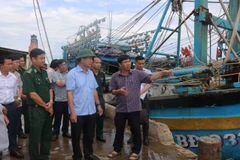
Vice Chairman of the Ho Chi Minh City People’s Committee Hoang Nguyen Dinh inspects IUU fishing prevention efforts at Hung Thai Port in Long Hai commune. (Photo: VNA)

Ho Chi Minh City steps up oversight of unqualified fishing vessels

HCM City currently has 4,475 fishing vessels, all of which have been registered and updated on the VNFishbase system. Among them, 4,268 vessels, or 95.37%, have been granted fishing licences, while 207 unqualified vessels are being strictly managed and kept ashore.