Da Nang (VNA) – Vietnam’s journey to have the European Commission’s (EC) “yellow card” warning against illegal, unreported and unregulated (IUU) fishing has also been a process of qualitative transformation for the entire fisheries sector.
Positive changes in fishing vessel management, awareness of fishermen, and production organisation are ushering in a new development phase which is more modern, more sustainable and better aligned with international integration requirements.
Towards digital fishermen, responsible fishing
According to the National Steering Committee for Combating IUU Fishing, Vietnam has completed the digitalisation of the entire database system for managing fishing vessel operations. The system is now interconnected, integrated and multi-purpose, meeting the criteria of being “accurate, sufficient, clean and live”. Databases on vessel information and the monitoring and control of fishing activities at sea via vessel monitoring systems (VMS) have been put into operation under clear regulations, with access granted only to authorised agencies, organisations and individuals.
Each fishing vessel is now managed under a unique identification code, with synchronised data across the fisheries management software and VMS devices. Localities have strengthened port departure control and traceability in a digitalised manner.
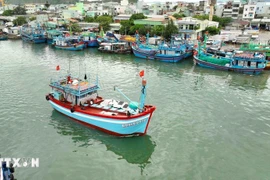
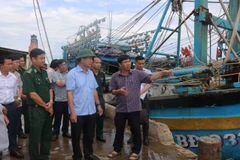
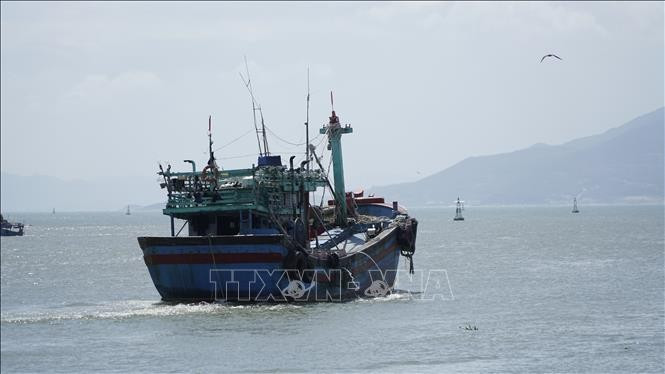
In Khanh Hoa province, most captains and vessel owners have become familiar with electronic declarations, submitting logbooks in full before new fishing trips are approved or upon arrival at ports. Fishing teams and associations are increasingly aware of the requirements for responsible fishing. Many vessel owners said they keep VMS devices operating 24 hours a day. The practice of “checking in before departure and reporting upon return” has become a routine, reflecting closer cooperation between fishermen and authorities - an essential foundation for a modern and transparent fishing industry.
Nguyen Lai, head of Tho Quang fishing port and storm shelter management board, noted that fisheries management software such as VNFishbase and eCDT has recently been better connected and upgraded, integrating citizen ID data and vessel-related documents. This has significantly reduced manual data entry for port authorities.
He expressed his hope that these systems would continue to integrate more user-friendly features, reduce manual operations and gradually apply voice input and artificial intelligence (AI), making electronic declarations easier for fishermen while improving supervision and management efficiency.
In Gia Lai province, most cases of VMS disconnection have been attributed to satellite incidents. However, authorities acknowledged that some violations were intentional. To address this, the provincial competent forces have compiled a list of high-risk vessels and shared it with localities for closer monitoring. Since late October 2025, Gia Lai has operated an intelligent automatic warning system that displays alerts, sends signals and issues notifications whenever a vessel crosses boundaries or loses connection for an extended period.
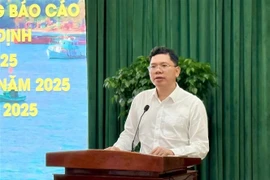
Nguyen Huu Nghia, head of the Gia Lai Fisheries Sub-department, said the system automatically sends warnings to the phone numbers of vessel owners or their family members. While vessels are subject to penalties if disconnected for six hours, the system issues alerts after four hours, allowing timely corrective action. The system has reduced manual screening workload by 60–70% and significantly improved continuous monitoring efficiency. As a result, weekly cases of prolonged disconnection have dropped from 500–700 vessels to just around 10.
Several localities have proposed that central ministries revise and improve national technical standards for VMS equipment, integrating new technologies in line with the EC's requirements, including electronic logbooks, automatic data transmission and AI-based real-time violation detection and alerts.
Shifting from capture fisheries to mariculture
Against the backdrop of declining marine resources and climate change impacts, many central coastal provinces have introduced policies to restructure the fishing fleet, phase out inactive or unqualified vessels, and strongly promote sustainable mariculture.
In Gia Lai, the provincial People’s Council has adopted resolutions to support fishermen, particularly owners of vessels unfit for operation, through monthly rice and cash assistance (3 million VND per vessel) from September to December 2025. These measures are tied to commitments not to engage in IUU fishing or go to sea, helping stabilise livelihoods while tightening vessel management. Additional policies have been approved to support occupational transition and the decommissioning of vessels no longer suitable for fishing.
Tran Quoc Khanh, Deputy Director of the Gia Lai Department of Agriculture and Environment, explained that these policies offer financial incentives for vessel owners to willingly and permanently remove high-risk boats from the system, tackling the root causes of IUU violations while creating new livelihood opportunities for fishermen.
With favourable natural conditions, Khanh Hoa has emerged as a national frontrunner in high-value mariculture, gradually reducing dependence on capture fisheries. The province harvests over 32,000 tonnes of farmed aquatic products annually, with mariculture accounting for about a half. In 2024, the province's seafood export turnover reached nearly 850 million USD.
Khanh Hoa now has more than 80,800 lobster cages and 15,000 marine fish cages, the country’s largest aquatic seed production centre, accounting for around 30% of national output. Local research institutes support selective breeding, environmental monitoring and technological application. Coastal communities have diversified mariculture models, including lobsters, Pacific oysters, seaweed, marine fish, sea cucumbers and pearls, often combining species to improve efficiency.
Alongside traditional practices, the province is piloting high-tech mariculture models. HDPE cages used for cobia, pearl grouper and lobster farming in Cam Ranh and Dai Lanh have proven safer and more profitable than wooden cages. Several cooperatives have combined advanced farming techniques with aquaculture tourism, creating sustainable value chains.
In early January 2025, the Prime Minister approved a pilot scheme for high-tech mariculture development in Khanh Hoa, with a total investment of 1 trillion VND. The project is expected to boost productivity, increase incomes, protect the marine environment and ease pressure on nearshore waters.
With this direction, Khanh Hoa and other central coastal localities are laying the groundwork for a modern, sustainable fisheries sector - creating favourable conditions for Vietnam to have the EC's IUU warning removed and advance a green, responsible marine economy./.