Circular economy seen as key to sustainable agriculture

Adopting circular practices is no longer optional but essential. This model, which reduces waste and reuses resources, is seen as vital to boosting productivity, protecting the environment, and improving farmers’ incomes.

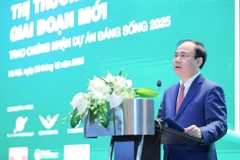
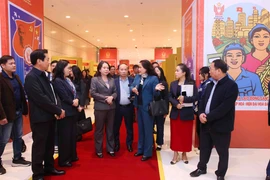
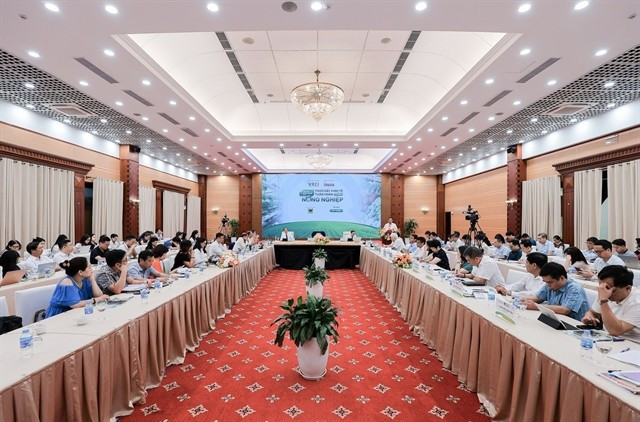
Participants at the 2025 agricultural forum. (Photo: VNA)

Hanoi (VNS/VNA) - As Vietnam seeks to modernise its agricultural sector and stay globally competitive, the circular economy is emerging as a critical pathway toward greener and more sustainable farming.

At the 2025 agricultural forum held in Hanoi on July 16, Hoang Quang Phong, Vice President of the Vietnam Chamber of Commerce and Industry, highlighted the country’s long-standing agricultural strengths and noted that numerous policies have been introduced to support its continued development.

However, he said that adopting circular practices is no longer optional but essential. This model, which reduces waste and reuses resources, is seen as vital to boosting productivity, protecting the environment and improving farmers’ incomes.


“The circular economy is the inevitable path forward,” said Ha Van Thang, Chairman of the Vietnam Agricultural Business Council (VCAC). “It enhances productivity, reduces environmental harm, and strengthens our competitiveness.”

Organised by VCCI and Business Forum magazine, the event focused on accelerating the shift from traditional, resource-heavy farming to more efficient, closed-loop systems. In these models, agricultural waste is repurposed, rice straw and livestock waste become organic fertilisers, crop residues are turned into animal feed, and manure is treated for reuse.

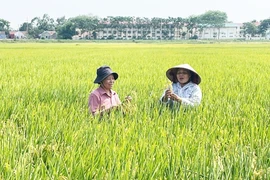
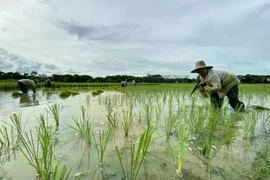
These approaches are already yielding results. In the northern midlands and the Mekong Delta, recycling rice by-products has boosted farmers’ incomes by around 15%. Livestock farmers in provinces such as Phu Tho, Tuyen Quang, and Hung Yen report cost savings of up to 15% through circular practices.

A government decision issued in June 2024 sets a target that by 2030, at least 20% of agricultural science and technology projects will be tied to circular economy models.

Despite recent progress, Thang pointed to several barriers, including outdated regulations, limited policy support, and restricted access to green financing. Small and medium-sized enterprises, which dominate the sector, often lack the capital to invest in recycling technologies or forge deeper partnerships with farmers.

He also said that short-term thinking remains a hurdle. “Many farmers still rely on chemical inputs without considering the long-term consequences,” he said.

He called for a coordinated policy ecosystem that includes tax incentives, green credit, improved infrastructure and pilot support programmes at the local level.

He also urged the simplification of technical standards so farmers can adopt sustainable methods more easily.

Agricultural extension services, he added, should play a stronger role in transferring knowledge and technology, especially in turning rice by-products such as straw and husks into biofertilisers and other value-added products.

Thang said that circular agriculture should be farmer-led, describing it not merely as a strategy but as the future of Vietnamese agriculture.

He noted that its success relies on coordinated efforts at all levels, particularly from grassroots communities.

Nguyen Tri Ngoc, Vice President of the Vietnam General Association of Agriculture and Rural Development, supported this view, adding that while the circular economy concept has existed for over a decade, real change has only begun to take hold recently.

He called for flexible, locally driven pilot models and tailored financial support for SMEs, stressing the need to ground circular farming efforts in practical realities.

He said that for the transition to be successful, it must be supported by long-term policy, innovation and sustained investment./.

VNA
See more

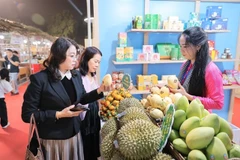
Delegates at the opening ceremony of the Hanoi shopping festival 2025. (Photo: VNA)

Hanoi shopping festival 2025 opens to boost domestic consumption

Featuring around 120 standard booths, the festival has attracted nearly 110 enterprises from 14 provinces and cities nationwide, including Dien Bien, Lao Cai, Son La, Ninh Binh, Thai Nguyen, Quang Ninh, Hai Phong, Bac Ninh, Hung Yen, Hanoi, Thanh Hoa, Da Nang, Ho Chi Minh City and Khanh Hoa.

A view of the Tan Thuan Export Processing Zone in Ho Chi Minh City (Photo: VNA)

HCM City posts 24% rise in registered FDI in 2025

As of December 31, Ho Chi Minh City is expected to continue leading the nation in valid FDI capital and project numbers, with total registered capital standing at 141.9 billion USD across 20,310 projects.

Illustrative image (Photo: VNA)

Dak Lak province intensifies fight against IUU fishing

Sen. Lieut. Nguyen Tien Khanh, from Hoa Hiep Nam border guard station, reported that fishermen now show a much stronger grasp of fisheries rules and exactly what compliance demands from their day-to-day operations. That heightened awareness is paying off, intensifying local crackdowns on IUU practices and preparing for the upcoming European Commission (EC)'s 5th inspection round.

Illustrative image (Photo: VNA)

Vietnam steps up anti-money laundering vigilance amid rising digital assets

Since the Anti-Money Laundering Law was enacted in 2022, the Anti-Money Laundering Department has received thousands of suspicious transaction reports (STRs) annually, with the number of reports growing by about 30% each year. Since 2023, based on these reports, the department has collected and analysed information, issuing nearly 600 documents related to over 5,000 STRs.

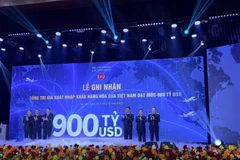
Vietnam Customs holds a ceremony to mark the country’s total import-export turnover surpassing 900 billion USD for the first time (Photo: VNA)

Vietnam’s trade turnover tops 900 billion USD for first time

Vietnam's total trade in 2025 reached about 920 billion USD, up 16.9% year on year. Of the total, exports were valued at 470.59 billion USD, a year-on-year increase of 15.9%, while imports amounted to 449.41 billion USD, up 18%, resulting in a trade surplus of around 21.2 billion USD.

Illustration of the North–South high-speed railway project (Photo: TEDI–TRICC–TEDI SOUTH consulting consortium)

Vingroup withdraws bid for North–South high-speed railway project

In the document dated December 25, Vingroup asked to retract the investment registration it had submitted to the Government in May 2025. The group said the decision was made after careful consideration to ensure maximum focus of capital, manpower and implementation capacity on strategic infrastructure projects recently assigned to it.

Passengers of the first direct flight connecting HCM City and Dien Bien are welcomed at Dien Bien airport on December 24. (Photo: VNA)

Vietnam Airlines launches direct HCM City – Dien Bien route

Deputy General Director of Vietnam Airlines Dang Anh Tuan said the new route is an important step in expanding the airline’s domestic network, creating better access for tourists to Dien Bien province and contributing to local tourism and socio-economic development.

With 2025 on track for around 8% growth, Vietnam has solid momentum heading into the new year. (Photo: VNA)

Vietnam bets big on double-digit economic growth in 2026

A series of socio-economic targets for 2026 has been approved by the National Assembly, including GDP growth of at least 10%; GDP per capita of 5,400–5,500 USD, consumer price index hike of around 4.5%, and labour productivity gains of about 8.5%.