Vietnam steps up anti-money laundering vigilance amid rising digital assets

Since the Anti-Money Laundering Law was enacted in 2022, the Anti-Money Laundering Department has received thousands of suspicious transaction reports (STRs) annually, with the number of reports growing by about 30% each year. Since 2023, based on these reports, the department has collected and analysed information, issuing nearly 600 documents related to over 5,000 STRs.

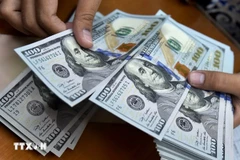
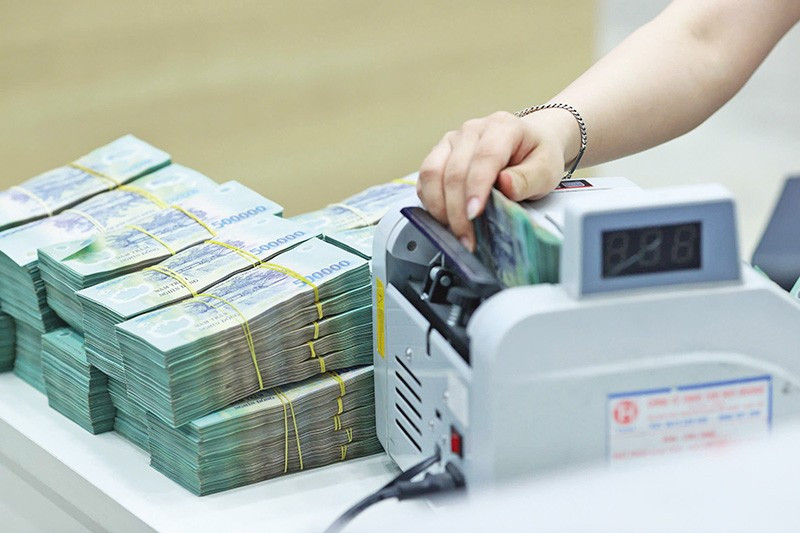
Illustrative image (Photo: VNA)

Hanoi (VNA) - The rise of new investment channels and asset classes, spurred by the establishment of an international financial centre (IFC) in Vietnam, is posing increasing challenges for anti-money laundering efforts, said insiders.

Tightening control of cash flows

Vietnam’s newly-established IFC will serve as a testing ground for innovative financial models and products under risk-controlled mechanisms. While it opens opportunities to diversify markets, financial products, and asset classes, the emergence of these new models also poses significant challenges for anti-money laundering efforts.

Dr. Nguyen Tri Hieu, an economic expert, emphasised that, to prevent money laundering, banks operating in the IFC must act as “financial supermarkets,” offering services from retail to wholesale, while serving as “gatekeepers” throughout all transactions to monitor cash flows, enhance financial security, and combat transfer pricing and cross-border money laundering.

Recently, the Government issued Decree No. 329/2025/ND-CP, regulating the licensing of the establishment and operation of banks, foreign exchange management, and anti-money laundering, counter-terrorism financing, and weapons of mass destruction financing regulations for banks operating in the IFC.

Regarding foreign exchange management, the decree requires foreign members and investors to clearly state the purpose of any funds transferred into the IFC. Banks providing foreign exchange services must verify and preserve complete documentation appropriate to each transaction, providing a basis for IFC member banks to strengthen oversight and ensure funds are used as intended.

Dr. Nguyen Quoc Hung, Secretary General of the Vietnam Banks Association, said the IFC offers a promising new platform, but all transactions will be closely monitored. “There is no room for fraud, money laundering, or uncontrolled capital outflows,” he said.

High risk of money laundering via digital assets

Vietnam’s anti-money laundering legal framework is largely in place. In September 2025, the State Bank of Vietnam issued Circular No. 27/2025/TT-NHNN to guide the implementation of certain provisions of the Anti-Money Laundering Law. Transactions at the IFC are also tightly controlled under the newly issued Decree No. 329/2025/ND-CP.

Yet the legal framework can only monitor formal channels, leaving many off-the-record “black market” transactions largely unchecked.

With their anonymity and cross-border nature, crypto assets are being exploited to create an “underground market,” posing risks to national security and social order.

Sen. Lt. Colonel Dam Van Minh, from the Homeland Security Department under the Ministry of Public Security, also warned that with around 26 million crypto asset accounts held by Vietnamese users, the risk of money laundering through these assets remains a serious concern in Vietnam.

Since the Anti-Money Laundering Law was enacted in 2022, the Anti-Money Laundering Department has received thousands of suspicious transaction reports (STRs) annually, with the number of reports growing by about 30% each year. Since 2023, based on these reports, the department has collected and analysed information, issuing nearly 600 documents related to over 5,000 STRs forwarded to the Economic Security Department under the Ministry of Public Security./.

VNA

See more

Ho Chi Minh City’s public spending rose in 2025 but fell short of the amount it had targeted (Photo: dangcongsan.vn)

Ho Chi Minh City to tackle public spending bottlenecks

By the end of 2025, the city had disbursed 74% of the amount targeted by the Government – 89.07 trillion VND (3.7 billion USD) out of 120.32 trillion VND – well below the near-100 % rate typically required to maximise economic impact.

A view of Hanoi. The capital city will boost trade promotion and advertise the ‘Hanoi - A Green Destination’ programme to attract investment and international markets (Photo chinhphu.vn)

Hanoi aims to attract 4.5 billion USD in FDI in 2026

The plan was under Decision No. 53/KH-UBND on international economic integration in 2026, aiming to create momentum for rapid and sustainable growth, while simultaneously enhancing the competitiveness and position of the capital city in the context of deep integration.

People buy gold at a shop in Hanoi (Photo: VNA)

Ministry of Finance clarifies new gold bar tax amid market concerns

Under the new Personal Income Tax Law No. 109/2025, adopted by the National Assembly, a 0.1% tax will be levied on each transfer of gold bars. The Government will set value thresholds to exempt individuals purchasing gold for savings rather than speculative purposes.

Hyundai Thanh Cong automobile manufacturing and assembly plant in Ninh Binh province. (Photo: VNA)

Vietnam reports 95% jump in January auto sales

Passenger cars accounted for the lion’s share of the gain, with 26,102 units sold. Commercial vehicles contributed 10,312 units, while special-purpose vehicles totaled 461 units.

The forest database will be completed by the end of this year, adapting to the EU Deforestation Regulation (Photo: VNA)

Forest databases for EUDR implementation to be completed in 2026

Localities nationwide are required to complete the development and publication of provincial-level forest boundary databases and maps as of December 31, 2020, by the end of this year, as part of Vietnam’s efforts to adapt to the EU Deforestation Regulation (EUDR).

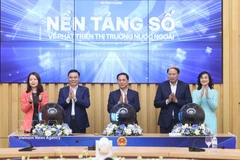
PM Pham Minh Chinh announces the establishment of the Vietnam International Financial Centre in Ho Chi Minh City. (Photo: VNA)

PM announces launch of Vietnam Int'l Financial Centre in Ho Chi Minh City

The Vietnam International Financial Center in Ho Chi Minh City and Da Nang will gradually assert Vietnam's position on the global financial map and make a substantial contribution to achieving the 2-digit growth target set by the 14th National Party Congress in the coming years, towards realising the 100-year strategic goals, said PM Pham Minh Chinh.

Duong Thi Lap's garden has 200 kumquat trees ready for Tet (Photo: VNA)

Tet bloom markets: rising demand, stable prices

Across Vietnam, key farming hubs for flowers and ornamental plants are buzzing with activity as the Lunar New Year (Tet) approaches, with farmers robust plant health, eye-catching designs, surging consumer demand, and broadly stable pricing.

Retail sales of goods in January estimated at 487.4 trillion VND (Photo: VNA)

Total retail sales of goods, service revenue up 9.3% in January

Retail sales of goods in January was estimated at 487.4 trillion VND, accounting for the largest share and increasing 9.3% year-on-year. Growth was driven by many categories, including household appliances and equipment, which rose 9.4% thanks to early-year shopping demand and promotional programmes by retailers.

Fishing vessel monitoring system (VMS). (Illustrative photo: VNA)

Quang Tri backs VMS subscription fees for fishing vessels

Under a recently approved provincial resolution, the support will be disbursed once a year. Total funding for the three-year programme is estimated at more than 12.2 billion VND from the provincial budget, benefiting around 1,360 vessels across the province.

Delegates at the meeting in Hanoi on February 9, 2026. (Photo baotintuc.vn)

Vietnam to release 2026 economic census data seven months earlier

Nguyen Thi Huong, head of the Standing Group of the Steering Committee of the 2026 Economic Census and Director of the National Statistics Office (NSO), said the first phase of data collection was underway nationwide and was scheduled to conclude on March 10.