Hanoi Convention: Vietnam strengthens anti-money laundering legal framework

Vietnam’s hosting of the signing ceremony of the United Nations Convention against Cybercrime (Hanoi Convention) marks a major step in its efforts in global integration on cybersecurity and financial security, underscoring the country’s determination to strengthen its defences against money laundering and other high-tech crimes.

Hanoi (VNA) — Vietnam’s hosting of the signing ceremony of the United Nations Convention against Cybercrime (Hanoi Convention) marks a major step in its efforts in global integration on cybersecurity and financial security, underscoring the country’s determination to strengthen its defences against money laundering and other high-tech crimes.

According to Deputy Governor of the State Bank of Vietnam (SBV) Nguyen Ngoc Canh, improving the anti-money laundering (AML) legal framework is a core task under the Government’s National Action Plan. The SBV’s Circular No. 27/2025/TT-NHNN, effective November 1, provides guidance for several provisions of the Law on Anti-Money Laundering and represents a significant step forward.

The circular regulates that financial institutions and payment intermediaries must report domestic electronic transfers worth 500 million VND (about 19,000 USD) or more, or international transfers of 1,000 USD and above, while strengthening mechanisms for monitoring, reviewing, and temporarily suspending suspicious transactions. The full digitalisation of reporting processes is expected to enhance transparency and reduce risks associated with manual processing.

nguyen-ngoc-canh.jpg
Deputy Governor of the State Bank of Vietnam Nguyen Ngoc Canh (Photo: VPG)

Alongside tighter reporting and oversight, the government is expanding its regulatory scope to cover digital assets — a high-risk area for money laundering. Particularly, Resolution No. 05/2025/NQ-CP on piloting a framework for the digital asset market mandates strict AML compliance to prevent cross-border money laundering via virtual assets.

Dr. Nguyen Thai Ha, head of the Faculty of Law at the Banking Academy, said Vietnam’s AML framework has largely aligned with international standards but remains fragmented, especially in regulating virtual assets and digital transactions that criminals could exploit.

“The absence of a comprehensive legal framework for virtual assets is currently the biggest loophole that money launderers can exploit,” he noted, adding that Vietnam needs to harmonise its legal system, improve implementation, and enhance the capacity of stakeholders to identify suspicious activities, including those using new and complex methods.

With a stronger legal foundation, technology will play a critical role in enforcement. Ha suggested adopting artificial intelligence (AI) and big data analytics in transaction monitoring systems and called for closer coordination among the SBV, the Ministry of Public Security, and the Ministry of Information and Communications to ensure timely information sharing on transactions, identities, and fund flows.

He added that swift detection and strict punishment of AML violations are vital to maintaining a strong deterrent effect.

Internationally, Vietnam’s hosting of the Hanoi Convention signing ceremony underscores its commitment to global cooperation in data sharing, financial tracing, and preventing transnational crimes, reinforcing both national financial security and the global fight against cross-border money laundering in the digital era./.
VNA

See more

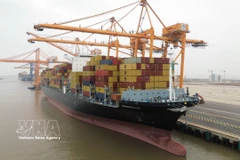
The ribbon-cutting ceremony marking the export of C.P. Vietnam's first container shipment to Singapore. (Photo: VNA)

C.P. Vietnam exports first processed chicken batch to Singapore

The CPV Food Binh Phuoc plant operates a closed-loop system and holds international certifications, including HACCP, BRC, ISO 22000, and Halal. Before reaching Singapore, the company’s processed chicken was already exported to Japan, Hong Kong (China), Cambodia, and Laos, with Japan alone importing 10,000 tonnes by November 2025.

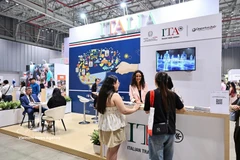
Delegates visit a booth at the exhibition (Photo: VNA)

HanoiTex & HanoiFabric 2025 kicks off

Running until December 18, HanoiTex & HanoiFabric is expected to contribute to sustainable development and stronger international integration of Vietnam’s textile and garment industry.

The thematic session on finance and banking of the Viet­nam Eco­nomy in 2025 and Pro­spects in 2026 Forum (VEPF). (Photo: VNA)

Vietnam economic forum 2025: balancing high growth and sustainability

At the thematic session on finance and banking, delegates focused on solutions for financial resources and eco­nomic growth tar­gets in the 2026-2030 period. The effective mobilisation of financial resources was identified as a key prerequisite for Vietnam to realise its target of double-digit economic growth during this phase.

Local residents and visitors tour and shop at a fair. (Photo: VNA)

Made in Vietnam Fair set to open in Hanoi

The Made in Vietnam Fair will showcase a wide range of products, including industrial and consumer goods, processed foods, agricultural produce and handicrafts, with the participation of distribution systems, e-commerce platforms, digital platforms and digital financial solution providers operating in Vietnam.

2025 a good year for Vietnam’s securities sector: SSC

2025 a good year for Vietnam’s securities sector: SSC

During the year, the SSC made significant progress in improving the legal and policy framework. Institutional work was implemented in a coordinated manner, including the issuance of two decrees, one resolution, seven circulars and three major schemes. At the same time, the regulator strengthened policy dialogue and expanded cooperation with international organisations to support the market upgrade process.

Vietnam shows strong FDI performance in the first 11 months of 2025 (Source: vtv.vn)

Vietnam shifting FDI attraction focus from volume to quality

As production relocation to Southeast Asia accelerates and competition for FDI intensifies, Vietnam faces increasing pressure from regional rivals such as India, Malaysia and Indonesia, which are offering bold tax incentives and developing specialised industrial parks. This reality requires Vietnam to shift its focus from attracting large volumes of capital to drawing high-quality investment, prioritising core technologies, innovation, value chain linkages and higher localisation rates.

Vice Chairman of the Ho Chi Minh City People’s Committee Hoang Nguyen Dinh inspects IUU fishing prevention efforts at Hung Thai Port in Long Hai commune. (Photo: VNA)

Ho Chi Minh City steps up oversight of unqualified fishing vessels

HCM City currently has 4,475 fishing vessels, all of which have been registered and updated on the VNFishbase system. Among them, 4,268 vessels, or 95.37%, have been granted fishing licences, while 207 unqualified vessels are being strictly managed and kept ashore.

Airlangga Hartarto (fifth from right), Indonesian Coordinating Minister for Economic Affairs, and CEO of VinFast Asia Pham Sanh Chau (sixth from right) at the plant opening ceremony on December 15. (Photo: VinFast)

VinFast inaugurates EV plant in Indonesia

The VinFast Subang plant was completed and put into operation just 17 months after groundbreaking, demonstrating the company's rapid execution capability and strong implementation capacity. This is VinFast's fourth operational facility worldwide, and its first plant in Indonesia and Southeast Asia outside of Vietnam.

From early December, major retail chains in Ho Chi Minh City have recorded a noticeable increase in shoppers seeking Tet products. (Photo: VNA)

HCM City businesses ramp up production to meet Lunar New Year demand

From early December, major retail chains in the city have recorded a noticeable increase in shoppers seeking Tet products. Many consumers are taking advantage of promotional programmes to purchase gift items with long shelf lives, such as confectionery, soft drinks and processed foods, well ahead of the holiday peak.