Hanoi (VNA) - The Government’s Resolution No.05/2025/NQ-CP on the pilot implementation of the cryptocurrency market in Vietnam, issued and effective from September 9, 2025, serves as a foundation for the establishment of the domestic cryptocurrency market.
The resolution stipulates that organisations and individuals participating in the market must comply with relevant laws on anti-money laundering, counter-terrorism financing, and the non-proliferation of weapons of mass destruction. These regulations are considered essential to building a safe and transparent cryptocurrency market.
Exploiting cryptocurrency for illegal activities
The Vietnam Blockchain and Digital Assets Association, citing data from Chainalysis (a US blockchain analytics firm based in New York), reported that Vietnam has recorded over 220 billion USD in cryptocurrency transactions in 2025, marking a 55% increase from the previous year. However, the majority of these transactions occur on international platforms, which results in tax revenue loss and complicates efforts in anti-money laundering, counter-terrorism financing, and the fight against high-tech crime.
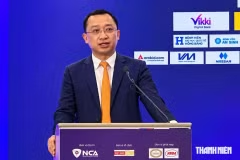
Senior Lieutenant Colonel Nguyen Thanh Chung, an officer at the cybersecurity and high-tech crime prevention department under the Ministry of Public Security, stated that cryptocurrencies are increasingly being exploited for illegal fundraising and other unlawful activities in cyberspace, posing significant risks to national security, social order, tax revenue, and the macroeconomic management efforts of the State Bank of Vietnam and the Government.
In Vietnam, although there have been no specific cases of large-scale terrorism financing using cryptocurrency, this risk is real and increasing, Chung said, noting that with their anonymity and cross-border nature, cryptocurrencies are being fully exploited by cybercriminals to create an ‘underground market,’ facilitating the flow of funds for illegal activities.
According to statistics from the department, from December 15, 2019, to May 14, 2024, nearly 20,000 fraud cases were detected, involving more than 17,000 individuals, causing losses of over 12 trillion VND (455.3 million USD). In the cases of online fraud, most of the illegally obtained funds were converted into cryptocurrencies through peer-to-peer exchanges organised on international platforms such as Binance, HTX, and OKX, with daily transaction volumes reaching up to trillions of VND.
In addition, Chung pointed out the risks of unauthorised cryptocurrency exchanges collecting and storing large amounts of customer data without complying with the regulations of the Cybersecurity Law and Personal Data Protection Law. Therefore, he stressed that conducting cryptocurrency transactions on licensed domestic exchanges, as per the provisions of Resolution No. 05, not only contributes to improving the effectiveness of anti-money laundering and counter-terrorism financing efforts by regulatory authorities, but also directly ensures customer rights in case of disputes.
Implementing anti-money laundering and counter-terrorism financing regulations
Nguyen Thi Minh Tho, Deputy Director of the Anti-Money Laundering Department under the State Bank of Vietnam, said that Vietnam has been placed on the "Gray List" by the Financial Action Task Force (FATF) since June 2023. It is actively implementing actions based on recommendations from this organisation to build a legal framework for virtual assets and virtual asset service providers. This includes demonstrating the enforcement of this legal framework, which involves increasing the understanding of regulatory authorities, improving their awareness of the risks in this sector, and providing training to raise awareness and obligations of virtual asset service providers regarding anti-money laundering, counter-terrorism financing, and legal measures for addressing violations.
According to Tho, the National Risk Assessment Report on Money Laundering for the 2018-2022 period showed that Vietnam chose to assess four areas related to virtual assets, including wallet service providers, virtual asset management, stablecoins, and virtual assets in the form of securities, utility tokens, and platform tokens. The results indicated that the risks in these four areas were rated as high or medium-high.
This is also why the Digital Technology Industry Law and Resolution No. 05 have imposed strict requirements on the implementation of anti-money laundering and counter-terrorism financing regulations for cryptocurrency service providers.
Experts believed that this pilot mechanism not only paves the way for innovation but also acts as a filter to eliminate models that carry potential risks. As a result, the market can operate transparently, building trust among domestic and foreign investors, and helping Vietnam integrate with international standards in cryptocurrency asset management./.

Vietnam looks to global best practices to develop crypto-asset market
Marco Dal Lago, Vice President for Global Expansion and Strategic Partnerships at Tether Group, described Vietnam as one of Tether’s most promising and strategic markets, citing its young population, dynamic economy, and substantial remittance inflows.