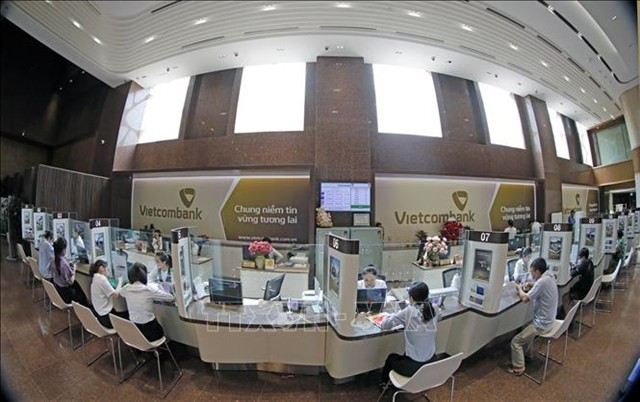
Hanoi (VNS/VNA) - Regulations governing the operational networks of commercial banks could be significantly streamlined under a new proposal from the State Bank of Vietnam (SBV).
Under a draft circular to replace Circular 32/2024/TT-NHNN, which is now open for public comment, numerous administrative procedures related to the establishment and relocation of bank branches and transaction offices will be shortened.
According to the SBV, the draft circular is intended to support a broader plan to simplify business regulations for banks in line with Government Resolution No. 66/NQ-CP on reducing and streamlining administrative procedures related to production and business activities.
For overseas operations, the SBV proposes reducing the time required to review and approve the establishment of branches, representative offices or subsidiaries of Vietnamese commercial banks from 45 working days to 30, counted from the date complete and valid documents are received.
For domestic networks, procedures for relocating head offices will also be shortened. The time needed for an SBV branch in a province or city to consider and approve the relocation of a branch office to another province or city will be reduced from 20 working days to 13. Cases involving relocation within the same province or city will be cut from 10 days to five.
Under the draft circular, the requirement for commercial banks to submit reports on compliance with safety limits and operational ratios will also be removed. The SBV said it already possessed sufficient data on these indicators through its periodic monitoring and reporting system, making the requirement unnecessary and a waste of time and money.
In addition, the draft circular proposes abolishing vague regulations, including the requirement to comply with the law in the conditions for bank establishment, to ensure transparency and ease of enforcement.
The SBV also plans to expand the autonomy of commercial banks when arranging their internal networks. Banks would be permitted to independently decide on changes to the branches managing their transaction offices and would only be required to report such changes to the SBV instead of seeking prior approval, as is currently the case. This greater autonomy is expected to enhance flexibility in management and operations.
According to Dr Hoang Van Thanh, Head of the Economic Law Department at the Banking Academy of Vietnam, in the context of an extensive review and amendment of the banking sector's legal framework to align with the 2024 Law on Credit Institutions, the development of a revised circular to replace Circular 32 is a necessary step to adjust outdated regulations and address practical challenges in organising the operational networks of commercial banks.
Thanh proposed that the SBV amend the regulation on the outstanding loan cap at transaction offices, as the draft circular maintains the existing requirement that the total outstanding loan granted to a customer at a transaction office cannot exceed 2 billion VND or the equivalent in foreign currency, excluding credit secured by savings passbooks issued by the bank itself.
He argued that demand for capital in industrial parks and key economic zones had risen sharply. He suggested that the draft circular consider a conditional authorisation mechanism allowing certain bank branches to increase the loan cap when they meet internal control requirements./.

Banks see improving bad debt levels amid steady recovery
The group of State-owned banks continued to affirm its role as a pillar in stabilising the banking system, with the bad debt ratio maintained at a very low level of 1–1.9%.